


Malaysia Airlines: safety, fleet, and facts (updated 2026)
Malaysia Airlines, the national carrier of Malaysia, has been a significant player in the aviation industry since its inception in 1947. Originally established as Malayan Airways, the airline evolved through several transformations, including the formation of Malaysia–Singapore Airlines in 1966 and the split in 1972 that created Malaysian Airline System (MAS). The airline commercially rebranded as “Malaysia Airlines” in 1987 while retaining its statutory name until a 2015 restructuring formed Malaysia Airlines Berhad (MAB).[1][18] With its primary hub at Kuala Lumpur International Airport (KUL) and secondary hubs at Kota Kinabalu (BKI) and Kuching (KCH), Malaysia Airlines connects passengers across Asia-Pacific, the Middle East and select long-haul markets. Depending on season, the carrier serves roughly the high-60s in total destinations (e.g., ~69 as of September 2025).[1]
The airline is a member of the Oneworld alliance (joined on 1 February 2013), expanding global reach through partner networks and reciprocal benefits.[2] Malaysia Airlines’ brand centres on Malaysian Hospitality—the service ethos behind its “MH” code—while “Malaysia, Truly Asia” is the national tourism slogan used by Tourism Malaysia, not the airline’s brand line.[19][20] Positioning itself as a full-service premium carrier, Malaysia Airlines focuses on comfort, connectivity, and value.
Key Takeaways
- Malaysia’s flag carrier with hubs at KUL (primary), BKI and KCH (secondary), serving about 69 destinations worldwide as of September 2025 (seasonal variation applies).[1]
- Member of the Oneworld alliance since 2013, providing global connectivity and reciprocal benefits.[2]
- Current fleet centres on Airbus A350-900 and A330 family (including new A330-900neo) for medium/long-haul and Boeing 737-800/737-8 for short-haul; ongoing fleet renewal through 2028.[7][8][9][10][11]
- Safety oversight by Malaysia’s Civil Aviation Authority (CAAM); airline is IOSA-registered (IATA’s globally recognised safety audit), renewed July 2024 and valid through 2026.[5][6]
- Following a 2024 regulatory review, CAAM temporarily reduced the airline’s AOC validity to one year; after corrective actions, a full 3-year AOC was restored in September 2025.[12][13]
- Skytrax rates Malaysia Airlines a 4-Star Airline; ranked 27th in the 2025 World Airline Awards (up from 39th in 2024).[3][4]
Safety record of Malaysia Airlines
Malaysia Airlines’ safety record is often discussed in the context of two tragic events in 2014:
- MH370 (8 March 2014) disappeared en route from Kuala Lumpur to Beijing, prompting one of the largest multinational search operations in aviation history. The official Malaysian Annex 13 Safety Investigation Report (2018) found insufficient evidence to determine the precise cause.[16]
- MH17 (17 July 2014) was shot down over eastern Ukraine while flying from Amsterdam to Kuala Lumpur; the Dutch Safety Board concluded the aircraft was struck by a Buk surface-to-air missile fired from conflict-zone territory.[17]
While these incidents profoundly affected public perception, they involved unique circumstances—particularly the external shoot-down of MH17—and do not, in isolation, represent current operational safety performance.
Regulatory oversight & audits. Malaysia Airlines is audited by CAAM and is listed on IATA’s IOSA registry (an internationally recognised safety audit). The airline’s IOSA registration was renewed in July 2024 and remains valid through 2026.[5][6]
Recent oversight actions. In August 2024, following a review of maintenance and staffing challenges affecting operations, CAAM shortened Malaysia Airlines’ Air Operator Certificate (AOC) validity from three years to one year and required corrective measures and reporting. In September 2025, CAAM restored the airline’s three-year AOC after improvements were verified.[12][13]
Fleet and aircraft maintenance

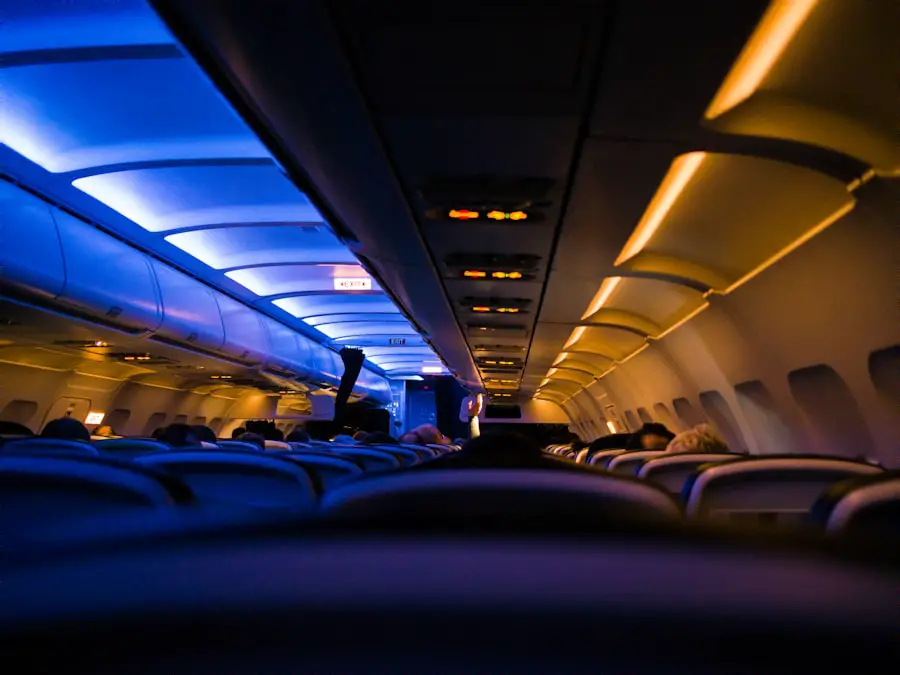
Malaysia Airlines operates a mixed Airbus/Boeing fleet tailored to route needs. Medium and long-haul services use Airbus A350-900 and A330 variants, including the new A330-900neo (first delivered 29 Nov 2024; now operating to Australia), while short-haul routes use Boeing 737-800 and the latest 737-8.[7][10][11][9] Fleet renewal continues through 2028; in March 2025 the parent group also announced plans to acquire additional 737s later in the decade.[21]
Maintenance is governed by rigorous manufacturer programs and Malaysia’s regulatory framework. Oversight is by the Civil Aviation Authority of Malaysia (CAAM), in alignment with ICAO standards. Malaysia Aviation Group has also highlighted compliance with IATA’s Operational Safety Audit (IOSA), indicating adherence to global best practices in operational control and safety management systems.[6][5]
Pilot training and experience
| Category | Metrics |
|---|---|
| Training | Hours of flight & ground school training; type-specific curricula; recurrent checks |
| Experience | Cumulative flight hours; command experience on type |
| Qualifications | Type ratings & certifications per CAAM/ICAO requirements |
| Simulator Training | Initial & recurrent full-flight simulator hours; scenario-based training |
Malaysia Airlines emphasises initial and recurrent training aligned to ICAO and CAAM standards, with full-flight simulators and crew resource management (CRM) as core elements. This continuous professional development underpins safe operations and up-to-date compliance.
Safety measures and protocols
In addition to standard airline safety systems (flight data monitoring, ETOPS compliance, etc.), Malaysia Airlines adheres to IATA’s IOSA framework and CAAM’s regulatory requirements. IOSA registration was renewed in July 2024, signalling conformity with global benchmarks for operational control, safety management, and quality assurance.[5][6]
Airport and onboard security are maintained in coordination with local and international authorities. Operational risk management includes route risk assessments, flight tracking, and contingency planning, all within Malaysia’s evolving single-regulator framework (see below).
Recent incidents and regulatory actions

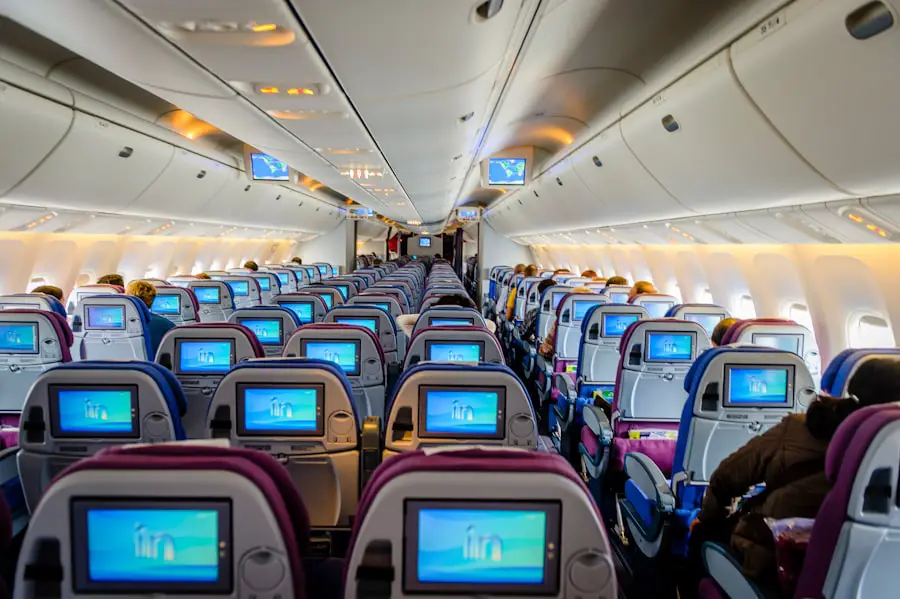
Beyond the 2014 tragedies, recent years have not seen fatal accidents at the airline, but operational disruptions in 2024 triggered enhanced oversight by CAAM. In August 2024, CAAM reduced the AOC validity to one year and required a mitigation plan and monthly reporting. In September 2025, CAAM restored the standard three-year AOC after improvements were verified.[12][13]
Government oversight and regulation
Malaysia’s airline safety is regulated by the Civil Aviation Authority of Malaysia (CAAM)—which replaced the former Department of Civil Aviation (DCA). In 2025, Malaysia rationalised the economic and technical oversight functions under a single regulator, with CAAM assuming MAVCOM’s responsibilities effective 1 August 2025.[14][15]
Customer reviews and satisfaction
Malaysia Airlines holds a 4-Star Airline rating from Skytrax, and in the 2025 World Airline Awards the carrier ranked 27th globally, up from 39th in 2024—reflecting improvements in product and service.[3][4]
Comparison with other airlines
Peers such as Singapore Airlines and Cathay Pacific are frequent Skytrax top-10 entrants, while low-cost competitor AirAsia excels in the budget segment. Malaysia Airlines positions itself as a full-service carrier balancing value and service, aided by Oneworld partnerships and ongoing fleet renewal (A330neo, 737-8).[2][4]
Future plans and improvements
Fleet modernisation is central. Malaysia Aviation Group is inducting 20 Airbus A330-900neo through 2028 (first delivered 29 Nov 2024; now flying to Australia), and announced in March 2025 an intent to acquire additional Boeing 737 aircraft for later-decade delivery. These moves target better fuel efficiency, reliability, and customer comfort while supporting network growth.[7][11][21]
Is Malaysia Airlines safe to fly?
Considering independent audits (IOSA), national oversight by CAAM, and ongoing fleet renewal and training, Malaysia Airlines can be considered safe to fly. The 2014 incidents (MH370 and MH17) remain pivotal to public perception; however, they do not define current operations. Oversight intensified in 2024 with corrective actions subsequently validated in 2025. As with any carrier, travellers should consider current advisories and route-specific notices when planning.[5][12][13]
Ultimately, based on current audits, regulation and fleet upgrades, Malaysia Airlines offers a safe and modern full-service experience (accuracy as of 2025-10-09).
For personal comfort and security, consider travel accessories that keep valuables close and support rest on board.
One helpful item for travellers is a scarf with a hidden pocket, which can be found in this article. This accessory lets you keep essentials secure. Additionally, a portable white noise machine, as discussed in this article, can help you sleep better during your flight. And for those who enjoy fishing, a compact travel fishing pole, featured in this article, is a space-saving way to bring your hobby along.
FAQs
Is Malaysia Airlines safe to fly with?
Yes. Malaysia Airlines is audited under IATA’s IOSA program (renewed July 2024, valid to 2026) and regulated by CAAM. In 2025 the airline’s AOC was restored to a full three-year term after corrective actions. Skytrax rates the carrier 4-Star.[5][6][13][3]
What safety measures does Malaysia Airlines have in place?
A certified safety management system, compliance with CAAM/ICAO regulations, regular line/base maintenance, flight data monitoring, and recurrent crew training. IOSA registration independently audits operational control and safety standards.[6]
Has Malaysia Airlines had any major safety incidents in the past?
Yes—MH370 (2014) remains unresolved per the 2018 official report; MH17 (2014) was shot down by a missile over Ukraine, per the Dutch Safety Board’s final report. These were exceptional circumstances and are distinct from current operations and audits.[16][17]
How does Malaysia Airlines compare to other airlines in terms of safety and service?
Safety is primarily judged by regulatory compliance and audits (CAAM, IOSA). In service, Skytrax rates Malaysia Airlines 4-Star and ranked it 27th worldwide in 2025 (up from 39th in 2024).[3][4]
What should passengers do to ensure their safety when flying with Malaysia Airlines?
Follow crew instructions, review the safety briefing, comply with seat belt and electronics rules, and monitor travel advisories for your destinations and overflight regions.
References
- Wikipedia: Malaysia Airlines (history, hubs, destinations)
- Oneworld — Malaysia Airlines member page
- Skytrax — Malaysia Airlines 4-Star Airline rating
- Skytrax — World’s Top 100 Airlines 2025 (rank #27)
- MAG news: IOSA registration (July 2024)
- IATA — IOSA program overview
- Airbus press release: First A330neo delivered to MAG (29 Nov 2024)
- The Edge: First A330neo arrives in Kuala Lumpur (29 Nov 2024)
- CAPA: Fifth 737-8 delivered (17 Dec 2024)
- Malaysia Airlines media centre: First A330neo arrival
- Sydney Airport: A330neo lands; service details (Aug 2025)
- Reuters: CAAM cuts AOC validity to one year (Aug 2024)
- Free Malaysia Today: CAAM restores 3-year AOC (Sep 2025)
- CAAM: MAVCOM functions to be continued by CAAM (from 1 Aug 2025)
- Bernama: CAAM to take over Mavcom’s regulatory functions (July 2025)
- Official MH370 Safety Investigation Report (2018)
- Dutch Safety Board — MH17 Final Report (2015)
- The Star: Throwback to MAS rebranding in 1987
- Malaysia Airlines — Malaysian Hospitality
- Tourism Malaysia — “Malaysia, Truly Asia” campaign
- Reuters: MAG to buy 30 Boeing 737 aircraft (Mar 2025)