


To ventilate your tent in the rain without getting wet, face it into the wind to enhance airflow. Keep vents and openings slightly ajar, and use mesh screens to allow air in while keeping moisture out. Consider partially unzipping the door for better circulation, too. Avoid cooking inside and store wet gear outside to minimize humidity. Employing these strategies not only helps reduce condensation but also keeps your tent interior drier. Discover more tips for effective moisture management.
Understanding Tent Condensation

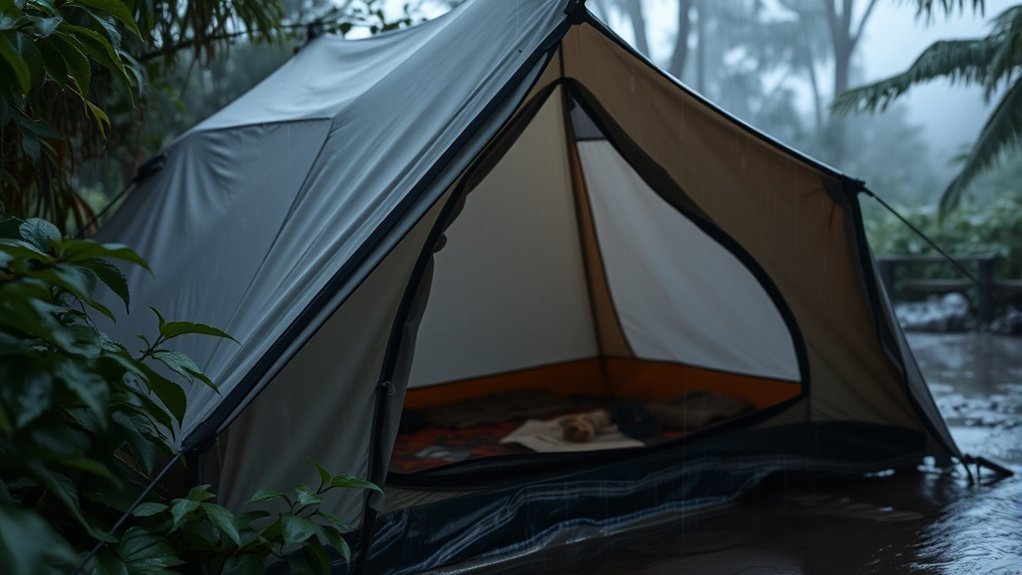
When you’re camping, understanding tent condensation is essential for a comfortable experience. Condensation occurs when warm, moist air from your breath meets the colder air outside, causing moisture buildup on the tent’s surfaces. You might not realize it, but you can exhale about a liter of water in one night, greatly contributing to this issue.
The temperature difference between the warm air inside and the cold air outside exacerbates condensation. Even with proper ventilation, you can’t completely eliminate it due to these inherent differences. However, knowing the condensation causes helps you prepare. To manage moisture, consider keeping vents and doors slightly open. This simple action allows drier air to replace the warm, moist air, minimizing discomfort. Understanding these factors will empower you to create a more pleasant camping environment, liberating you from the frustrations of a damp tent.
Effective Ventilation Techniques
To keep your tent ventilated during rain, start by opening vents and windows while ensuring you have a rain guard in place. Position your tent with the entrance away from the wind to reduce moisture risk. Utilizing mesh panels can also help maintain airflow without letting in unwanted insects.
Open Vents and Windows
Opening vents and windows is essential for maintaining airflow inside your tent, especially during rainy conditions. Effective ventilation strategies help you expel humid air while minimizing rain intrusion. Position your tent so its openings face the wind direction, enhancing natural airflow and promoting moisture control. You can also partially zip the tent door to allow airflow without letting in too much moisture. Consider using rain gutters or awnings over doors to redirect water away from openings, helping to keep you dry. While mesh doors can keep insects out, they also allow for continuous ventilation, ensuring comfort and airflow. By implementing these techniques, you can enjoy a fresh and comfortable tent environment, even in wet weather.
Utilize Mesh Panels
While opening vents and windows is a great start for tent ventilation, utilizing mesh panels takes airflow management to another level. Mesh panels offer significant benefits, allowing fresh air in while keeping pesky insects out. By incorporating mesh doors and windows, you can promote air circulation without risking moisture entering your tent during rain. When positioned correctly, mesh panels can enhance airflow, reducing humidity levels and maintaining a comfortable environment inside. Even during light rain, opening these panels lets warm, moist air escape without letting water in. To maximize your tent ventilation techniques, guarantee that your mesh panels remain intact and unobstructed. Embrace the freedom of fresh air while staying dry and comfortable in your tent!
Position Against Wind
Positioning your tent entrance against the wind is a smart strategy for enhancing ventilation, especially during rainy conditions. By aligning your tent orientation with the wind direction, you promote natural airflow and help moist air escape efficiently. Here are some effective techniques:
- Use mesh doors to keep insects out while allowing air to circulate.
- Partially zip the tent door, maintaining airflow and minimizing moisture entry.
- Verify vents are open and unobstructed for peak air exchange.
- Consider adding rain gutters to divert water away while still facilitating ventilation.
These methods work together to guarantee you stay comfortable and dry, maximizing your shelter’s performance even when the rain pours. Embrace the elements with confidence!
Positioning Your Tent for Optimal Airflow
To guarantee ideal airflow in your tent during rainy conditions, face it into the wind direction; this allows fresh air to enter and moist air to escape effectively. Your tent orientation plays a significant role in airflow dynamics, so avoid low-lying areas where cold air settles, increasing condensation risk. Instead, seek higher ground for better ventilation.
Ensure vents and windows stay open, even in the rain, to promote circulation and minimize moisture buildup. Utilizing mesh doors is another great option, as they allow airflow while keeping pesky insects out, ensuring your interior remains dry.
If rain is heavy, consider partially zipping the tent door, which maintains airflow while utilizing rain gutters to divert moisture away from the entrance. By strategically positioning your tent and managing openings, you can enjoy a fresher, more comfortable camping experience, even in the wettest conditions.
Managing Moisture Inside the Tent
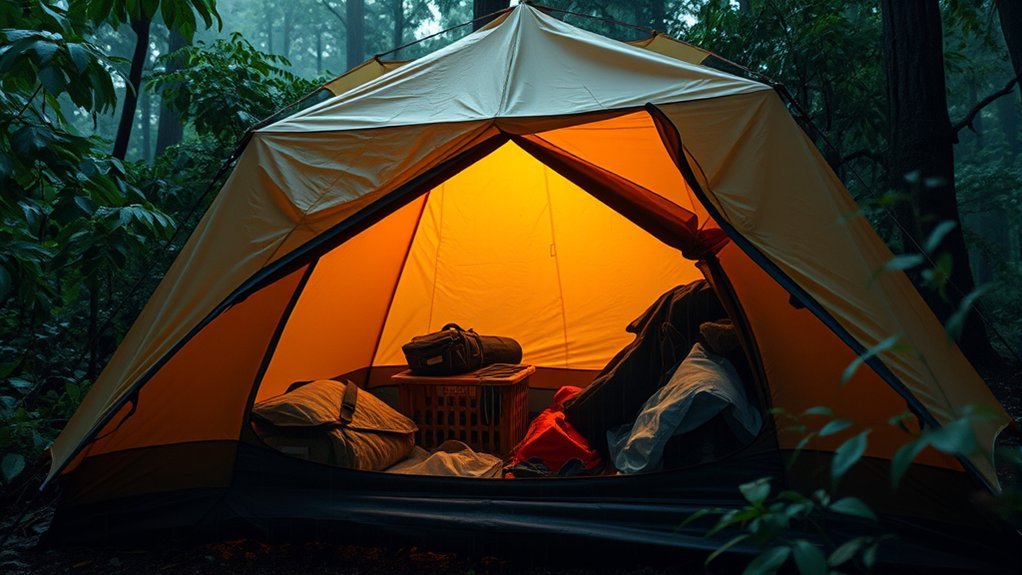
Even with effective ventilation, managing moisture inside your tent is key to a comfortable camping experience. To maintain humidity control and prevent moisture absorption, consider these practical tips:
Managing moisture inside your tent is essential for a comfortable camping experience.
- Avoid cooking inside; it generates excess heat and moisture.
- Store wet gear outside in dry sacks, keeping the interior drier.
- Dry out the tent as much as possible in the morning before packing.
- Minimize wet items inside; each contributes to rising humidity.
Utilizing Rain Gutters and Mesh Screens
When it rains, keeping your tent ventilated can be a challenge, but utilizing rain gutters and mesh screens makes it easier. Start with rain gutter installation at your tent’s entrances. This directs water away while allowing fresh air to flow in, minimizing moisture buildup inside. Next, consider mesh screens for your tent openings. They provide essential ventilation while keeping pesky insects out, guaranteeing you enjoy the fresh air without the rain.
Position your tent with the entrance facing away from prevailing winds to reduce direct rain exposure while still promoting airflow. Additionally, adjustable rainfly designs let you roll back parts for maximum ventilation without sacrificing rain protection. Finally, confirm your tent vents are strategically placed to catch any wind direction, enhancing airflow and decreasing the chances of rain entering. By combining these elements, you can create a comfortable and dry camping experience, no matter the weather.
Additional Tips for Staying Dry While Camping
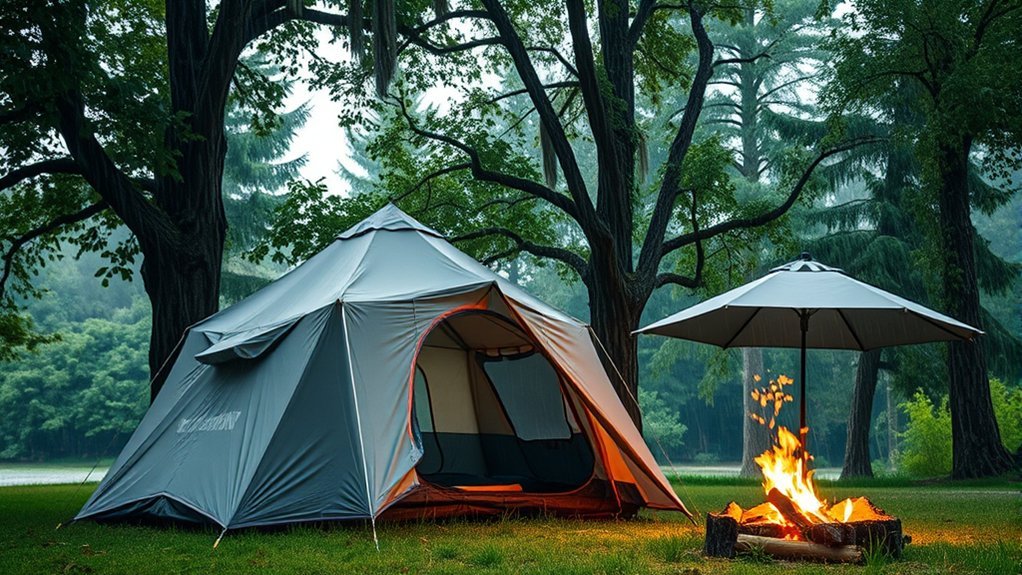
To stay dry while camping, consider choosing elevated campsites to avoid water pooling around your tent. Using protective tarps can shield your gear from rain and create a dry zone for entry and exit. Also, keeping your gear dry is essential—make sure to store items in waterproof bags or containers.
Choose Elevated Campsites
Choosing elevated campsites can greatly enhance your camping experience, especially during rainy conditions. By opting for higher ground, you’ll reap the elevated benefits that come with it. Proper campsite selection can make all the difference in keeping your tent dry and comfortable.
- Enjoy fresh airflow as cold air settles in lower areas.
- Avoid puddles; elevated sites reduce the risk of wet ground seeping in.
- Benefit from natural drainage, keeping your living space cozy.
- Stay warm as higher ground helps prevent condensation buildup.
Use Protective Tarps
Using protective tarps is a smart way to stay dry while camping in the rain. Start with a tarp setup above your tent entrance to guarantee effective rain deflection, creating a sheltered area. This lets you keep the tent door open for ventilation while staying dry. Make sure the tarp slopes away from the tent to prevent water pooling and drips inside. You can also use additional tarps to form a windbreak around your tent, improving airflow while reducing rain exposure. Consider using weighted canopies or poles to elevate the tarp, enhancing your sheltered area without sacrificing protection. These simple measures can transform your camping experience, allowing you to embrace the outdoors without the hassle of getting wet.
Maintain Gear Dryness
Keeping your gear dry while camping in the rain is essential for a comfortable experience. Effective gear organization and moisture control can make all the difference. Here are some tips to help you stay dry:
- Hang wet gear outside the tent under a tarp to air dry.
- Use a footprint or tarp underneath your tent to prevent water seepage.
- Store wet items in waterproof dry sacks outside your living space.
- Pack extra layers of non-cotton clothing and waterproof jackets for unexpected rain.
Regularly dry out your tent during breaks by opening vents and ensuring airflow, even if it’s drizzling. With these strategies, you’ll maintain gear dryness and enjoy your adventure without the discomfort of wet belongings.
Frequently Asked Questions
Can I Use a Tarp for Additional Rain Protection?
Yes, you can definitely use a tarp for additional rain protection. Proper tarp installation creates a barrier against moisture, keeping your tent dry and enhancing your outdoor experience. Enjoy your adventure without worrying about getting soaked!
How Can I Prevent Water Pooling Near the Tent Entrance?
To prevent water pooling near your tent entrance, use tent drainage solutions like sloping ground and install entrance ground cover. It’s simple, and you’ll stay dry while enjoying the outdoors without worry.
Should I Close the Tent Windows During Heavy Rain?
Yes, you should close the tent windows during heavy rain for effective rain protection. However, make certain you maintain some tent ventilation to prevent condensation, balancing comfort with safety for a more enjoyable camping experience.
Is It Safe to Use a Heater Inside the Tent?
Using a heater inside your tent can feel like bringing the sun into a stormy sky, but prioritize tent safety. Opt for safe heater types designed for indoor use, ensuring warmth without compromising your adventure.
What Materials Are Best for Waterproofing a Tent?
To waterproof your tent, use silicone-based sealants or polyurethane coatings as fabric treatment options. Both offer effective tent waterproofing techniques, ensuring you stay dry during your adventures while enjoying the freedom of the great outdoors.
Conclusion
By following these ventilation strategies, you can keep your tent fresh and dry, even in the rain. Think of your tent as a living organism—it needs to breathe to thrive. Position it wisely, manage moisture inside, and utilize smart tools like rain gutters and mesh screens. With these tips, you won’t just survive the storm; you’ll turn your camping experience into a cozy retreat. Embrace the elements while staying snug and dry!