


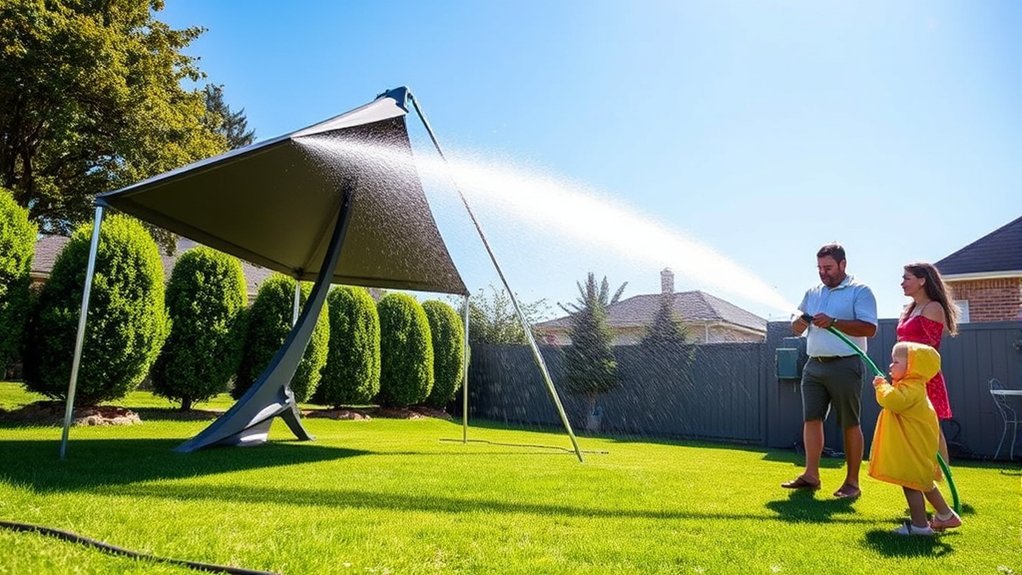
To test your tent’s waterproofing at home, first inspect and clean it thoroughly. Set it up in a well-ventilated area, guaranteeing proper assembly. Simulate rain using a garden hose, focusing on seams and vulnerable areas. Check for leaks by looking for water pooling inside or damp spots. If leaks appear, consider applying waterproofing treatments and seam sealers. Regular maintenance is key for longevity. You’ll find more helpful tips and techniques to guarantee your tent stays dry and durable.
Why Testing Tent Waterproofing Is Important

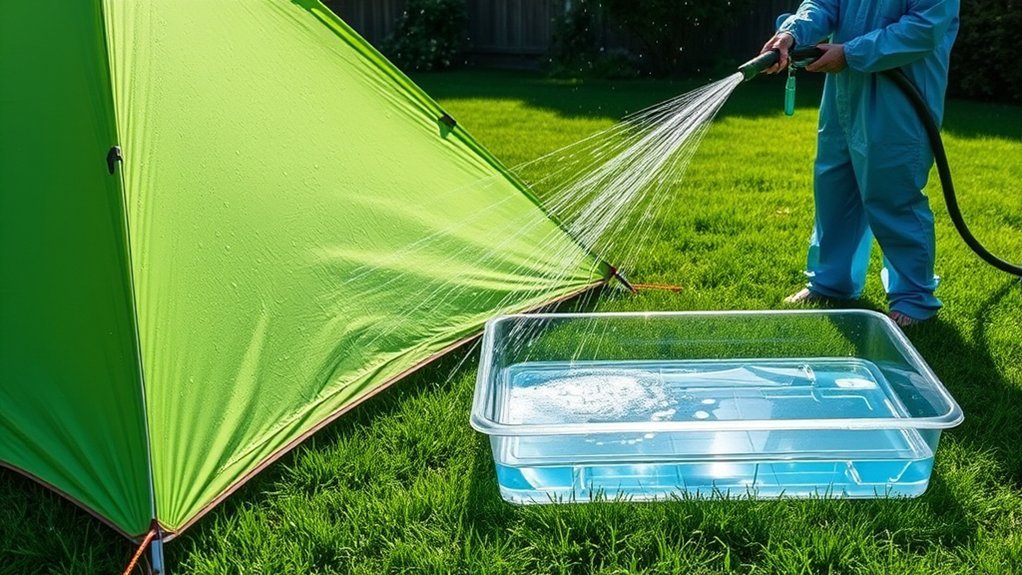
When you’re preparing for a camping trip, testing your tent’s waterproofing isn’t just a good idea—it’s vital. By doing this at home, you can identify leaks or weaknesses in your tent materials before facing unpredictable weather. Regular testing helps you understand the effectiveness of your waterproofing techniques, allowing you to decide if reapplication is necessary.
This proactive approach not only keeps you dry during rain but also protects your gear from water damage, avoiding unexpected financial losses. Knowing your tent’s waterproofing capabilities informs you about its lifespan and maintenance needs, guaranteeing you give it the care it deserves.
Ultimately, testing at home enhances your camping experience, freeing you from worry and letting you fully enjoy the great outdoors. So, embrace this simple yet vital step to guarantee your adventures remain liberating and worry-free.
Preparing Your Tent for Testing
Before testing your tent’s waterproofing, start with a thorough inspection to check for any damage that could compromise its performance. Next, clean the tent with mild soap and a soft sponge to remove any dirt that might interfere with the test results. Once it’s clean, make certain to let the tent dry completely to guarantee accurate testing.
Tent Inspection Checklist
A thorough tent inspection is essential for ensuring your camping gear is ready and watertight. Start by checking the tent material for visible damage like tears, thinning spots, or flaking waterproof coatings, as these issues can lead to leaks. Focus on critical areas such as the rainfly, tent floor, and seams, where water often finds its way in. Next, conduct a simple water test: pour water over the fabric and observe if it beads up or seeps through. This will help you assess the effectiveness of the waterproofing. Don’t forget to perform annual checks to maintain your tent’s integrity and readiness for your adventures. Keeping your gear in top shape is crucial for a liberating outdoor experience.
Cleaning for Testing
To guarantee your tent is ready for waterproof testing, you’ll want to start by setting it up in a well-ventilated area. This verifies thorough cleaning and drying. Use a mild, non-detergent soap with a soft sponge or cloth to gently clean the tent fabric, removing dirt and debris that might interfere with waterproof treatment adherence. Rinse the tent thoroughly with a low-pressure hose to eliminate any soap residue, which can compromise waterproofing performance. Before you proceed, make sure the tent is completely dry; moisture can hinder the effectiveness of waterproofing products. During this tent maintenance routine, regularly inspect for damage or wear to spot any areas needing extra attention before testing its waterproofing.
Setting Up Your Tent for the Test
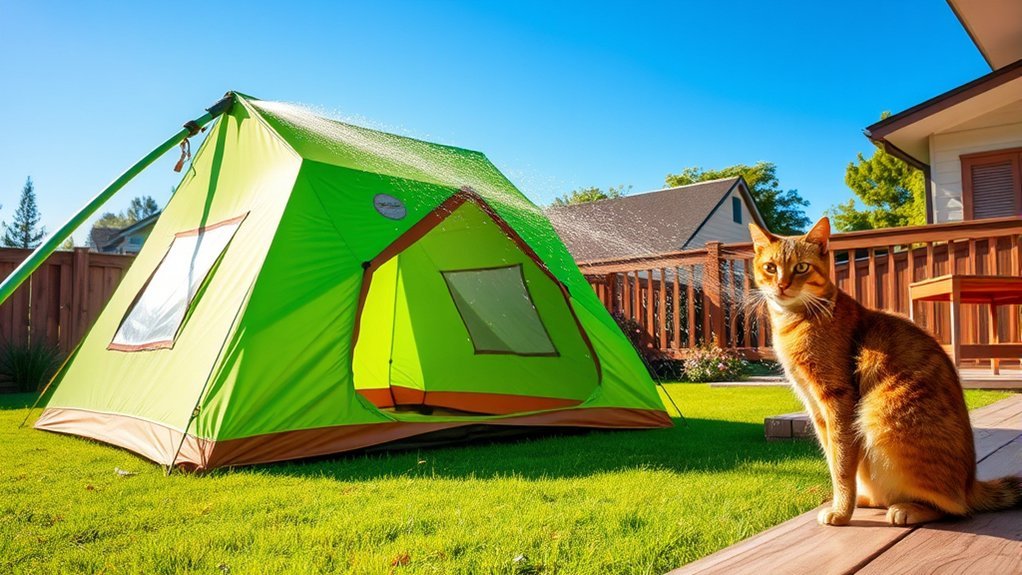
Setting up your tent in a well-ventilated area, preferably outdoors or in a spacious garage, is vital for an effective waterproofing test. To guarantee accurate results, follow these tent setup tips: fully assemble your tent, including the rainfly and guylines, to mimic real camping conditions. A flat, dry surface is essential—this prevents any external water pooling that could skew your test results.
Simulating Rain With a Garden Hose
While it may seem straightforward, simulating rain with a garden hose requires attention to detail to effectively test your tent’s waterproofing. Set up your tent in a well-drained area, making sure it’s completely dry. Use the garden hose to create a rain simulation, spraying water evenly from the top downwards for proper water distribution. Focus on critical areas like the rainfly and seams, as these spots are more susceptible to leaks.
| Area Tested | Expected Outcome | Action if Failure |
|---|---|---|
| Rainfly | Water beads and rolls | Reapply waterproofing |
| Tent Floor | No pooling or soaking | Check floor material |
| Seams | No leakage | Reseal seams |
| Attachment Points | Dry to the touch | Reinforce attachment |
| Overall Tent | No signs of seepage | Consider replacement |
After testing, inspect closely for any signs of weakness. This process guarantees your adventures remain dry and liberating!
Inspecting Seams and Vulnerable Areas
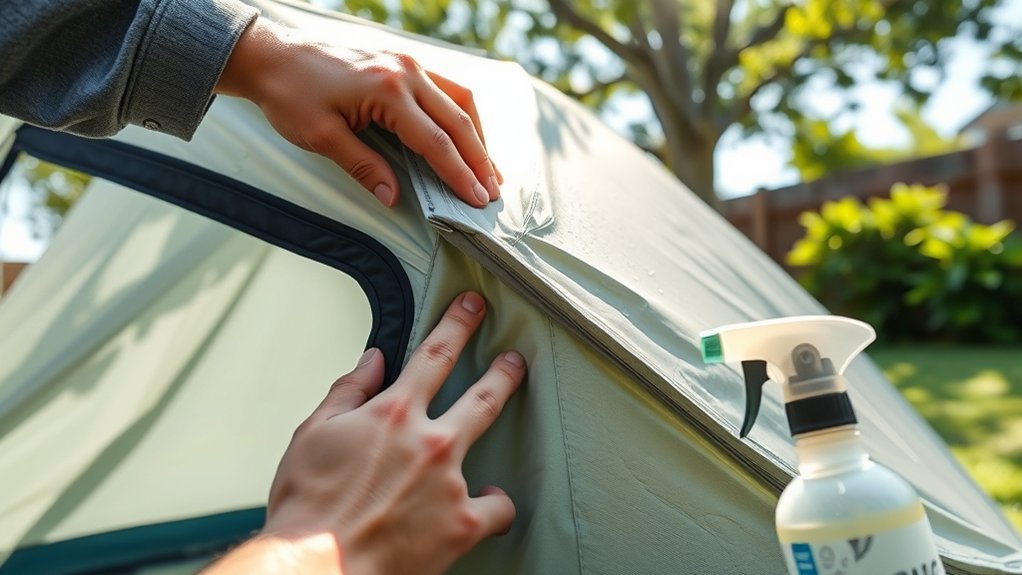
Although you might focus primarily on the tent’s overall structure, inspecting seams and vulnerable areas is essential for guaranteeing effective waterproofing. Start by closely examining the seams for any signs of wear, like flaky seam tape or sealant, as these are common spots where water can sneak in. Conduct a water test by pouring water over these seams and other vulnerable areas to check for leaks. Ascertain that seam sealer is evenly applied over stitching to maintain seam integrity and prevent water from entering through needle holes. Don’t overlook toggles, guy out points, and attachment areas, which can also be potential entry points for water. Regularly check the rainfly and tent floor for any thinning material or damage that could compromise waterproof materials. By diligently inspecting these critical areas, you’ll enhance your tent’s waterproofing and enjoy your outdoor adventures worry-free.
Checking for Water Leakage Inside the Tent
To check for water leakage inside your tent, start with a visual inspection of the fabric and seams for any signs of wear or damage. Then, perform a water bead test by pouring water over the rainfly; if it beads up, the tent’s still effective, but if it soaks in, you might have a problem. Afterward, look inside for any damp spots or pooling, which could indicate a leak that needs fixing.
Visual Inspection Method
A thorough visual inspection is essential for ensuring your tent remains waterproof and ready for your next adventure. Begin by setting up your tent in a dry area, fully erected with all seams sealed. Use a hose or watering can to simulate rainfall, spraying water evenly over the tent, focusing on seams, the rainfly, and other vulnerable areas. During this process, keep an eye on the tent’s interior for any signs of water leakage, like damp spots or drips, particularly around seams and corners. Check if water beads up and rolls off the fabric; if it soaks in, the waterproof coating might need re-treatment. Always conduct this test after cleaning and re-waterproofing for accurate results on its effectiveness.
Water Bead Test
The water bead test is a straightforward yet effective way to check your tent’s waterproofing capabilities. Set up your tent in a dry area and pour water over the fabric. If the water beads up, your waterproofing materials are still doing their job. If it seeps through, it’s time to re-waterproof. Pay close attention to seams and worn areas, as these spots are most vulnerable to leaks. Aim to conduct this test every 12-24 months to keep your tent ready for wet conditions.
| Test Result | Action Required | Next Testing Frequency |
|---|---|---|
| Water beads up | No action needed | 12-24 months |
| Water seeps through | Re-waterproof tent | Immediately |
| Wet spots found | Inspect seams, re-waterproof | 12 months |
Evaluating the Effectiveness of Waterproofing
How can you be certain your tent’s waterproofing is still effective? Start by conducting a simple water test. Pour water over the tent fabric and watch for it to bead up and roll off. If it seeps through or absorbs moisture, your waterproofing materials may be failing, signaling a need for reapplication. Pay special attention to seams and areas where the fabric meets, as those are common leak points. Regularly testing your tent’s waterproofing every 12-24 months is crucial for effective tent maintenance; this helps catch issues early, preventing significant leaks during your adventures. After re-waterproofing, simulate rainfall by spraying the tent at a 45-degree angle with a hose. This controlled test will help you assess how well your tent performs against the elements. By staying proactive, you guarantee your camping experience remains liberating and dry.
What to Do if Your Tent Leaks
When you discover that your tent leaks during a water test, it’s critical to act quickly to prevent further damage. Start by inspecting the tent for issues like thinning materials, tears, or flaking coatings. Pay special attention to vulnerable areas such as the rainfly, floor, and seams, which are common points for water penetration.
Clean these affected areas with mild soap and water, then let them dry completely. Once dry, you can tackle the leak repair. Use a high-quality waterproofing product specifically designed for tent fabrics. Apply it evenly and thoroughly for maximum effectiveness. If you find seams that need extra protection, consider using a seam sealer to guarantee they’re properly sealed.
After treating the leaks, conduct another water test to confirm that your efforts have paid off and that your tent is now adequately waterproof.
Tips for Maintaining Tent Waterproofing
To keep your tent in top shape and guarantee it remains waterproof, regular maintenance is essential. Start by inspecting your tent every 12-24 months for signs of wear, like thinning material or flaking coatings. If you spot any issues, re-waterproofing might be necessary. Clean your tent with mild, non-detergent soap, and make sure it’s completely dry before applying any waterproofing treatments. This step guarantees proper adhesion.
When you’re ready to waterproof, use a quality spray, such as Scotchgard Heavy Duty Outdoor Water Shield, and apply it evenly to the tent fly and seams, following the manufacturer’s instructions. Don’t forget to seal the seams with an appropriate seam sealer like Gear Aid’s Seam Grip WP to prevent leaks. Finally, conduct a water test after re-waterproofing by pouring water over the surface to check for water beading or seepage, guaranteeing your tent’s ready for your next adventure.
Preparing for Your Next Camping Adventure
As you gear up for your next camping adventure, making sure your tent is in prime condition is essential for a worry-free experience. Start by inspecting your tent for wear, checking for thinning material or tears. Then, perform a water test to see if water beads up or seeps through the fabric. Clean your tent with mild soap before applying waterproof treatments, as a clean surface enhances effectiveness.
Here’s a checklist to help you prepare:
| Task | Purpose | Frequency |
|---|---|---|
| Inspect tent | Identify wear | Before each trip |
| Water test | Check waterproofing | Before each trip |
| Clean tent | Prepare for treatment | As needed |
| Apply waterproof spray | Enhance rain protection | As needed |
| Schedule maintenance | Make certain longevity | Annually |
Taking these steps will help you enjoy your outdoor essentials, knowing your camping gear is ready for whatever nature throws your way.
Frequently Asked Questions
Can I Test My Tent’s Waterproofing Indoors?
Yes, you can test your tent’s waterproofing indoors. Set up the tent in a controlled space, simulate rain with a hose, and observe for leaks under these indoor conditions. This method guarantees thorough testing without outdoor elements.
How Often Should I Test My Tent for Leaks?
You should test your tent for leaks annually, especially after extended storage or heavy use. Regular tent maintenance and effective waterproofing techniques guarantee your gear stays reliable, allowing you to embrace the freedom of outdoor adventures.
What Materials Can Improve My Tent’s Waterproofing?
Imagine your tent as a fortress against the storm. You can enhance its defenses with waterproofing sprays and seam sealants. These materials create a barrier, ensuring you stay dry and liberated during your adventures.
Is There a Specific Temperature for Testing Waterproofing?
There’s no specific temperature for testing waterproofing, but extreme weather conditions can affect results. Ideally, try testing in moderate temperatures, as temperature effects can influence how materials respond to moisture and overall durability.
Can I Use a Spray Bottle Instead of a Garden Hose?
Sure, you can use a spray bottle instead of a garden hose! While it’s less effective for thorough testing, it’s a practical alternative. Just make certain you evenly distribute water to evaluate the tent’s waterproofing properly.
Conclusion
In the world of camping, “an ounce of prevention is worth a pound of cure.” By testing your tent’s waterproofing at home, you can guarantee a dry and comfortable adventure ahead. Regular maintenance and prompt repairs can save you from unexpected downpours during your trip. So, take the time to inspect and prepare your tent, and you’ll be ready to embrace nature with confidence, knowing you’ve done your part to stay dry and safe. Happy camping!