



To tension guylines properly, position pegs at least 1.5 to 2 feet away from the tent and insert them at a 45° angle toward the tent. Make sure guy lines are snug but not overtightened to prevent fabric damage. Use adjustable tensioners for easy modifications and regularly check tension for changes in weather. Following these steps keeps your tent secure and stable. Discover the techniques for effective setup and maintenance to guarantee a hassle-free camping experience.
Understanding the Importance of Guy Lines

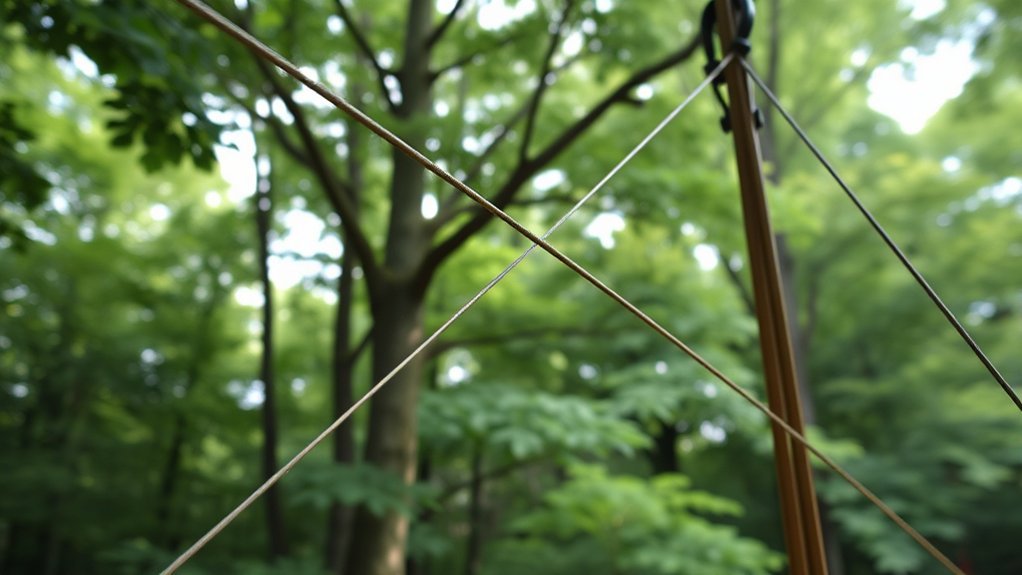
Guy lines are a fundamental component of tent setup, ensuring stability and safety in various weather conditions. When you neglect to set them up upon arrival, you risk facing difficulties during nighttime adjustments, particularly in adverse weather. Properly tensioned guy lines greatly enhance your tent’s stability, preventing potential collapse or displacement during storms.
The correct angle and placement of these lines improve your tent’s performance, making it more resistant to wind and rain. By securing your shelter effectively, you reduce the risk of accidents and create a safer environment for yourself and your companions.
Regular maintenance and proper storage of guy lines prevent tangling, ensuring they’re ready for your next adventure. This preparation promotes efficient setup, allowing you to focus on enjoying the great outdoors rather than wrestling with your tent. Ultimately, mastering guy line usage liberates you to embrace nature with confidence.
Identifying the Correct Direction for Guy Lines
Understanding how to properly tension your guy lines starts with identifying the correct direction for them. Begin by examining the attachment points on your tent; these indicate the ideal alignment for stability. Typically, side guy lines extend straight out in line with the vertical poles, while front guy lines may angle forward or slightly to the side, depending on your tent design. Each guy line type should follow a natural line that maximizes tension and stability without stressing the tent fabric. When you align your guy lines accurately, you enhance the overall security of your tent, especially in windy or adverse weather conditions. This precise positioning helps prevent issues like sagging or slipping, ensuring a more enjoyable camping experience. Pay attention to these details, and you’ll set up your tent for enduring performance in various environments.
Determining the Proper Angle for Guy Lines

How do you guarantee your guy lines are positioned for maximum stability? Start by aiming for an angle measurement of approximately 45°. This angle minimizes sagging while maximizing tension, ensuring your tent remains stable. Position your guy lines to extend straight out from the attachment points; this alignment helps maintain tension and reduces stress on the tent poles.
When adjusting the angle, make sure your guy lines are set far enough from the tent to enhance stability without creating trip hazards. Regular angle adjustment and checking after setup are essential, especially in adverse weather. Maintaining that 45° angle prevents excessive movement, keeping your shelter secure. Regular re-tensioning at this angle throughout your camping experience can greatly improve your setup’s resilience against the elements. By focusing on these angle measurements, you create a solid foundation for a worry-free adventure.
Choosing the Right Placement for Stability
To guarantee your tent remains stable, position the guy line pegs at least two feet away from the tent. This distance not only enhances stability but also helps you avoid trip hazards. Aim for a 45° angle when extending each guy line for maximum support and ideal tension.
Optimal Peg Positioning
When setting up your tent, positioning the pegs correctly is essential for ensuring stability in varying weather conditions. Place your pegs 3 to 5 feet from the tent, which helps prevent tipping during strong winds. Drive the pegs into the ground at a 45° angle towards the tent to securely anchor the guy lines and minimize slippage. For side guy lines, align pegs straight out from the pole attachment points, while front guy lines should angle slightly forward for ideal tension. Use durable, weather-resistant peg types suited for specific ground conditions, as unstable ground can jeopardize your setup. Regularly check and adjust peg positions after setup to maintain consistent tension and prevent sagging over time.
Angle for Maximum Stability
Proper peg positioning sets the foundation for tent stability, but the angle of your guy lines plays a key role in maintaining that stability. For ideal performance, position your guy lines at a 45° angle from the tent. This angle guarantees effective tension distribution, reducing the risk of sagging.
| Guy Line Position | Angle (Degrees) | Purpose |
|---|---|---|
| Side Guy Lines | 45 | Align with pole for support |
| Front Guy Lines | 30-45 | Align with tension direction |
| Back Guy Lines | 45 | Stabilize against wind forces |
| Adjusted Tension | Variable | Prevents damage and instability |
Regularly check your guy line materials for wear and adjust tension as needed to maintain your tent’s integrity.
Avoiding Trip Hazards
Choosing the right placement for your guy lines is essential for maximizing stability and preventing trip hazards. Position your guy line pegs at an ideal distance from the tent, ensuring they’re not too close to walkways or high-traffic areas. Aim for a 45° angle when securing the lines; this not only enhances tension but also reduces the risk of tripping over slack lines. Regularly check your guy lines to prevent sagging, which can create unexpected trip hazards, especially in low-light conditions. To improve guy line visibility, consider using reflective materials or brightly colored pegs. These measures enhance trip hazard prevention, making your camping experience safer and more enjoyable, especially during nighttime activities.
Securing Guy Lines With the Right Peg Technique
To secure guy lines effectively, insert pegs at a 45° angle toward the tent for ideal stability. Use tension management adjusters to fine-tune the lines during setup, allowing for necessary adjustments as conditions change. Start by loosely positioning the guidelines, enabling flexibility before final tightening to guarantee your tent remains secure without risking damage.
Peg Angle Importance
When securing guy lines, the angle at which you insert pegs plays a crucial role in guaranteeing your tent’s stability. By positioning your pegs at a 45° angle directed towards the tent, you maximize stability factors and keep the guy lines taut. Confirm the pegs are far enough from the tent to maintain adequate tension without creating trip hazards. While you’ll want to start with the guy lines loosely set, this allows for easy adjustments during the initial setup. Remember, avoid overtightening pegs, as this can damage the tent fabric or lead to instability in windy conditions. Proper peg orientation is essential for maintaining a stable and secure shelter, enabling you to enjoy the freedom of the outdoors.
Tension Management Adjusters
Proper tension management is essential for securing guy lines effectively. Utilizing tension management adjusters allows you to easily regulate the tension, ensuring lines remain taut without sagging. When you’re securing guy lines with pegs, insert them at a 45° angle directed towards the tent for ideal stability. Start by loosely setting the guy lines during the initial setup, enabling adjustments for better tension management once the tent is fully pitched. Remember to tighten the guy lines evenly; this prevents one side from becoming overtightened, which could damage the tent structure. Regularly check and adjust the tension, especially after inclement weather, to maintain tent security and performance throughout your camping trip. Embrace these adjuster benefits for a liberated camping experience.
Initial Setup Technique
Securing guy lines effectively begins with the right peg technique, as it greatly influences the stability of your tent. Start by inserting pegs at a 45° angle toward the tent, maximizing tension and stability. During the initial setup, loosely secure the guy lines; this allows for necessary adjustments once your tent is pitched. Position pegs at a safe distance from the tent to maintain stability while minimizing trip hazards. Use adjusters on the guy lines to manage tension, ensuring they’re snug but not overtightened to prevent damage. After securing all lines, check for sagging or slipping and make guy line adjustments as needed. Following these initial setup tips will enhance your tent’s performance and reliability.
Adjusting Tension for Optimal Performance
Adjusting the tension of your guy lines is crucial for maximizing your tent’s stability and performance. To achieve ideal tension techniques, aim for a 45° angle from the tent to provide maximum stability and minimize sagging. Start by loosely setting the guy lines during your initial setup. Once the tent is fully pitched, use tension adjusters to fine-tune the tightness. Remember, the lines should be snug but not overly tight, as this could damage the fabric or poles.
Regularly check the tension, especially in adverse weather, since wind and rain can cause the lines to loosen. For securing pegs, insert them at a 45° angle directed toward the tent. This enhances resistance against lateral forces and prevents slipping. Follow these adjustment tips, and you’ll guarantee your tent stands firm and reliable, empowering you to enjoy the great outdoors without worries.
Avoiding Common Mistakes in Guy Line Setup

When setting up guy lines, it’s vital to avoid common mistakes that can compromise your tent’s stability. Make certain your lines are anchored at the correct angle and that pegs are positioned at a safe distance from the tent to prevent hazards. Additionally, don’t overtighten the lines, as this can lead to sagging and structural issues.
Incorrect Angle Placement
While proper angle placement is essential for effective guy line setup, many campers overlook this fundamental aspect, leading to instability. Incorrect tension and misaligned guy line angles can compromise your tent’s integrity. To avoid these mistakes, follow these guidelines:
- Set guy lines at a 45° angle from the tent for ideal tension.
- Confirm side guys extend straight out from the pole attachment points.
- Avoid placing pegs too close to the tent to prevent collapse under wind pressure.
- Regularly check and adjust tension to account for changing ground conditions.
Insufficient Peg Distance
Placing pegs too close to your tent can critically undermine its stability. To guarantee ideal tension and minimize sagging, position your pegs at least 1.5 to 2 feet away from the tent. This distance allows your guy lines to form a 45° angle, which is essential for effective tensioning. If pegs are too close, your guy lines won’t provide adequate support, especially during windy or rainy conditions, greatly increasing the risk of tent collapse. Always check your peg placement during setup, as improper spacing leads to frequent adjustments, detracting from your camping experience. By maintaining proper peg distance, you enhance tent stability and create a more enjoyable, worry-free environment in the great outdoors.
Overly Tight Guidelines
If you overlook the tension in your guy lines, you risk damaging your tent’s fabric and structure. Overly tight guidelines create fabric strain that can lead to serious issues. To avoid this, follow these steps:
- Start with a loose setup, allowing flexibility.
- Gradually increase tension, checking for signs of strain.
- Guarantee the fabric remains taut yet free of excessive pulling.
- Regularly inspect for wear or fraying to prevent degradation.
Striking a balance between tension and flexibility is vital. Aim for a setup that prevents sagging but doesn’t compromise the tent’s integrity. Remember, a well-tensioned tent enhances stability and durability, providing you the freedom to enjoy your outdoor experience without worry.
Maintenance Tips for Guy Lines and Equipment
To guarantee your guylines perform reliably on your camping trips, regular maintenance is essential. Start by inspecting your guy lines for signs of wear or fraying; this assures they remain strong and dependable. Clean them thoroughly and store them in a dry place to prevent mildew, which will prolong their lifespan. Implement effective storage solutions by using a dedicated pouch to prevent tangling and simplify your setup next time. Additionally, consider applying a light coating of silicone or waterproofing spray to enhance moisture resistance. Don’t neglect to check your pegs and adjusters, replacing any damaged pieces immediately to maintain the integrity and effectiveness of your guy line setup. By prioritizing guy line maintenance, you’ll enhance your outdoor experience, assuring your shelter remains stable and secure throughout your adventures.
Streamlining Your Setup Process
After ensuring your guy lines are well-maintained, streamlining your setup process becomes essential for an efficient camping experience. A well-organized approach not only saves time but also enhances your outdoor freedom. Follow these steps for a smooth tent setup:
- Loosely set guy lines during the initial setup, allowing for adjustments as you pitch the tent.
- Position pegs at a 45° angle towards the tent to enhance stability and prevent sagging.
- Utilize adjusters on guy lines to manage tension effectively, keeping them taut but not overtightened.
- Consistently place guy lines, attaching side guys straight out in line with the pole to maintain organization.
Finally, take a moment to neatly tie up guy lines when packing away. This simple gear organization prevents tangling and expedites future setups, empowering you to focus on enjoying the great outdoors.
Preparing for Different Weather Conditions
When preparing for different weather conditions, it’s essential to adjust your guylines accordingly to guarantee your tent remains stable and secure. For windy conditions, tighten your guylines more securely to prevent shifting or collapsing. In rainy weather, keep them slightly slack to allow for water runoff and minimize sagging from accumulation. Aim for a 45° angle on your guylines to maximize stability against strong gusts, especially during storms.
To enhance your weather preparedness, consider using adjustable tensioners, which allow for quick modifications as conditions change. Regularly check and retighten your guylines during prolonged adverse weather to maintain tent integrity. This vigilance prevents damage from excessive tension or sagging. By making these seasonal adjustments, you’ll ensure a reliable setup that withstands the elements, allowing you to focus on enjoying your outdoor experience without worry.
Frequently Asked Questions
What Materials Are Best for Guy Lines?
For guy lines, choose nylon due to its strength and durability. Incorporating reflective materials enhances visibility at night, ensuring safety. These elements create a reliable setup that empowers your outdoor experience without worries about equipment failure.
How Can I Tell if My Guylines Are Too Tight?
You can tell if your guylines are too tight by using tension indicators and performing a slack assessment. If the lines feel overly rigid or don’t allow slight movement, they’re likely too tight. Adjust accordingly.
Can I Use Knots Instead of Tensioners?
Yes, you can use knots instead of tensioners. Certain knot types, like the bowline or taut-line hitch, offer tension benefits, allowing for adjustable support. However, they may not provide the same ease as dedicated tensioners.
What Should I Do if My Tent Is Still Sagging?
If your tent’s sagging, try adjusting the guylines for more tension. Check for uneven ground or loose stakes, and consider using additional sagging solutions like tensioners. These adjustments help maintain a taut, secure shelter.
How Often Should I Check My Guylines During Use?
You should check your guylines every couple of hours, especially during changing weather conditions. Statistics show that 70% of tent failures occur due to poor maintenance. Consistent adjustments guarantee stability and shelter integrity throughout your adventure.
Conclusion
By mastering the art of tensioning guylines, you’ll guarantee your shelter stands firm against even the wildest storms, making it as stable as a fortress. Remember to check the angle, direction, and placement for ideal support. With the right techniques and maintenance, you’ll avoid common pitfalls and streamline your setup process. So, gear up and secure those guylines properly—you’re not just setting up a tent; you’re creating a reliable refuge in the great outdoors.