


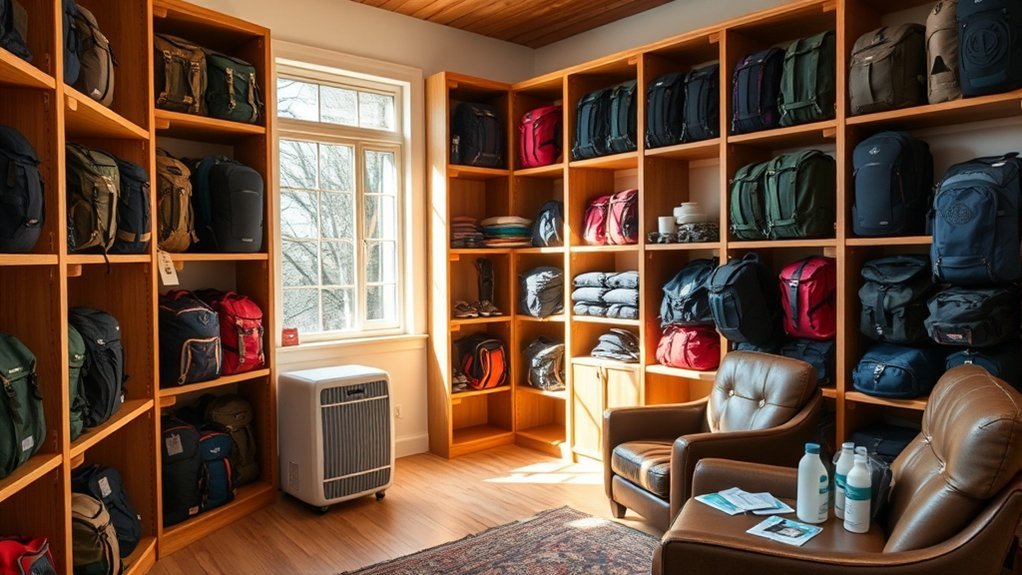
To store your backpack long-term, start by cleaning it thoroughly to remove any debris or odors. Lightly stuff it with clean materials to maintain its shape and store it in a cool, dry place, away from sunlight. Hang it or place it on sturdy shelves to prevent squishing. Regularly inspect for mold, wear, and dust, cleaning it every three months. These steps will help preserve your backpack, and there’s more to discover for ideal storage solutions.
The Importance of Cleaning Before Storage


Before you store your backpack, it’s crucial to clean it properly to prevent any leftover materials from damaging the fabric. Start by giving your bag a thorough shake-out to remove loose items and dirt. This quick action helps eliminate debris that could lead to mold or mildew if left unattended. For stubborn stains, perform a light wash to maintain the backpack’s appearance and functionality. Keeping your backpack clean contributes considerably to its longevity; clean bags are less likely to suffer from deterioration over time. Additionally, a properly cleaned backpack minimizes the risk of unpleasant odors, ensuring it’s ready for immediate use when needed. By taking these simple steps, you not only protect your investment but also enhance your freedom to explore without worry, knowing your gear is in excellent condition. Remember, a clean backpack is a happy backpack!
Techniques for Maintaining Backpack Shape

To maintain your backpack’s shape during long-term storage, it’s essential to use effective techniques that prevent deformation. Start by lightly stuffing your backpack with clean, dry materials like towels or bubble wrap. This keeps the backpack’s structure intact and prevents collapse. For small and mini backpacks, provide additional support to guarantee they retain their form.
Avoid placing any heavy items inside; this can lead to deformation and damage over time. It’s also critical to store your backpack in a cool, dry place, away from direct sunlight. Excessive heat and UV rays can degrade materials and alter its shape.
Regularly check on your stored backpack. Adjust the stuffing as needed to maintain its original form and make sure it remains in good condition. Implementing these techniques will help you preserve your backpack’s shape, ready for use whenever you need it again.
Choosing the Right Storage Environment

To protect your backpack, store it in a cool, dry environment with a temperature range between 60-75°F. Avoid places with high humidity and direct sunlight, as both can cause moisture damage and fade the fabric. Ensuring proper ventilation will help maintain freshness and prevent musty odors.
Ideal Temperature Range
When considering long-term storage for your backpack, maintaining an ideal temperature range is essential to prevent material degradation. Aim for a storage environment between 60°F to 70°F (15°C to 21°C). Temperatures exceeding 80°F (27°C) can weaken your backpack’s fabric and straps, while those below 32°F (0°C) can make materials brittle.
| Temperature Range | Effect on Backpack | Recommended Action |
|---|---|---|
| 60°F – 70°F | Best | Store in this range |
| Above 80°F | Weakening | Avoid excessive heat |
| Below 32°F | Brittle materials | Protect from extreme cold |
| Fluctuating temps | Condensation risk | Maintain stable conditions |
Storing it in a cool, dry place away from direct sunlight preserves its color and integrity.
Preventing Moisture Damage
Moisture damage can severely compromise your backpack’s integrity, so it’s vital to choose the right storage environment. Store your backpack in a cool, dry location to prevent moisture buildup that can lead to mold and mildew growth. Avoid areas with high humidity, like basements or near water sources, to minimize this risk. Make sure the storage area is well-ventilated; stagnant air can trap moisture and deteriorate fabrics. While it’s important to keep your backpack away from direct sunlight to avoid fading and degradation, you can also enhance moisture control by placing silica gel packs inside. These packs absorb excess moisture, guaranteeing the interior stays dry and protected for long-term storage.
Sunlight Exposure Risks
While you might be tempted to store your backpack in a sunny spot, doing so can lead to significant damage over time. Direct sunlight can fade colors and degrade materials, shortening its lifespan. UV rays weaken fabric fibers, making them more susceptible to tears and wear. To prevent heat damage that can warp your backpack’s structure, opt for a cool, dry storage environment. Excessive moisture combined with sunlight can create a breeding ground for mold and mildew, which can cause permanent damage. Instead, choose a shaded or enclosed area, like a closet or under your bed, to protect your backpack from harmful UV exposure. This simple choice will help maintain its appearance and functionality for years to come.
Utilizing Silica Gel for Moisture Control
To prevent mold growth and maintain freshness inside your backpack during long-term storage, consider using silica gel packets. These packets effectively absorb excess moisture, reducing humidity and protecting your backpack’s fabric. Remember to replace them periodically to guarantee ideal moisture control.
Preventing Mold Growth
When storing your backpack long-term, utilizing silica gel packets is essential for preventing mold growth. These packets effectively absorb moisture, keeping your backpack dry and inhibiting mold and mildew formation. Place several packets inside your backpack to considerably reduce humidity levels. Aim for “indicating” silica gel packets that change color when saturated, signaling when to replace them. It’s also wise to change these packets every few months for ideal moisture control. Combine silica gel use with proper storage conditions, like placing your backpack in a cool, dry area away from direct sunlight.
| Silica Gel Packet Type | Purpose |
|---|---|
| Indicating | Changes color when saturated |
| Regular | Absorbs moisture |
| Rechargeable | Can be dried and reused |
| Disposable | Single-use for convenience |
Maintaining Freshness Inside
Maintaining freshness inside your backpack is essential for preventing unpleasant odors and preserving the integrity of your gear. One effective method is using silica gel packets, which absorb moisture and help keep the interior dry. Place a few packets inside your backpack to prevent mold and mildew from developing during long-term storage. Remember to replace or recharge these packets regularly, as they can become saturated and lose effectiveness over time. Silica gel is non-toxic and safe, making it an ideal solution for moisture control without harmful chemicals. For best results, store your backpack in a cool, dry place, enhancing silica gel’s ability to maintain freshness and ensuring your gear remains in excellent condition.
Creative Storage Solutions for Small Spaces
Finding creative storage solutions for small spaces can greatly enhance your organization, especially when it comes to backpacks. Consider these practical ideas to maximize your area:
- Peg board: Hang backpacks securely while minimizing wall damage and adding hooks or shelves as needed.
- Over-the-door backpack hanger: A two-tier design saves floor space and accommodates multiple items.
- Repurposed lockers: Use closed spaces for backpacks and belongings, keeping areas tidy without wall damage.
- Command hooks: Install on closet doors for a quick, non-damaging way to hang backpacks, supporting up to 15 lbs.
- Small cubbies: Create organized storage that fosters independence, especially for children, by making their items easily accessible.
Implementing these strategies can liberate your space and keep your backpacks organized, making it easier to find what you need when you need it.
Regular Maintenance Checks
To assure your backpack remains in peak condition, it’s important to conduct regular maintenance checks. This guarantees longevity and functionality. Focus on inspecting for wear and tear, especially frayed straps and zippers. Clean your backpack periodically to prevent dirt buildup and fabric degradation. Check all compartments for leftover items or debris, which can lead to odors or damage.
Here’s a simple checklist for your maintenance routine:
| Task | Frequency | Notes |
|---|---|---|
| Inspect for wear | Every 3 months | Look for frayed straps, zippers |
| Clean the exterior | Every 3 months | Use mild soap and water |
| Clear compartments | Every 3 months | Remove debris and leftover items |
| Check seams and stitching | Every 3 months | Repair any loose threads |
| Store properly | After each use | Keep in a cool, dry place |
Tips for Long-Term Preservation
After completing regular maintenance checks, focus on long-term preservation techniques to guarantee your backpack stays in peak condition. Here are some essential tips to take into account:
To ensure your backpack remains in top shape, prioritize long-term preservation after routine maintenance checks.
- Clean your backpack thoroughly to eliminate debris and odors before storing.
- Lightly stuff it with clean, dry materials like towels or bubble wrap to maintain its shape.
- Store it in a cool, dry location, away from direct sunlight to prevent fabric degradation.
- Hang your backpack by its top handle or place it on sturdy shelving to avoid squishing.
- Regularly check on your stored backpack for any signs of mold or odors.
Best Practices for Packing
Packing your backpack efficiently is essential for maximizing comfort and stability on your adventures. Start by organizing your gear into designated zones, placing heavier items close to your spine to improve balance. Use compression sacks to save space and prevent shifting, helping maintain organization and reducing fatigue during hikes.
Sort your gear into modular packing kits, like a Sleep System or Cooking Kit, for easy access without unpacking everything. Make the most of external pockets for quick-access essentials such as rain jackets and snacks, while keeping less frequently used items in the main compartment to optimize weight distribution.
Regularly review your packing strategy, adapting it based on your experiences. This continual refinement will enhance your efficiency and comfort on future outings. Prioritize a streamlined, organized approach, and you’ll enjoy a liberating adventure, free from the burdens of poor packing.
How to Protect From Sunlight and Dust
Once you’ve efficiently packed your backpack, protecting it from sunlight and dust becomes essential for maintaining its longevity. To guarantee your backpack remains in top condition, follow these guidelines:
- Store your backpack in a cool, dry place to prevent damage from sunlight.
- Cover it with a breathable fabric or dust cover to allow airflow and prevent moisture buildup.
- Avoid direct sunlight exposure, as UV rays can weaken fabric and compromise structural integrity.
- Utilize storage bins or containers that block light, especially if they’re transparent.
- Regularly inspect your backpack for dust or damage, cleaning gently as needed.
Frequently Asked Questions
Can I Store My Backpack in a Garage or Attic?
You can store your backpack in a garage or attic, but make certain it’s dry and protected from extreme temperatures. Moisture and heat can damage the materials, leading to mold or deterioration over time.
How Often Should I Use Silica Gel Packets?
You should replace silica gel packets every few months, especially if they become saturated. Regularly check their effectiveness to guarantee proper moisture absorption, keeping your backpack dry and in peak condition for your next adventure.
Is It Necessary to Empty All Compartments?
Yes, you should empty all compartments. Leaving items inside can cause damage, mold, or odors over time. An empty backpack guarantees it stays in excellent condition, ready for your next adventure without any hidden surprises.
What if My Backpack Has a Strong Odor?
If your backpack smells like a gym sock’s evil twin, don’t panic! Clean it with a mix of mild soap and water, then air dry it. Freshness will return, and liberation from odor awaits you!
Can I Use Vacuum-Sealed Bags for Storage?
Yes, you can use vacuum-sealed bags for storage. They compress your backpack, saving space and protecting it from moisture and dust. Just make sure your backpack is clean and dry before sealing it to prevent odors.
Conclusion
Storing your backpack long term doesn’t have to be an intimidating task. By following these steps, you can keep it in top shape, just like a well-preserved book on a shelf. Remember to clean it, choose the right environment, and utilize moisture control methods. Regular maintenance checks guarantee your backpack stays ready for your next adventure. With these tips, you’ll protect your gear from sunlight and dust, making sure it lasts for years to come.