


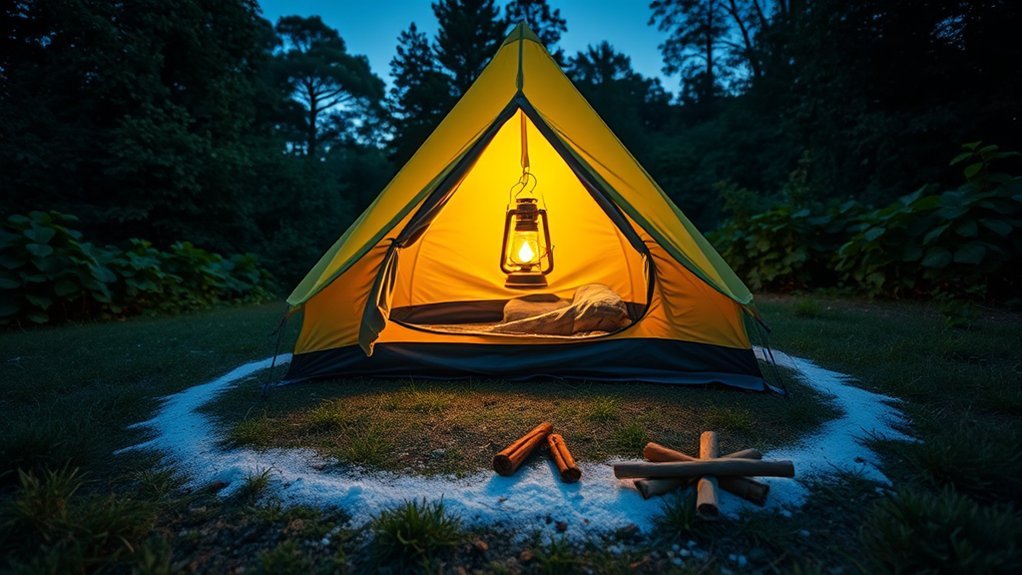
To stop ants from getting inside your tent, start by choosing a campsite away from ant trails and nests. Keep your food sealed in airtight containers and store it away from sleeping areas. Maintain cleanliness by cleaning up crumbs and spills quickly. Use natural barriers like salt or diatomaceous earth around the tent’s base. By implementing these tactics, you can enjoy a more peaceful camping experience. Discover more tips for effective ant management and coexistence with these fascinating creatures.
Understand Ant Behavior

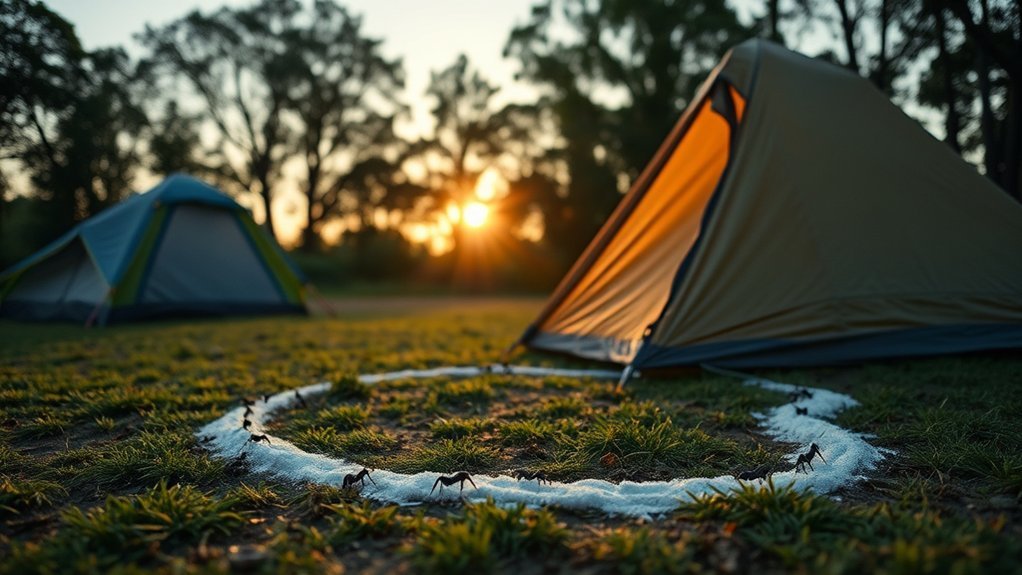
To effectively prevent ants from invading your tent, it’s essential to understand their behavior. Ants thrive in colonies, often numbering in the thousands or millions, and they’re constantly on the lookout for food and water. Their communication relies heavily on pheromones, which they use to create scent trails that lead fellow ants to food sources. If you leave food unsecured or waste around your campsite, you’re likely to attract them.
Pay attention to their foraging patterns—many species are drawn to sugary or protein-rich substances. Additionally, moist conditions from overwatered plants or damp organic matter can entice ants, making your campsite a prime target. By recognizing these behaviors, you can better manage your food storage and minimize attractants, effectively keeping ants at bay while you enjoy your outdoor adventure.
Choose the Right Campsite
Choosing the right campsite can greatly reduce your chances of encountering ants. Begin your campsite selection by staying at least 200 feet away from known ant trails or nests. Open areas with good airflow are ideal, as they minimize the attraction of ants and other insects. Avoid camping near standing water, which invites a variety of pests, including ants.
If possible, opt for higher elevation locations where ant populations tend to be lower, further enhancing your ant avoidance strategy. Before setting up your tent, assess the environment for any signs of ant activity—look for trails or nests to guarantee you’re not setting up in an infested area. By taking these practical steps in your campsite selection, you can create a more enjoyable and pest-free camping experience. With a bit of foresight, you’ll be able to focus on the adventure rather than battling unwanted visitors.
Secure Food Storage
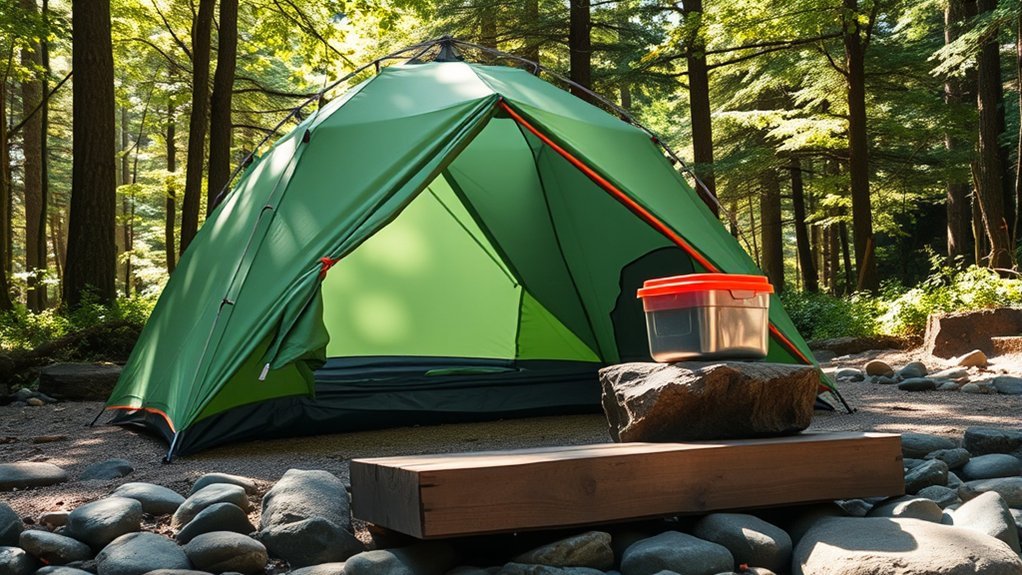
After selecting a suitable campsite, securing your food storage is essential to keep ants at bay. Use high-quality food container types like plastic bins or glass jars with airtight sealing to prevent odors that attract pests. Designate a specific area for food storage, keeping it separate from your sleeping quarters to minimize the risk of ant invasions. Avoid eating or drinking inside the tent; even tiny crumbs can lure ants. Always clean up spills immediately and wash cooking utensils promptly to eliminate food sources. When disposing of trash, seal it in bags and use designated receptacles; open waste is an open invitation for ants. By taking these simple steps, you can enjoy your outdoor adventure without the nuisance of ants invading your space. Secure food storage isn’t just practical; it’s your first line of defense against unwelcome guests.
Cleanliness Is Key
Cleanliness is essential when camping, especially if you want to keep ants out of your tent. Maintaining campsite hygiene is vital. Start by promptly cleaning up any food spills or crumbs, as these can be an open invitation for ants. Store your food in airtight containers and keep it away from your sleeping area to minimize the risk of unwanted guests.
When it comes to trash disposal, always use sealed bags and containers. This helps prevent odors that might attract ants and other pests. Avoid eating inside your tent; even small food remnants can increase the likelihood of ant activity around your sleeping area.
Regularly check the cleanliness of your campsite, ensuring no food sources or debris are left unattended. By prioritizing cleanliness, you create an environment that’s less appealing to ants, allowing you to enjoy your camping experience without worry.
Use Natural Barriers
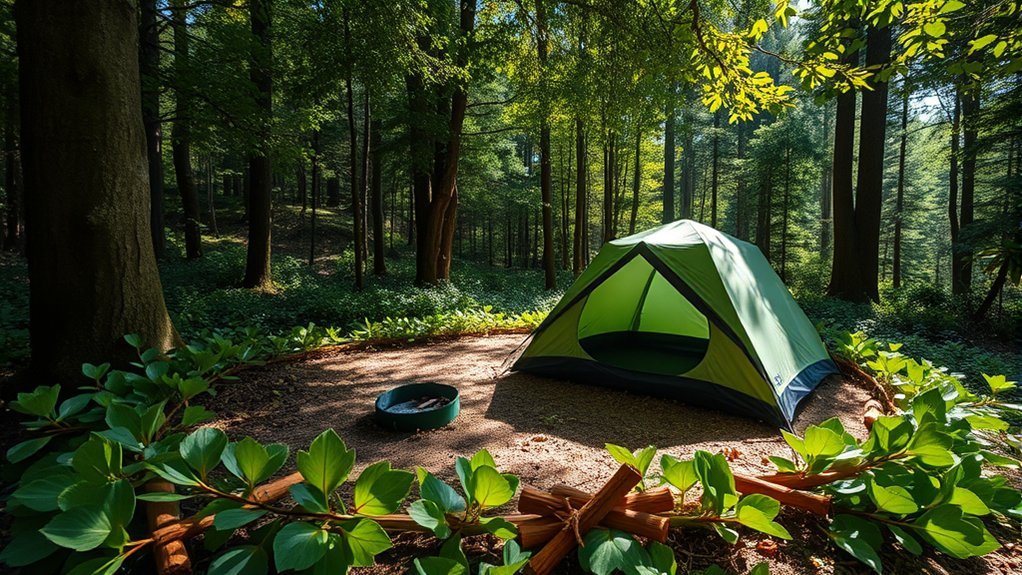
Even with a clean campsite, you might still need extra measures to keep ants at bay. One effective strategy is to create a continuous line of salt around your tent. Ants won’t cross this natural barrier, helping to keep your space secure. You can also use diatomaceous earth at the base of your tent; it damages ants’ exoskeletons, leading to dehydration and death. Additionally, consider pouring boiling water on nearby ant nests, but do this cautiously to avoid harming non-target insects.
For a more aromatic approach, place lemon juice and bay leaves around your campsite. These natural repellents are excellent at deterring ants due to their strong scents. Regularly check and replenish these barriers to maintain their effectiveness. By employing these natural solutions, you can create a protective perimeter that liberates your camping experience from pesky intruders.
Create a Bait Trail
Creating a bait trail can be an effective way to redirect ants away from your tent while still enjoying the outdoors. To set this up, mix equal parts sugar and water to create a simple bait composition. Pour the solution into a shallow container and place it at a distance from your tent. This method capitalizes on ant attraction, drawing them toward your bait instead of your camping area.
Regularly check the bait trail to verify it’s working; if the ants aren’t responding, consider moving the bait closer to their activity. Remember to clean up any excess bait after the ants have been redirected. This prevents attracting other wildlife or pests. Keep in mind that complete eradication of ants isn’t realistic, so your goal is to effectively guide them away, allowing you to enjoy your outdoor experience without unwelcome visitors.
Monitor Ant Activity
To effectively manage ant activity around your tent, regularly inspect the area for signs of trails or movement. After setting up camp, keep an eye out for any visible ant behavior, especially during your stay. Use monitoring techniques like bait stations—mix sugar and water and place them away from your tent—to assess ant presence. This allows you to observe ant activity without inviting them into your space.
Look for natural ant nests or established trails nearby; these can indicate potential encounters. Keeping a log of ant sightings will help you identify peak activity times and possible entry points. Pay attention to changes in ant behavior, such as increased activity during warmer weather or after rainfall, and adjust your strategies accordingly. By staying vigilant, you can better protect your campsite and enjoy your outdoor experience free from unwanted ant intrusions.
Employ Natural Deterrents
While you enjoy the great outdoors, employing natural deterrents can help keep ants at bay. Consider using herbal repellents and essential oils to create a more enjoyable camping experience. Below are some effective options:
| Deterrent | Method | Effectiveness |
|---|---|---|
| Salt | Create a barrier | Deters entry |
| Vinegar solution | Spray around the tent | Strong scent repels |
| Diatomaceous earth | Sprinkle around tent | Damages exoskeletons |
| Bay leaves | Place around campsite | Naturally repels |
Additionally, lemon juice can be sprayed for its citrus scent, and don’t forget about the power of bay leaves. These natural solutions can liberate your tent from unwanted guests, allowing you to fully embrace the beauty of nature without the intrusion of ants.
Set Up Protective Measures
To keep ants at bay, you’ll want to set up effective protective measures around your tent. Start by securing food storage solutions and creating barriers around the tent’s perimeter. Choosing your camping location wisely also plays a vital role in minimizing ant encounters.
Food Storage Solutions
Storing food properly is essential for preventing ants from invading your tent. Use airtight, sealed containers to keep food fresh and minimize scents that attract ants. Aim to store all food items at least 200 feet away from your tent. Designate a specific area for food preparation and eating, ideally with a portable table, to contain any food residues. After each meal, clean this area thoroughly to eliminate crumbs and spills. Avoid eating or drinking inside the tent, as odors can invite unwanted guests. Consider setting up a small, secured tent specifically for food storage, ensuring it’s well-sealed and regularly checked for ant activity. This proactive food storage approach can help you enjoy the great outdoors without unwelcome intruders.
Tent Perimeter Barriers
Setting up effective perimeter barriers around your tent can greatly reduce the chances of ants invading your space. Here are some practical options for ant prevention:
| Barrier Type | Description |
|---|---|
| Salt | Create a continuous line; ants struggle to cross it. |
| Diatomaceous Earth | Apply this powder; it damages ants’ exoskeleton on contact. |
| Water Moat | Place your tent on a kiddie pool or containers of water to deter ants. |
Regularly inspect and replenish your tent barriers to maintain effectiveness. These protective measures not only keep ants at bay but also enhance your camping experience by allowing you to enjoy your time in nature without unwanted visitors. Stay vigilant, and let your adventures be liberated from ant troubles!
Camping Location Selection
When choosing a camping location, it’s important to stay clear of known ant trails or nests, as this simple step can greatly reduce the likelihood of unwanted visitors. Aim for areas with fewer natural ant habitats, avoiding dense vegetation and standing water, which attract these pests. Higher elevation campsites offer elevation benefits, as ant populations are typically lower in these regions. Before you set up, inspect the area for signs of ant activity, like trails or nests, to promote a safer environment. Finally, maintain a clean campsite by storing food in airtight containers and covering trash. This not only helps keep ants at bay but also enhances your overall camping experience, allowing you to enjoy nature without worry.
Community Awareness and Coexistence
Understanding ants’ ecological role helps you appreciate their value in your camping environment. By promoting awareness of non-invasive species and adopting sustainable camping practices, you can coexist with these insects while protecting biodiversity. Engaging with fellow campers about effective ant management strategies fosters a community approach that benefits everyone.
Ecological Role of Ants
Coexistence with ants requires an appreciation for their crucial ecological role. Ants contribute greatly to soil aeration and nutrient cycling, promoting healthy plant growth and supporting overall ecosystem health. Their diverse species enhance ant biodiversity and create a balance by controlling pest populations, acting as natural predators. Additionally, some ants aid in seed dispersal, helping plants reproduce and flourish. While it’s true that certain species can be invasive, many native ants are essential to local ecosystems and deserve protection. By understanding their ecological benefits, you foster a mindset of coexistence, encouraging humane management practices. Rather than resorting to extermination, consider how you can live alongside these remarkable creatures while still enjoying your camping experience.
Non-Invasive Species Awareness
Recognizing the importance of non-invasive ant species can greatly enhance your camping experience. These ants contribute to soil aeration and seed dispersal, playing a crucial role in maintaining ecological balance. By understanding the ecological benefits they provide, you can learn to appreciate their presence rather than fear it.
Educate yourself and fellow campers on identifying non-invasive ants and their differences from invasive species. This knowledge prevents unnecessary extermination that could harm beneficial populations. Encourage community discussions focused on humane strategies for managing ant interactions, fostering coexistence. By promoting awareness of non-invasive ants, you help create a camping culture that respects biodiversity and encourages responsible behaviors, minimizing ant attractions while enjoying nature’s harmony.
Sustainable Camping Practices
Embracing sustainable camping practices not only enhances your outdoor experience but also fosters a sense of community responsibility. By understanding the ecological role of ants, you can avoid indiscriminate extermination that disrupts local biodiversity. Engage with fellow campers to share knowledge about coexistence with non-invasive species. Implement natural deterrents like salt barriers and diatomaceous earth, aligning with sustainable practices that protect the environment from harmful chemicals. By maintaining cleanliness at your campsite and leaving no trace, you’ll prevent attracting ants and other pests, promoting a healthier ecosystem. Community discussions about pest management strategies can lead to effective, environmentally responsible solutions, ensuring that both you and the wildlife can thrive in harmony. Embrace these practices for biodiversity protection and a shared outdoor experience.
Frequently Asked Questions
What Types of Ants Are Most Likely to Invade Tents?
Carpenter ants, fire ants, sugar ants, and pavement ants are the most likely to invade tents. Each type seeks food or shelter, so keeping your tent clean and sealed can help deter them effectively.
Can Ant Repellents Harm the Environment or Pets?
Yes, some ant repellents can harm the environment or pets. You should consider eco-friendly alternatives and pet-safe solutions instead, ensuring you protect nature and your furry friends while keeping ants at bay effectively.
How Do I Identify Ant Trails Near My Campsite?
When it comes to identifying ant trails, keep your eyes peeled for trail markers like tiny pheromone lines. Observe their behavior; ants follow these paths diligently. Spotting them will lead you right to their source.
Are Certain Tent Materials More Resistant to Ants?
Yes, certain tent material types, like nylon with a polyurethane coating, offer better ant resistance features. Choosing these materials can help prevent ants from invading your space, making your camping experience more enjoyable and liberating.
What Should I Do if Ants Get Inside My Tent?
If ants invade your tent, act fast! Shake out your gear and perform thorough tent cleaning. Use natural ant removal methods like vinegar or essential oils, reclaiming your space and ensuring a peaceful night under the stars.
Conclusion
In the grand scheme of camping, it’s ironic how tiny ants can turn a peaceful retreat into a chaotic invasion. By understanding their behavior and taking proactive steps—like securing food and maintaining cleanliness—you can keep your tent ant-free. Remember, while you’re out in nature, it’s all about coexistence. After all, who knew that the biggest challenge in camping would be a minuscule creature? With these strategies, you’ll reclaim your space and enjoy the great outdoors, ant-free.