


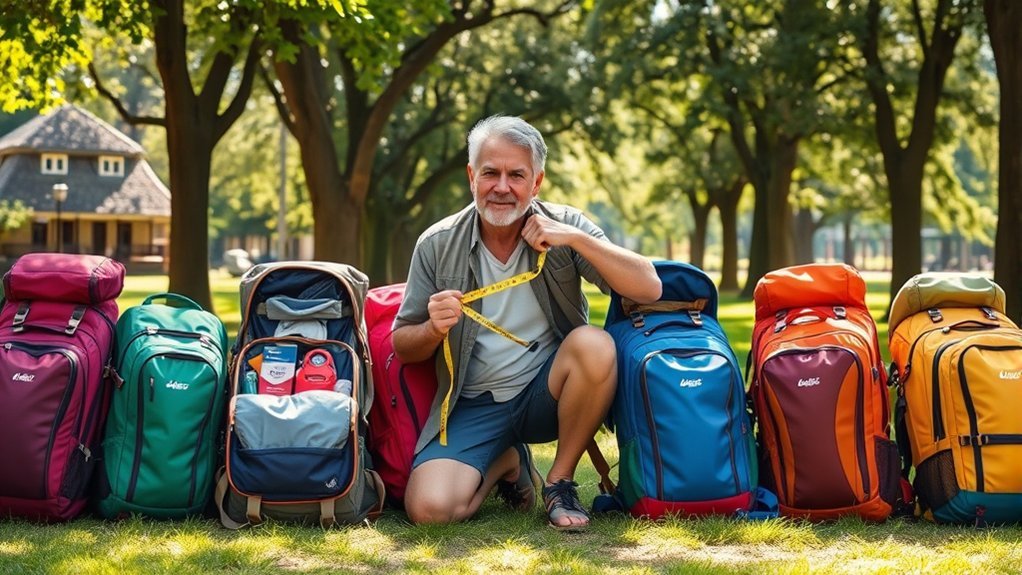
Choosing the right backpack size for travel starts with evaluating your trip duration. For one-night trips, a 36L to 47L pack works best, while 60L is ideal for multi-day adventures. Keep essential gear organized and prioritize weight to enhance comfort—aim for around 60 lbs. Test your pack for fit and stability, and consider compartmentalization for easy access to your gear. If you crave more tips and strategies, there’s plenty more to explore!
Understanding Backpack Sizes

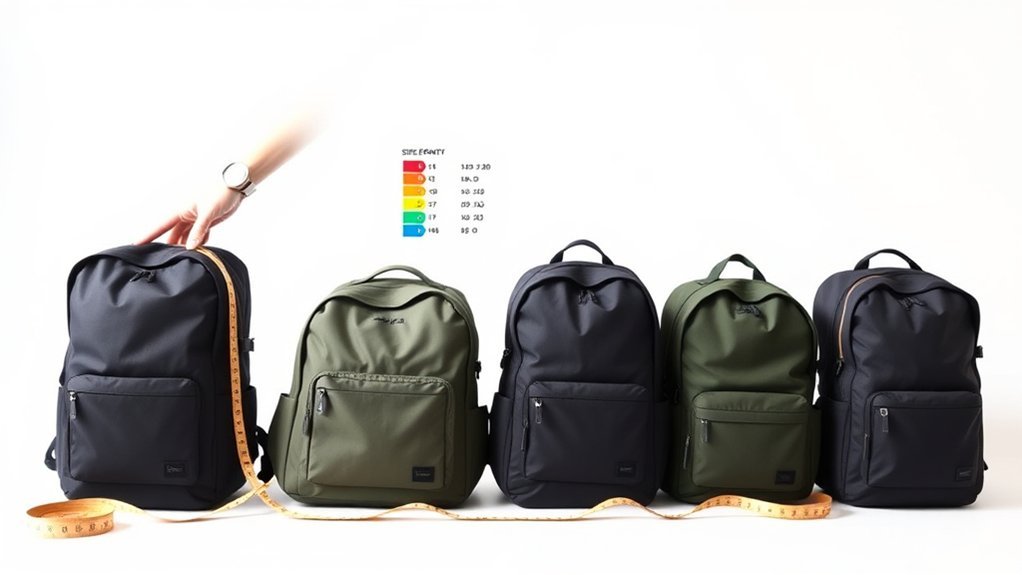
When choosing a backpack for travel, understanding the various sizes is essential to guarantee you have just what you need for your adventure. Backpacks typically range from 25L to 70L, and for one-night solo trips, aim for 36L to 47L. A 25L pack often falls short for gear like tents and sleeping bags, making it impractical for overnight excursions. While a 32L offers a bit more space, its compartmentalized design can complicate organization and access. The 36L and 47L sizes strike a perfect balance between comfort and capacity, with the 47L providing a bit of extra room for flexibility. If you’re planning multi-day trips, consider a 60L for additional gear, but steer clear of the 70L unless you’re sharing equipment. Choosing wisely will empower your journey, ensuring you carry what you need without feeling weighed down. Embrace the freedom of travel!
Assessing Your Trip Duration
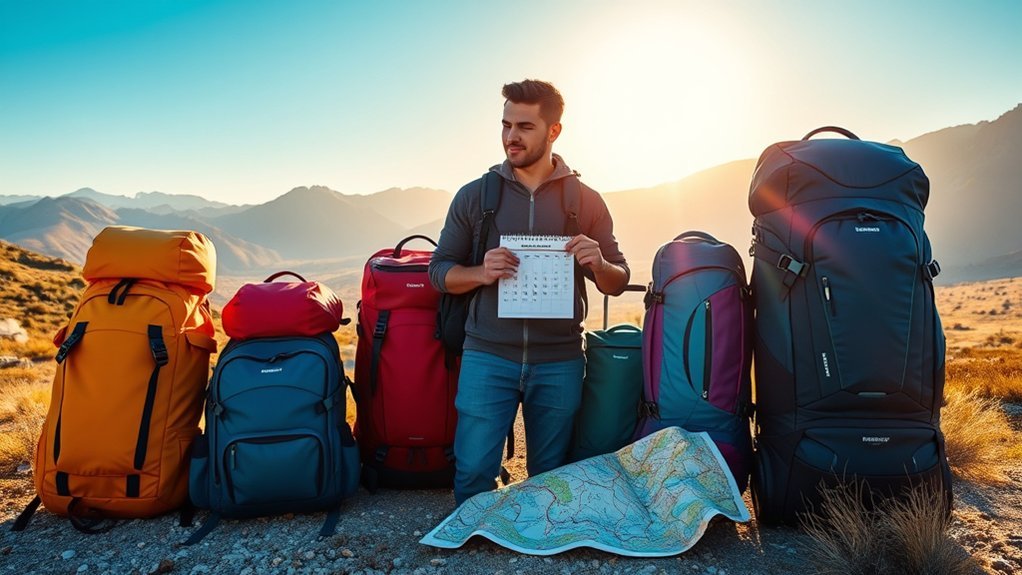
As you plan your adventure, evaluating your trip duration is essential for selecting the right backpack size. For single-night solo trips, a backpack between 36L to 47L is ideal, allowing you to comfortably fit your sleeping bag, tent, and food. On the other hand, a smaller 25L or 32L backpack will leave you struggling with organization and comfort.
| Trip Duration | Recommended Backpack Size |
|---|---|
| One Night | 36L – 47L |
| Overnight Trip | 25L – 32L |
| Multi-Day Trip | 60L – 70L |
| Extended Trek | 60L and above |
For multi-day excursions, consider a larger 60L or 70L pack to accommodate extra gear. Always balance capacity with weight to enhance your comfort and guarantee an enjoyable journey. Assess your trip length and gear needs to find the perfect fit!
Evaluating Essential Gear
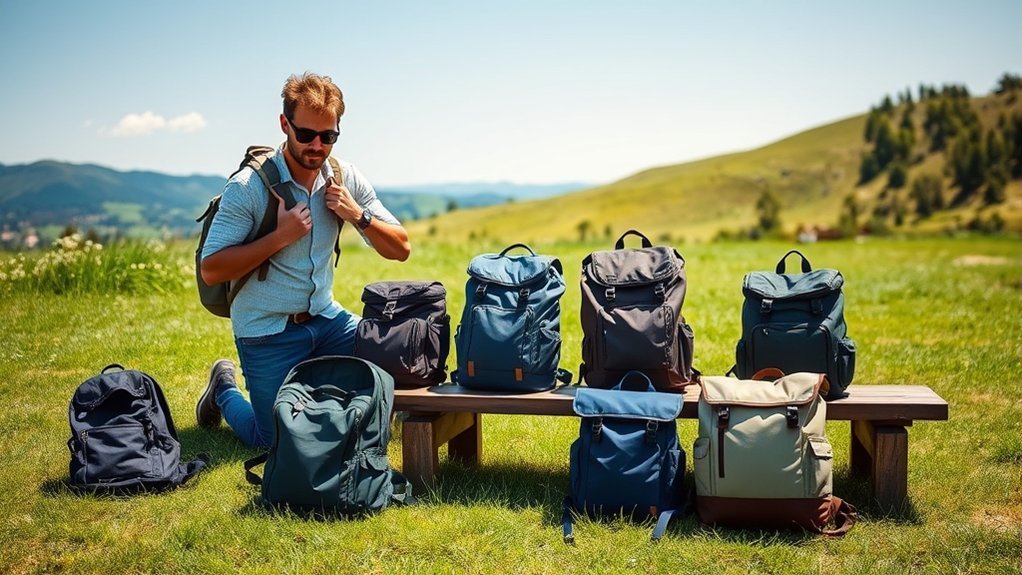
Selecting the right gear is essential for a successful trip, especially when you’re packing for a one-night adventure. You’ll need a sleeping bag, tent, sleeping pad, camp stove, food, utensils, toiletries, and perhaps a good book. Each item requires space, and packing efficiently is key. A 25L backpack simply won’t cut it; you’ll struggle to fit larger items like a tent, leading to chaos. Instead, opt for a 36L backpack—it’s perfect for your essentials while providing extra room for comfort. If you crave flexibility or plan for a slightly longer getaway, a 47L backpack offers generous space without sacrificing comfort. While a 60L pack is great for multi-day trips, it’s likely overkill for a single night unless you want that extra breathing room. Choose wisely, and your journey will feel liberating, allowing you to focus on the adventure ahead instead of gear-related stress.
Weight Considerations for Packing
Packing light is essential for a successful one-night trip, and keeping your backpack’s weight in check can make all the difference in your hiking experience. Aim for a weight limit of around 60 lbs, ensuring comfort and ease while you trek. Choosing the right size backpack is vital, so consider these tips:
- Opt for a 36L backpack for a balanced fit, accommodating your essentials without excess bulk.
- If you need flexibility, a 47L backpack offers room for extra gear while remaining comfortable.
- Prioritize ultra-light gear to enhance your mobility and organization.
Selecting lightweight items not only lightens your load but also keeps you agile on the trail. Remember, every ounce matters, and each choice you make can lead to a more liberating and enjoyable adventure. Embrace the freedom of packing light, and let the journey unfold effortlessly!
Ideal Backpack Sizes for One-Night Trips
Finding the right backpack size for your one-night adventure can make all the difference in your comfort and enjoyment. For solo trips, a 36L backpack strikes the perfect balance, accommodating your essential gear while leaving some extra space for those little extras. If you prefer flexibility, a 47L pack is your best bet, providing ample room for additional gear without feeling cumbersome. On the flip side, backpacks below 32L, like 25L or 32L, often fall short for essential items like a tent and sleeping bag, complicating your packing process. While a 60L pack is excellent for multi-day excursions, it may be overkill for just one night. Aim for a backpack between 36L and 47L to keep your load manageable, ensuring all your essentials fit securely and remain organized. Choose wisely, and your adventure will feel liberating rather than burdensome!
Comfort and Fit: Testing Your Backpack
When you try on a backpack, start by adjusting the straps to match your torso length for the best fit. This guarantees the weight is distributed evenly, making it easier to stand tall without any discomfort. Load it up with your usual gear and take a few steps to see how it feels in motion; you’ll want it to stay stable without shifting around.
Adjusting Straps Properly
Properly adjusting your backpack’s straps is essential for comfort and fit, especially during long travels. Start by distributing weight evenly across your back, ensuring the shoulder straps sit comfortably without pressure points. Don’t forget about the hip belt—position it on your hips and tighten it to carry most of the weight, freeing your shoulders for easier movement.
Here are a few key adjustments to take into account:
- Adjust the sternum strap at chest height for added stability.
- Walk on a flat surface to test the fit; it shouldn’t shift excessively.
- Load your backpack with gear and perform a trial walk, tweaking the straps for maximum comfort.
These adjustments can transform your travel experience, allowing you to roam freely and explore with ease.
Weight Distribution Techniques
After you’ve adjusted the straps for a comfortable fit, focusing on weight distribution becomes essential. Position heavier items close to your back and centered to maintain balance, reducing strain on your shoulders. Adjust your hip belt to carry up to 80% of the pack’s weight on your hips, relieving pressure and enhancing comfort during your hike. When testing your backpack, verify the shoulder straps are snug but not constricting, and the pack sits high on your back to prevent swaying. Aim for a loaded weight of 20-25% of your body weight for manageable carrying. As you consume food and water, regularly adjust your pack to guarantee ideal comfort and freedom while exploring the great outdoors.
Trying Before Buying
Testing a backpack before you buy is essential to guaranteeing it meets your travel needs. A good fit can make all the difference during your adventures. Here’s what to focus on:
- Confirm it fits snugly against your back without swaying side-to-side, affecting your stability.
- Adjust shoulder straps, hip belts, and load lifters for even weight distribution, vital for long hikes.
- Walk around with a loaded backpack, simulating your hiking pace, to identify any discomfort or pressure points.
Stand up straight while wearing it; the pack should sit close to your shoulders without hindering movement. Don’t forget to try on various weights to see what feels comfortable. This way, you’ll be ready for liberation on the trails!
Organization and Accessibility Tips
When you hit the trail, efficient packing can make all the difference in your experience. By employing smart compartmentalization strategies and keeping quick-access essentials handy, you’ll streamline your journey and reduce stress. Let’s explore some effective techniques to enhance your organization and accessibility while traveling.
Packing Techniques for Efficiency
As you prepare for your adventure, effective packing techniques can make a world of difference in how smoothly your travels unfold. Start with these strategies to enhance efficiency and accessibility:
- Use packing cubes or compression sacks to organize clothing, maximizing space while making it easy to find items.
- Roll your clothes instead of folding them to save space and minimize wrinkles, ensuring everything stays neat.
- Position heavier items closer to your back and at the bottom of your backpack for better balance and comfort.
Compartmentalization Strategies
Packing efficiently sets the stage for a smooth travel experience, but the right organization can elevate it even further. Choose a backpack that features compartmentalization to enhance accessibility, especially in larger models like the 36L and 47L. Incorporate packing cubes or compression bags to maximize space and keep your gear tidy—this makes finding essentials a breeze. Position heavier items, like your camp stove, close to your back and at the bottom to maintain balance. Utilize external pockets for quick access to frequently used items, such as water bottles and maps. Finally, mix zippered pockets, mesh sleeves, and elastic straps to create a customizable organization system that reflects your unique packing style, empowering you to travel freely.
Quick Access Essentials
To guarantee smooth travel experiences, prioritizing quick access to essentials can make all the difference. Selecting a backpack around 36L allows room for organization without sacrificing accessibility. Opt for a compartmentalized design and consider packing cubes to keep items tidy.
Here are a few tips to enhance your quick access game:
- External pockets: Use them for snacks, maps, or your water bottle.
- Lightweight gear: Keep your total weight around 60 lbs for comfort and easy maneuvering.
- Regular reviews: Adjust your packing strategy based on your experiences and insights from the backpacking community.
Personal Preferences and Packing Strategies
When it comes to choosing the right backpack size for your travels, personal preferences play an essential role in the decision-making process. Consider how much gear you’ll need and the weight you’re comfortable carrying. Some adventurers thrive with ultra-light setups, while others prefer the freedom of packing heavier loads.
| Backpack Size | Ideal Use |
|---|---|
| 36L | Short trips (1-3 days) |
| 47L | Weekend getaways |
| 60L | Multi-day adventures |
| 70L+ | Extended expeditions |
For multi-day trips, a larger pack like 60L provides flexibility, whereas a 36L might suffice for quick excursions. Balance your weight and storage needs to enhance your experience. Remember, your choice can shape not just your comfort, but also your journey’s liberating essence. Choose wisely, and let your backpack empower your adventures!
Engaging With the Backpacking Community
Finding the right backpack size is just the beginning of your adventure; connecting with the backpacking community can elevate your experience even further. Engaging with fellow outdoor enthusiasts opens doors to invaluable insights and shared stories that can transform your journey. Here’s how you can immerse yourself:
Connecting with the backpacking community enhances your adventure, offering insights and shared stories that enrich your journey.
- Join online forums or social media groups where you can exchange tips and gear recommendations tailored to your trip.
- Attend local backpacking meetups to connect with experienced hikers who can provide firsthand advice on choosing the right backpack size for your needs.
- Share your own experiences through comments, videos, or blogs to contribute to the community’s collective knowledge.
Frequently Asked Questions
What Materials Are Best for Durable Travel Backpacks?
For durable travel backpacks, look for materials like nylon or polyester. These fabrics resist wear and tear, while water-resistant coatings keep your gear dry. Reinforced stitching adds extra strength, ensuring your backpack lasts through countless adventures.
How Do I Clean My Backpack Properly?
Your backpack’s a trusted companion, but it needs love too! Remove items, spot clean stains with mild soap, and hand wash if necessary. Air dry it, ensuring it’s fresh for your next adventure. You’ll feel liberated!
Can I Carry a Backpack on a Plane?
Yes, you can carry a backpack on a plane! Most airlines allow one carry-on bag, so choose a size that fits the overhead compartment or under the seat. Check your airline’s specific guidelines for best results.
Are There Specific Backpacks for Hiking Versus Traveling?
Absolutely, hiking backpacks cradle your gear tightly for rugged trails, while travel backpacks embrace versatility for urban adventures. Choosing the right one lets you roam freely, turning every journey into a liberating experience filled with discovery.
How Do I Choose a Backpack Color or Style?
Choose a backpack color or style that resonates with your personality and adventure spirit. Bold colors can express confidence, while neutral tones offer versatility. Consider functionality too, ensuring it complements your journey’s vibe and purpose.
Conclusion
As you choose your backpack, think of it as a trusted companion, ready to carry your dreams and adventures. Just like a well-fitted glove, the right size will embrace you, allowing you to roam freely. So, whether you’re starting on a one-night escape or a longer journey, remember that the perfect backpack supports not just your gear, but the memories you’ll create along the way. Embrace the open road, and let your spirit soar with every step.