


To pack batteries in your carry-on backpack, cover battery terminals with tape to prevent short-circuiting and use original packaging if available. Only carry spare lithium batteries, as they can’t go in checked luggage. Confirm devices are in good condition and report any damage to the crew. Keep everything organized to streamline security checks. Always check airline regulations for specific restrictions. For more detailed packing strategies and tips, there’s much more to explore.
Assessing the Necessity of Your Batteries

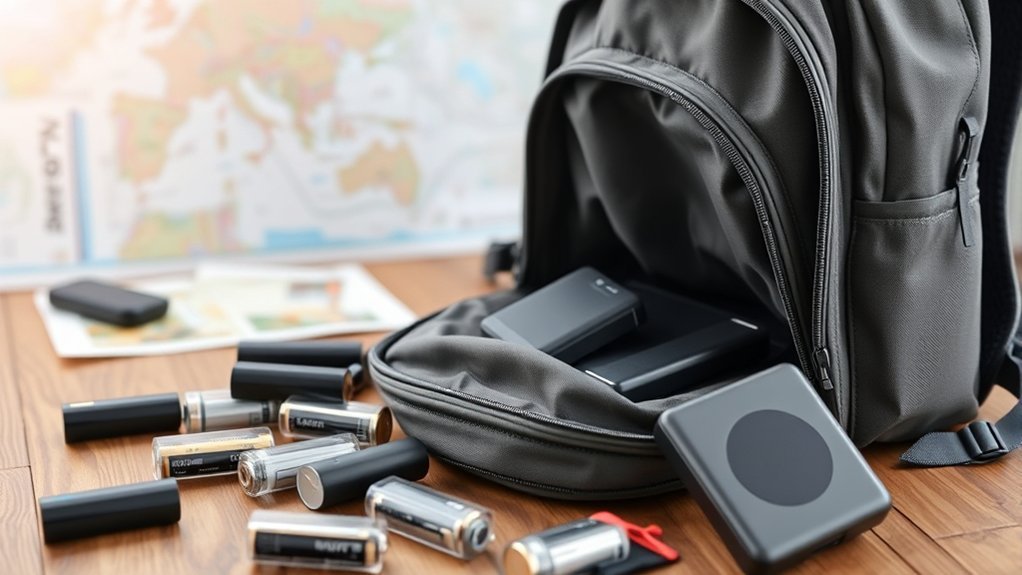
Before you pack your batteries, ask yourself: Do I really need all of these for my trip? Start by evaluating which devices are essential. If you’re only going for a weekend, you might not need spare batteries at all. Consider the length of your trip and the availability of charging stations. If you have access to power, you can rely on fewer batteries.
Evaluate the power needs of your devices. High-drain devices, like cameras, may require extra batteries, while low-drain gadgets, such as e-readers, won’t. Check if your devices are compatible with universal chargers to streamline your packing.
Lastly, remember that airlines have specific regulations regarding the number and type of batteries in carry-on luggage. Verify these rules to avoid surprises at security. By thoughtfully evaluating your battery needs, you can travel light and free.
Preparing Batteries for Safe Transport

When preparing batteries for safe transport, it’s vital to cover their terminals with tape or keep them in their original packaging to prevent short-circuiting. You should also check your airline’s specific regulations, as rules can vary greatly. By packing only essential batteries and keeping them organized, you’ll enhance safety and accessibility during your journey.
Battery Packaging Techniques
Properly packing your batteries is essential for safe transport, especially when flying. Always cover the terminals of spare lithium batteries with tape or place them back in their original packaging to prevent short-circuiting. It’s vital to pack your batteries in your carry-on baggage instead of checked luggage—airlines usually require this for safety reasons. Keep an eye on the condition of your batteries; don’t transport any that are damaged, hot, or malfunctioning. For added protection and organization, consider using a dedicated battery case or pouch. Finally, familiarize yourself with your airline’s regulations regarding battery size and quantity, as these can vary markedly. Stay informed and pack wisely to guarantee a hassle-free journey.
Airline Regulations Overview
Understanding airline regulations is key to safely transporting your batteries. Always check with your airline for their specific battery transport rules, as they can vary considerably. Spare lithium batteries must stay in your carry-on, with terminals covered in tape or kept in original packaging to prevent short-circuiting. If you have batteries exceeding 100 watt-hours, get prior approval from your airline before your flight. Generally, devices with non-removable batteries are allowed in carry-on luggage, but verify they’re in good working condition. Familiarize yourself with emergency procedures related to battery incidents, and report any damaged or overheating batteries to the flight crew immediately. Following these guidelines will help you travel with peace of mind.
Packing Guidelines for Electronic Devices

To guarantee a smooth travel experience, it’s crucial to pack your electronic devices and their batteries in your carry-on luggage. Always keep these items in your hand baggage to comply with airline regulations. When you arrive at the gate, remove any electronic devices from checked baggage to secure their safety.
For spare batteries, cover the terminals with tape or keep them in their original packaging to prevent short circuits during travel. Additionally, familiarize yourself with your airline’s specific packing rules, as they can vary greatly.
Before heading to the airport, make certain all devices are in good working condition. If you notice any hot, smoking, or damaged equipment, report it to the crew immediately for safety. By following these guidelines, you not only protect your devices but also contribute to a safer travel environment for everyone.
Understanding Airline Regulations
Although airline regulations can vary, knowing the basics about battery transport is crucial for safe travel. Airlines generally require that all spare lithium batteries be stored in your carry-on baggage, not checked luggage, to minimize fire risks. Be aware that most airlines limit lithium-ion batteries to a maximum of 100 watt-hours (Wh) for carry-on; batteries between 100 Wh and 300 Wh may need prior approval. To prevent short-circuiting, cover the terminals of spare batteries with tape or keep them in their original packaging. It’s important to check with your specific airline for any unique regulations regarding the number and type of batteries you can bring. If you encounter any issues, like overheating or damage, report it immediately to the flight crew. Understanding these regulations can help you travel confidently and safely with your devices.
Organizing Your Carry-On for Security Checks
Streamlining your carry-on for security checks can save you time and hassle at the airport. Start by organizing all your electronic devices and batteries in an easily accessible section of your backpack. This way, when you reach the security checkpoint, you can quickly remove these items for separate screening.
For spare batteries, make sure to use original packaging or tape over the terminals to prevent accidental short circuits and comply with safety regulations. Familiarize yourself with your airline’s specific rules regarding battery transport to avoid any delays.
Packing light is also essential; limit the number of devices you carry to minimize complications. This not only expedites your passage through security checks but also makes your travel experience more liberating. Remember, a well-organized carry-on can transform your airport journey from stressful to smooth.
Monitoring Device Condition During Travel
Monitoring your electronic devices and batteries during travel is essential for ensuring safety and functionality. Regularly inspect your devices for any signs of damage, such as cracks, swelling, or overheating. If a device feels hot or emits smoke, report it to the crew immediately and follow their instructions. Keep an eye on battery charge levels; fully charged devices are less likely to malfunction. Avoid using or charging devices in-flight unless permitted by the airline, as this complicates monitoring their condition. Be alert for unusual behavior, like unexpected shutdowns or erratic performance, which may indicate potential safety issues. Staying vigilant helps you maintain control over your devices, ensuring a smoother travel experience. By following these guidelines, you prioritize your safety and that of your fellow travelers, allowing for a more liberated journey. Keep your tech in check, and enjoy your travels with peace of mind.
Emergency Protocols for Device Issues
When a device shows signs of overheating, smoke, or damage during your flight, it’s essential to act quickly and follow established emergency protocols. First, report the issue to the flight crew immediately. Their training prepares them to handle such situations safely, ensuring the well-being of all passengers. Familiarize yourself with the airline’s specific emergency procedures related to electronic devices before you travel, as these can vary by airline and aircraft type.
Keep emergency contact information accessible to communicate effectively with airline staff if needed. Follow the crew’s instructions carefully; they know the best course of action. Remember, a prompt and calm response can help mitigate risks associated with battery incidents. By being prepared and informed, you can contribute to a safer flying experience for everyone on board. Stay vigilant and proactive, and you’ll navigate potential device issues with confidence.
Staying Informed About Safety Standards
Understanding the safety standards for transporting batteries is essential for a smooth travel experience. Staying informed helps you avoid hassles and guarantees compliance with airline regulations. Here’s a quick reference table for battery transport:
| Battery Type | Storage Guidelines | Special Requirements |
|---|---|---|
| Lithium-ion batteries | Keep in original packaging or tape terminals | May need airline approval |
| Spare batteries | Store securely, avoid loose connections | Check carrier-specific rules |
| Large batteries | Verify restrictions before traveling | Confirm handling requirements |
| Regular batteries | Pack safely, assure they’re not damaged | Follow general safety standards |
Always check with your airline for the latest regulations, as they can change frequently. Familiarize yourself with updates from authorities like the FAA or IATA to stay ahead. By being informed, you empower your travels and keep your devices safe.
Frequently Asked Questions
Can I Bring Lithium Batteries in My Checked Luggage?
You can’t bring lithium batteries in your checked luggage. Airlines restrict them due to fire risks. Instead, pack them in your carry-on, ensuring they’re properly protected to keep your devices safe during travel.
What Types of Batteries Are Prohibited on Flights?
When you fly, steer clear of damaged lithium batteries, loose batteries, and those exceeding 300 watt-hours. They symbolize danger, so keep your journey safe and hassle-free by knowing what’s allowed before you pack.
How Many Spare Batteries Can I Pack?
You can pack up to two spare lithium-ion batteries with a maximum capacity of 100 watt-hours each. If your batteries exceed that, check with your airline for specific regulations to guarantee a hassle-free travel experience.
Are Battery-Powered Devices Allowed in Checked Baggage?
When it comes to battery-powered devices, remember: “Better safe than sorry.” You can’t pack most battery-powered devices in checked baggage, so keep them in your carry-on to guarantee safe travel and functionality.
What Should I Do if a Battery Leaks?
If a battery leaks, carefully isolate it from other items. Wear gloves, clean the area with a damp cloth, and dispose of the battery properly according to local regulations. Don’t touch any leaked material directly.
Conclusion
Packing batteries in your carry-on doesn’t have to be a hassle. By evaluating their necessity, preparing them properly, and following airline regulations, you can travel with peace of mind. Coincidentally, keeping your devices organized not only simplifies security checks but also guarantees your tech’s in top shape throughout your journey. So, whether you’re on a weekend getaway or a business trip, staying informed and ready makes all the difference. Safe travels and hassle-free packing!