


When packing your backpack for rainy season travel, focus on waterproof gear first. Use dry bags for clothes and electronics, keeping your rain jacket handy in an external pocket. Organize your pack by placing lightweight items at the bottom, balancing heavier gear in the middle, and keeping essentials like your tent on top for quick setup. Store hydration and safety items in external pockets for easy access. Stick around to discover more effective packing tips for your adventure!
Choosing the Right Packing Strategy for Rainy Weather

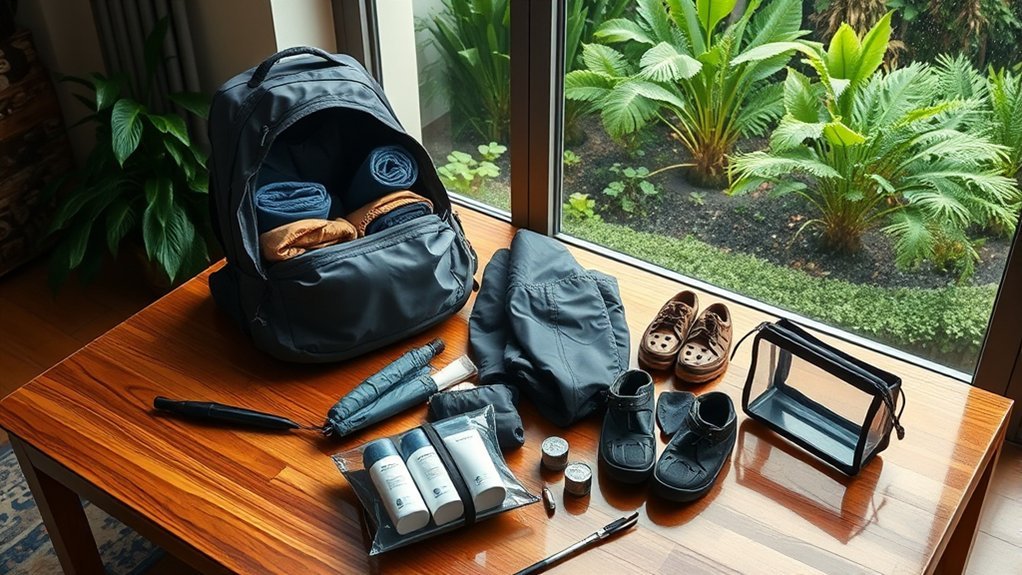
When you’re gearing up for travel during the rainy season, choosing the right packing strategy can make all the difference in keeping your belongings dry. Start by prioritizing waterproof or water-resistant gear; it’s crucial for shielding your items from moisture. Invest in dry bags or packing cubes to organize essentials like clothing, electronics, and snacks, guaranteeing they stay protected.
Keep your rain gear, like a poncho or rain jacket, within easy reach in an external pocket—this allows for quick deployment when the skies open up. If you’re hiking, consider using a rain cover over your backpack for that extra layer of protection. Finally, verify any items packed at the bottom, such as sleeping gear, are also water-resistant. This way, you can enjoy your adventures without the worry of soggy belongings, liberating you to embrace the journey, rain or shine!
Organizing the Bottom of Your Backpack for Cushioning
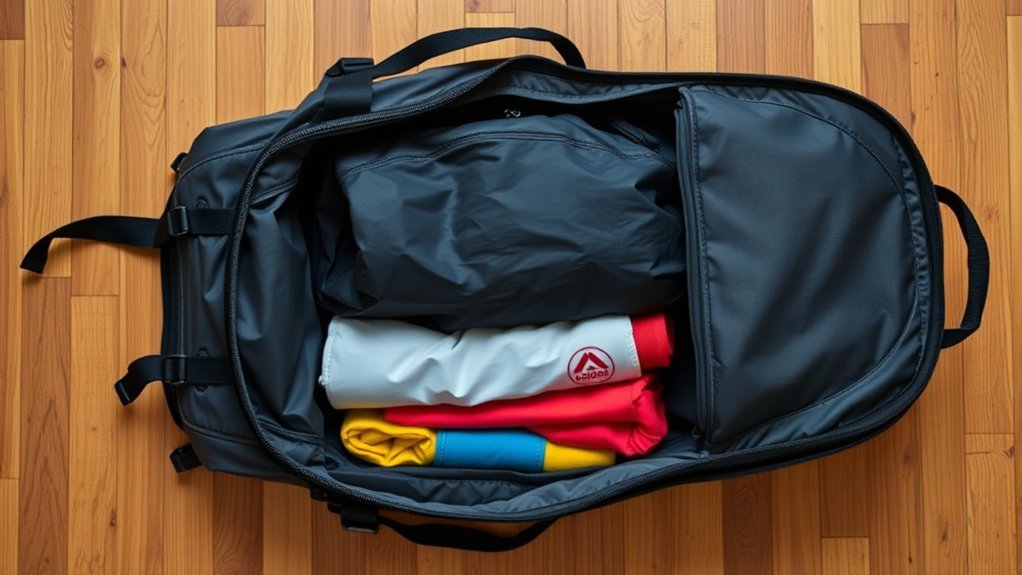
To create a comfortable and well-organized backpack, start by placing lighter and fluffier items, like your sleeping bag, at the bottom. This arrangement provides essential cushioning for your lumbar area, preventing back pain during your adventures. A sleeping bag can act as a protective barrier, ensuring no heavy items are pressing directly on your lower back.
Consider adding a sleeping pad and sleep clothes to this compartment for enhanced comfort during rest. If your backpack has a dedicated compartment for sleep items, take advantage of it for easy access when you need to recharge.
Make sure to pack these bottom items securely to prevent them from shifting while you hike, especially in wet conditions. A stable base not only enhances your comfort but also helps maintain balance, allowing you to navigate the trails with greater ease and freedom. Happy travels!
Maximizing the Middle Section for Balance and Support
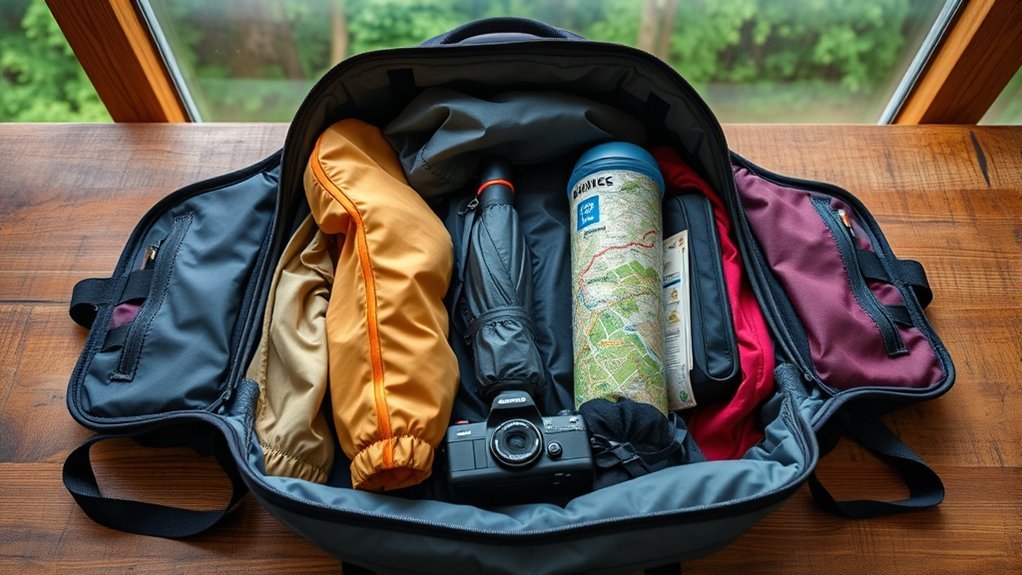
As you pack the middle section of your backpack, prioritize balance and support by placing heavier items, like a bear canister filled with food and cooking gear, closer to your back. This positioning stabilizes your load, making it easier to navigate uneven terrain, especially during rainy conditions. Fill any gaps with extra clothing to create a denser packing system, which minimizes movement and prevents discomfort. Make sure all items are securely packed; shifting contents can lead to strain on your back.
Also, keep frequently used items easily accessible, allowing for quick adjustments without unpacking your whole backpack. A well-organized middle section not only distributes weight evenly but also enhances your freedom to move confidently on the trail. By maximizing this area, you’re setting yourself up for a more balanced, enjoyable hiking experience, freeing you to focus on the beauty of your surroundings, rather than the burden on your shoulders.
Quick Access Essentials for the Top of Your Pack
Packing the top of your backpack with quick access essentials is essential for maneuvering unexpected rain or weather changes efficiently. Start by placing your tent near the top, ensuring you can set it up promptly when the skies open up. Don’t forget to keep the rain fly and stakes organized in a separate compartment for easy reach.
Load your hydration reservoir first, so you can grab a drink without digging through your gear. Items like a headlamp and first aid kit should also find their way into the top lid, ready for use at a moment’s notice. This way, you’re always prepared for whatever nature throws at you. By prioritizing these essentials, you’ll maintain your freedom to explore without the stress of being unprepared. Remember, staying organized at the top can make all the difference during those sudden downpours!
Utilizing External Pockets for Easy Reach Items
When you’re out on a rainy hike, having quick access to certain items can make all the difference. Stash your water bottle for filtering in an external pocket to guarantee you stay hydrated without fumbling through your pack. Store essential items, like a poop kit and bear spray, within easy reach for safety when nature calls.
Don’t forget to place your headlamp and first aid kit in the top lid for immediate access during emergencies or low visibility. Use the shovel pocket to keep extra layers, like a rain jacket or thermal clothing, ready for sudden weather changes.
For traversing slippery terrain, consider attaching your trekking poles to the exterior loops. This way, you can quickly grab them when you need extra stability. By utilizing these external pockets, you’ll enhance your hiking experience, making sure you’re prepared for whatever the rainy season throws your way.
Frequently Asked Questions
What Types of Waterproof Bags Are Best for Travel?
For travel, consider dry bags, roll-top backpacks, and waterproof pouches. These options keep your gear safe from moisture, allowing you to explore freely. Choose lightweight materials for comfort, and enjoy your adventures without worry.
How Can I Protect My Electronics From Water Damage?
To protect your electronics from water damage, you’ll want to use waterproof cases or bags. Consider packing them in resealable plastic bags, and always keep them elevated, away from potential water exposure. Your gear deserves safety!
Should I Bring Extra Clothing for Wet Conditions?
Absolutely, you should bring extra clothing for wet conditions. Having dry clothes keeps you comfortable and prevents chills. Opt for lightweight, quick-drying materials, and pack them in waterproof bags to stay organized and ready.
What Food Items Are Best for Rainy Season Hikes?
For rainy season hikes, pack energy-dense snacks like nuts, trail mix, and granola bars. These foods won’t spoil easily, provide quick energy, and keep your spirits up while you embrace the adventure in wet weather!
How Do I Clean My Backpack After a Rainy Trip?
After a rainy trip, 60% of travelers forget to clean their backpacks. Rinse it with cold water, scrub with mild soap, and air dry completely. This prevents mold and keeps your gear fresh for future adventures!
Conclusion
By packing smart for the rainy season, you’re not just shielding your gear from the downpour; you’re creating a fortress of convenience and comfort. Remember to balance your load, keep essentials at the ready, and utilize every pocket wisely. With these strategies in your toolkit, you’ll navigate the wettest of adventures like a seasoned traveler. So, embrace the rain and set forth, knowing you’re prepared for whatever nature throws your way!