


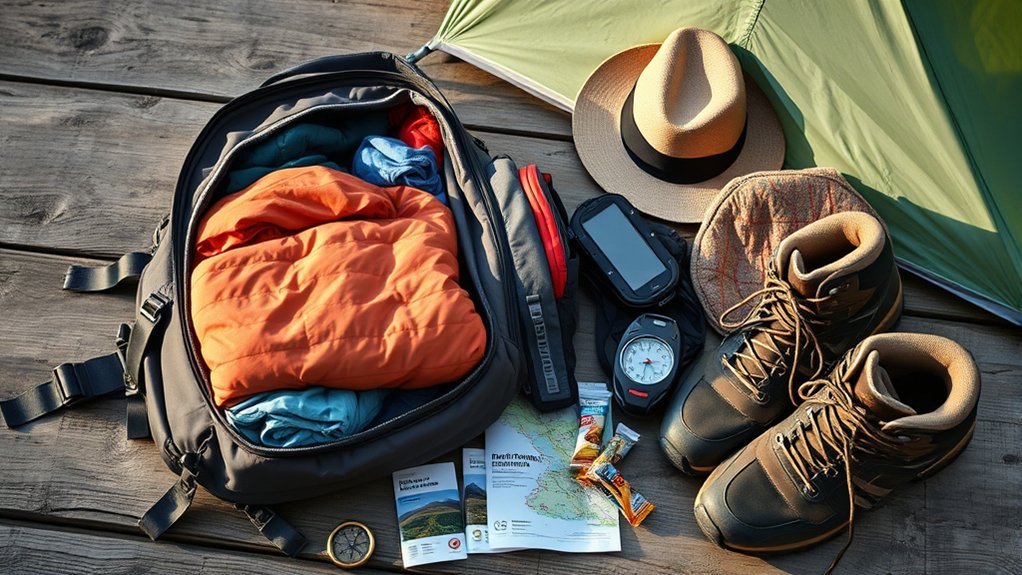
Packing your backpack for a hike boils down to organization and comfort. Start with choosing the right pack size—30 to 70 liters fits most needs. Distribute weight evenly, keeping heavier items close to your body. Pack food in separate waterproof bags for easy access, placing snacks on top. Adjust the hip belt first for stability, then shoulder straps for comfort. Follow these tips and you’ll be set for a successful adventure, plus there’s more to discover!
Importance of a Personal Packing System

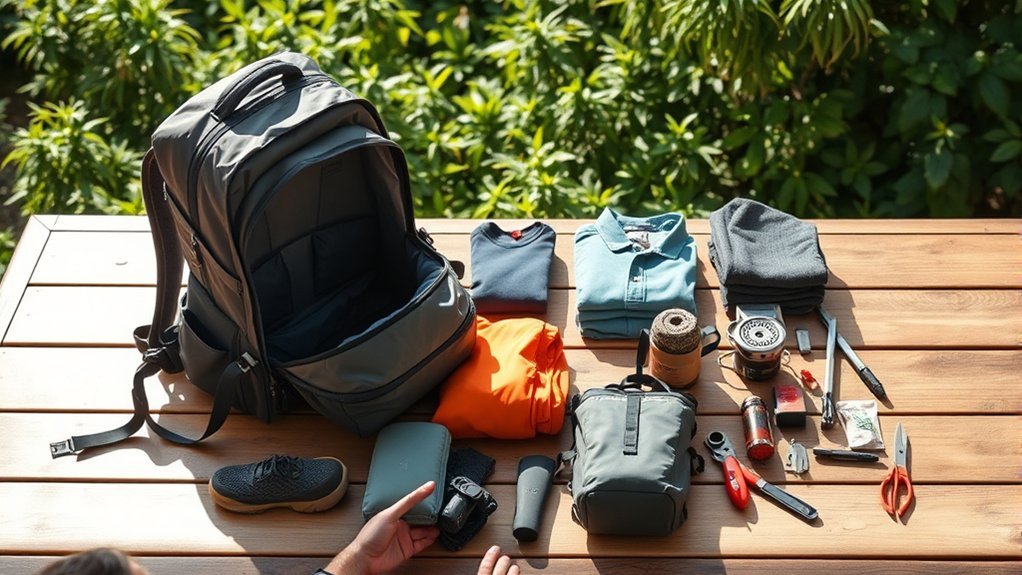
When you’re hitting the trails, having a personal packing system can make all the difference in your hiking experience. Tailoring your packing approach to your preferences enhances accessibility and comfort, allowing you to focus on the journey ahead. Weight distribution plays a vital role; pack heavier items close to your body to maintain stability and balance on uneven terrain.
Using waterproof sacks is essential for keeping your clothing and food dry, no matter the weather conditions. By organizing food into separate bags, you’ll have easy access to snacks and meals, making your hike more enjoyable. Flexibility in your packing methods means you can adapt based on your needs and the specific challenges of your trip. Embrace your unique style, and you’ll not only lighten your load but also elevate your hiking experience to new heights.
Choosing the Right Backpack
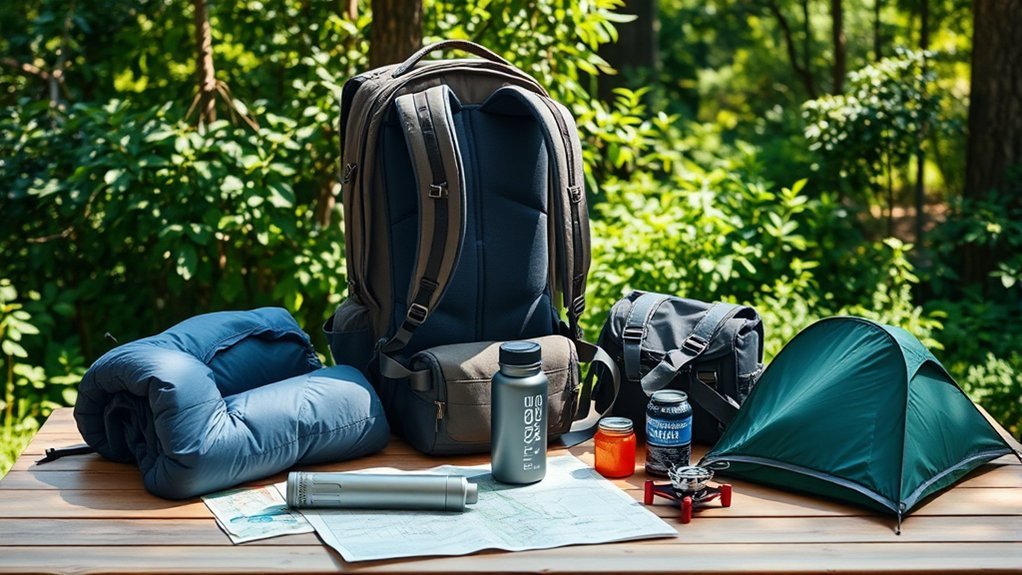
Choosing the right backpack can greatly enhance your hiking experience, and understanding your needs is key. Here are four essential factors to contemplate when making your selection:
- Volume & Capacity: Match the pack size (30 to 70 liters) to the trip duration and gear amount.
- Comfortable Suspension System: Look for adjustable shoulder straps, a padded hip belt, and load lifters to guarantee even weight distribution.
- Waterproofing: Choose a waterproof or water-resistant backpack to protect your gear from moisture, especially in wet conditions.
- Organization: Opt for a pack with multiple compartments and pockets for easy access to snacks, first aid kits, and camping gear.
Understanding Weight Distribution
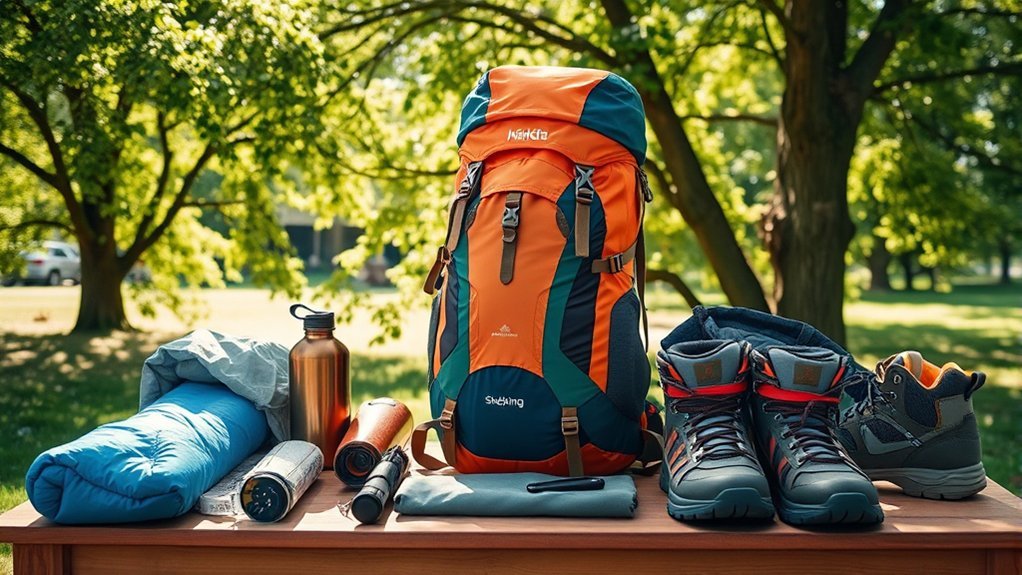
Effective weight distribution in your backpack is essential for a comfortable hiking experience. Start by keeping heavier items—like your cooking gear—close to your body. This enhances stability and reduces strain on your back. Place your sleeping bag at the bottom of your pack, with food items stacked above it for balanced packing.
Don’t forget to utilize gaps in your pack for lighter items; this optimizes weight distribution and makes access easier. When you put your backpack on, adjust the hip belt first, then gradually tighten the shoulder straps. This guarantees weight is evenly distributed across your back and hips.
Finally, use load lifters to bring the pack closer to your body, enhancing comfort and balance during your hike. With these tips, you’ll feel liberated on the trail, ready to conquer any adventure without the burden of an improperly loaded backpack.
Organizing Food and Snacks
To guarantee you have easy access to your meals and snacks while hiking, it’s important to organize your food items efficiently. Here are some tips to keep you fueled and ready on the trail:
- Separate Bags: Use different bags for snacks, lunch and breakfast, and dinner. This helps you find what you need quickly.
- Waterproof Storage: Pack everything in waterproof sacks to protect against moisture and make sure your food stays fresh.
- Top Placement for Snacks: Store your snacks and heavier items near the top of your pack for easy retrieval during the day.
- Dedicated Meal Bags: Have a specific bag for lunch and breakfast to streamline meal prep and reduce time searching for food.
Packing Gear and Clothing
When packing your backpack, organizing your gear and clothing is vital for a successful hike. You’ll want to adopt a layering strategy that keeps essentials accessible while optimizing space. By strategically placing items and utilizing every nook of your pack, you’ll maintain balance and guarantee everything is within reach.
Organizing Essential Gear
As you prepare for your hiking adventure, organizing your essential gear is crucial for a successful trip. Properly packing your backpack not only saves space but also guarantees you can access everything you need quickly. Here are four tips to help you organize:
- Sleeping Bag: Place it at the bottom in a waterproof stuff sack.
- Spare Clothes: Store them next to the sleeping bag, organized by seasonal needs for easy access.
- Tent: Keep it near the top for quick access during breaks, filling gaps with lightweight items.
- Stove and Gas Canister: Position them for easy access, and use smaller items like toiletries to fill any gaps.
Stay organized, and enjoy your hike!
Clothing Layering Strategy
Getting your gear organized sets the stage for effective clothing layering on your hike. Start by sorting spare clothing based on seasonal needs, ensuring you can quickly grab the right layers as weather conditions change. Roll jackets tightly and stuff them into gaps in your pack; this saves space and boosts packing efficiency. Keep your fleece and thermal gear easily accessible for quick adjustments when temperatures drop. Store gloves, beanies, and thermal pants in reachable spots so you can put them on during breaks or if the weather turns. Finally, utilize waterproof sacks to shield all clothing from moisture, keeping them warm and functional throughout your adventure. With this strategy, you’ll be ready for whatever nature throws at you.
Optimizing Space Utilization
To make the most of your backpack space, you’ll want to pack strategically and efficiently. Start by utilizing every gap in your pack to store lightweight items like your tent and camp shoes. Roll your jackets and stuff them into these gaps instead of using packing pockets. For easy access, place your stove and gas canister strategically. Position your sleeping bag at the bottom and pack the sleeping mat alongside it to create a solid base for weight distribution. Finally, use waterproof sacks for all clothing and food items to protect your gear while filling any remaining gaps.
Here’s a quick checklist to optimize your space:
- Utilize gaps for lightweight items.
- Roll and stuff jackets.
- Strategically position cooking gear.
- Use waterproof sacks for clothing.
Essential Items for Easy Access
When you’re out on the trail, having quick-access gear can make a world of difference. Organize your snacks and essentials strategically so you can easily grab what you need without stopping for long. Keep these items within reach to adapt to changing conditions and maintain your momentum on the hike.
Prioritize Quick-Access Gear
Efficiently packing your backpack can make all the difference on the trail, especially when it comes to quick-access gear. Here’s how to prioritize essential items for easy retrieval:
- Tent: Store it near the top for quick access during breaks or when you’re ready to set up camp.
- Stove and Gas Canister: Keep these handy to facilitate quick meal preparation on the trail.
- Toiletries and Camp Shoes: Utilize gaps in your pack for lightweight items, ensuring they’re within easy reach.
- Cup and Head Torch: Organize these in a kit bag for quick retrieval at camp or during nighttime.
Organize Snacks Strategically
Keeping your energy levels up on the trail is key, and organizing snacks strategically can make all the difference during your hike. Start by placing all your snacks in a separate bag for clarity and easy access—this way, you won’t waste time rummaging through your gear. For the first days of your trip, include drinks and heavier snacks to balance weight distribution effectively. Store lunch and breakfast items in another bag to streamline meal prep and reduce downtime at rest stops. Waterproof sacks are essential for keeping snacks fresh and protected from moisture. Finally, position the snacks bag near the top of your pack, so you can quickly grab energy boosts when you need them most.
Keep Essentials Within Reach
To guarantee a smooth hiking experience, it’s essential to keep your essentials within reach. This not only saves time but also enhances your enjoyment of the trail. Here are four key items to prioritize for easy access:
- Snacks and Water Bottles: Store them in outer pockets or at the top of your backpack for quick grabs.
- Tent: Keep it near the top to set up easily during breaks or at camp.
- Cooking Essentials: Place your stove and gas canister where they’re readily accessible for meal prep.
- Clothing Layers: Pack gloves and beanies at the top or in external pockets for swift retrieval in changing weather.
With this setup, you’ll stay organized and focused on your adventure!
Utilizing Gaps in Your Pack
When you’re hiking, every inch of space in your backpack counts, so it’s smart to utilize gaps effectively. Fill these spaces with lightweight items like camp shoes, toiletries, and first aid kits. Instead of cramming jackets into pockets, roll them and stuff them into gaps for easy access and better organization.
For smaller items like electronic devices, use a separate bag to guard against cold exposure while maximizing your pack’s capacity. Position your tent near the top for quick access during breaks, and fill gaps with lightweight gear to optimize load distribution.
Also, consider stashing items you might need quickly, such as gloves, beanies, and thermal pants, in these gaps. This way, you can grab them without unpacking your entire bag. By strategically filling gaps, you’ll guarantee your hike is comfortable and liberating, with everything you need right at your fingertips.
Pre-Hike Preparation Steps
Before you hit the trail, it’s essential to check the weight of your pack to guarantee it’s comfortable and balanced. Make certain all your gear is securely packed and that the straps are adjusted properly to prevent any shifting while you hike. Start by loosening the buckles, then tighten the hip belt followed by the shoulder straps for ideal weight distribution and comfort.
Check Pack Weight
Checking your pack weight is essential for a successful hike. You want to make sure your backpack falls within a comfortable range, typically 20-30% of your body weight. Lightening your load keeps you energized and balanced, so follow these steps:
- Weigh your packed backpack to confirm it’s within the ideal range.
- Securely pack all gear, distributing the weight evenly to prevent strain.
- Loosen all buckles and straps before putting on your pack.
- Tighten the hip belt first for better weight distribution, then adjust shoulder and side straps for balance.
Adjust Straps Properly
Properly adjusting the straps on your backpack is crucial for a comfortable hiking experience. Begin by loosening all buckles and straps, allowing for easy adjustments. Tighten the hip belt first; this is essential for distributing weight to your hips, reducing strain on your back. If your pack has side tensioning straps, adjust those next to enhance stability and balance as you move. Gradually tighten the shoulder straps until they fit snugly but still allow for freedom of movement. Finally, use the load lifters to pull the pack closer to your body, minimizing pressure on your shoulders and back. Take a moment to test your adjustments and confirm you’re ready to embrace the trail ahead!
Adjusting Your Backpack for Comfort
Adjusting your backpack for comfort is vital for an enjoyable hiking experience. Start by loosening all buckles and straps to make it easier to wear the pack before you begin adjusting. Follow these steps for ideal comfort:
- Tighten the hip belt first; it’s essential for proper weight distribution and overall comfort.
- Adjust side tensioning straps, if your pack has them, to stabilize the pack and keep it close to your body.
- Gradually tighten the shoulder straps after securing the hip belt to make certain an even weight distribution across your shoulders.
- Utilize load lifters, if available, to pull the top of the pack closer to your body, enhancing balance and reducing strain on your back.
Tips for a Successful Hiking Experience
Once your backpack is adjusted for comfort, you’re ready to focus on making your hiking experience successful. Start by prioritizing accessibility; pack frequently used items like your tent and stove near the top for easy access during breaks. Organize your food into separate bags for snacks, meals, and drinks, guaranteeing you can grab what you need without hassle.
To maintain comfort, distribute weight properly—keep heavier items close to your body and lighter items towards the top and sides. Before hitting the trail, adjust your pack securely by tightening the hip belt first, followed by the shoulder straps for ideal weight distribution.
Finally, prepare mentally for the hike by visualizing the journey ahead. This not only boosts your confidence but also guarantees all your gear is packed securely and balanced on your back. With these tips in mind, you’re set for an enjoyable and liberating hike!
Frequently Asked Questions
How Do I Choose the Right Hiking Shoes?
To choose the right hiking shoes, consider your foot type, terrain, and climate. Try them on with the socks you’ll wear, ensuring they fit snugly but comfortably. Don’t forget to test their traction and support.
What Should I Do if It Rains During My Hike?
If it rains during your hike, seek shelter under trees or use a waterproof jacket. Keep your gear in dry bags, and stay on marked trails to avoid slippery areas. Embrace the adventure; it can be invigorating!
How Can I Prevent Blisters on My Feet?
To prevent blisters, wear moisture-wicking socks, choose well-fitting shoes, and break them in before your hike. Keep your feet dry, and consider using blister prevention pads for extra protection on long walks.
What Snacks Are Best for Energy on the Trail?
Think energy bars are a thing of the past? They’re not! Grab high-protein nuts, dried fruit, or dark chocolate for quick energy boosts. These snacks fuel your adventure while keeping your spirits high on the trail.
How Do I Stay Hydrated While Hiking?
To stay hydrated while hiking, drink water regularly, even if you don’t feel thirsty. Consider using a hydration bladder for easy access and pack electrolyte tablets to replenish lost minerals during your trek. Enjoy your adventure!
Conclusion
Now that you’ve packed your backpack with care, picture yourself on the trail, the sun filtering through the trees. Each item is perfectly placed, weight balanced, and your snacks are easily accessible. As you take that first step, feel the excitement of adventure surge through you. You’re not just hiking; you’re ready to embrace the unknown. So, tighten those straps, breathe in the fresh air, and set off—your journey awaits, and it’s going to be unforgettable!