


To pack your backpack for camping, start by placing lighter items like sleeping bags at the bottom for stability. Next, position heavier gear in the middle, close to your center of gravity. Organize the top for quick access to essentials like your hydration reservoir and first aid kit. Use external pockets for gear you need frequently, like water bottles or safety tools. Follow these pro tips and you’ll guarantee a more enjoyable camping experience. There’s more to discover!
Importance of Proper Packing Techniques

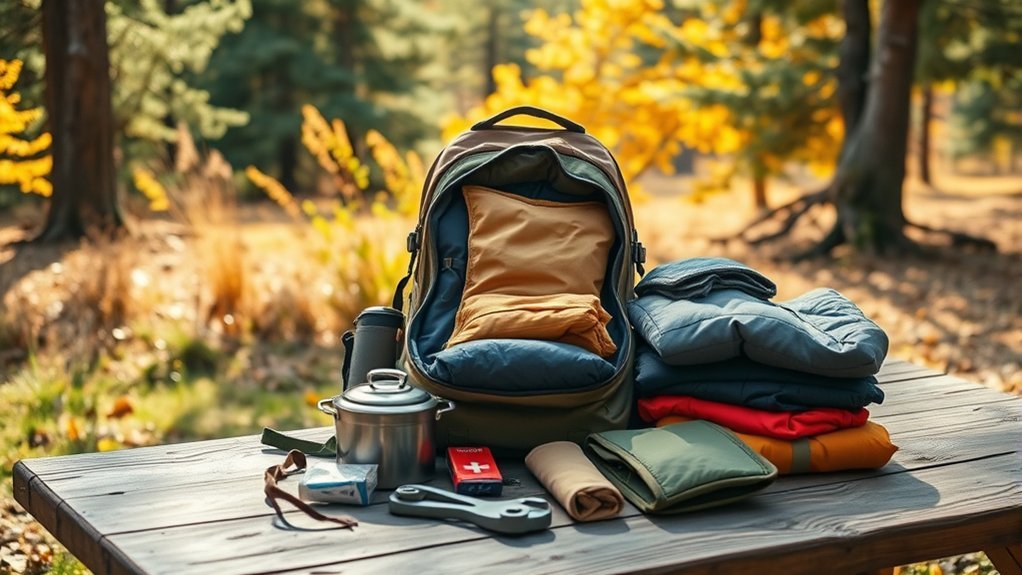
When you pack your backpack with care, you not only lighten your load but also enhance your hiking experience. Proper packing techniques distribute weight evenly, reducing strain on your back and ensuring comfort throughout your trek. By organizing your gear efficiently, you prevent unnecessary movement that can lead to fatigue over long distances.
Place heavier items in the middle of your backpack for ideal balance and support, minimizing the risk of injury. This thoughtful arrangement not only protects your body but also allows you to hike longer and more freely. Quick access to essentials, like your first aid kit and water, can be vital during emergencies or sudden weather changes, so keep these items handy.
Lastly, use external pockets wisely for easy retrieval of frequently needed gear, allowing you to enjoy the journey without the hassle of unpacking your entire backpack. Happy hiking!
Packing the Bottom of the Backpack
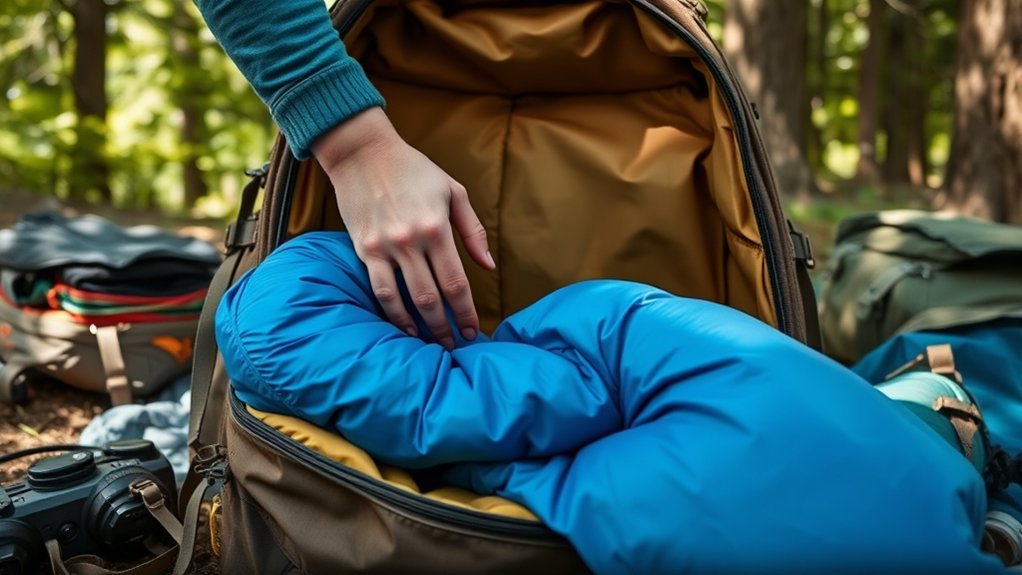
When packing the bottom of your backpack, start by placing lighter, fluffier items like your sleeping bag and sleeping pad. This not only provides cushioning for your lumbar area but also helps create a stable base for the heavier gear you’ll pack on top. By organizing these items correctly, you’ll guarantee a more comfortable hike and reduce the risk of discomfort.
Light Items Placement
To guarantee comfort on your hike, it’s essential to place lighter and fluffier items, like your sleeping bag, at the bottom of your backpack. This strategic placement not only provides cushioning but also balances the load. Consider adding a sleeping pad and sleep clothes alongside your bag for extra comfort and insulation. If your backpack has a separate compartment for sleep items, use it to stay organized and make everything easier to access when you set up camp. Avoid putting heavy items down low; doing so can lead to discomfort and pain in your lower back. By mastering light item placement, you’ll enjoy a liberating hiking experience, free from unnecessary strain.
Cushioning for Lumbar Support
Packing the bottom of your backpack with the right items is essential for ensuring lumbar support during your hike. Start with lighter, fluffier items like a sleeping bag, which not only provides insulation but also cushions your lower back, helping to prevent pain. You can enhance your comfort by adding a sleeping pad and sleep clothes to the bottom compartment. If your backpack has a designated space for sleep items, use it to keep your essentials organized and protected. Remember, avoid placing heavy gear at the bottom; that can throw off your balance and increase strain on your back. Prioritizing cushioning here sets you up for a liberating and enjoyable hiking experience.
Packing the Middle Section for Balance
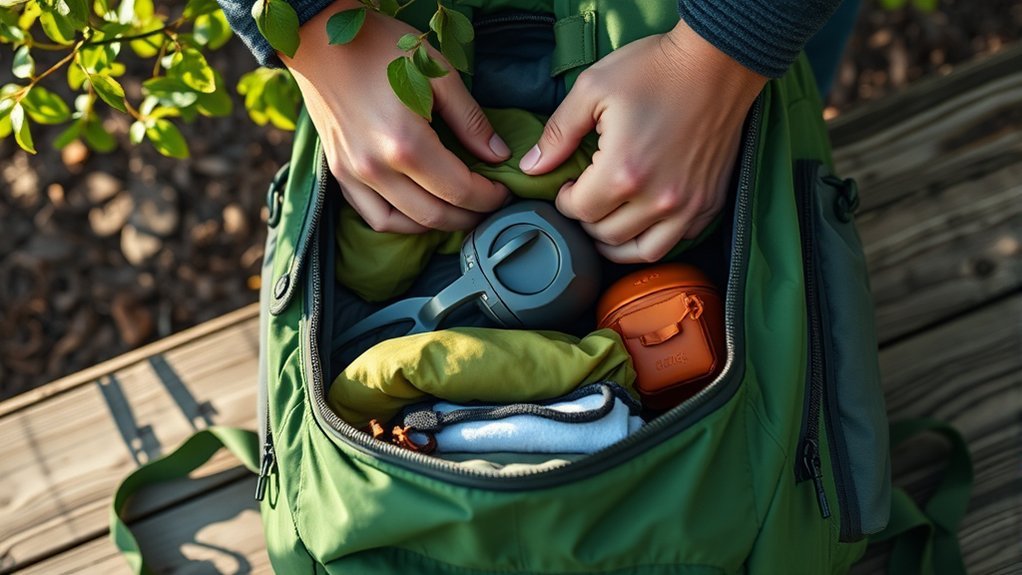
Achieving balance in your backpack is essential for a comfortable hike, especially in the middle section where the heaviest items should reside. Place your bear canister filled with food and your cooking kit here; this way, you effectively distribute weight and prevent shifting. The middle section acts as your stability anchor, keeping bulkiness close to your center of gravity.
Don’t forget to utilize any gaps for extra clothing—this creates a denser packing system that enhances stability. By securing all items tightly, you minimize movement, allowing you to navigate trails with confidence. This packing strategy not only improves balance but also reduces strain on your lower back, making your trek more enjoyable. As you pack, remember that a well-balanced backpack can liberate your hiking experience, letting you focus on the beauty around you rather than discomfort.
Organizing the Top of the Backpack
The top of your backpack plays an essential role in your hiking experience, and organizing it effectively can make all the difference. Start by loading your hydration reservoir in the top compartment for easy access to water. Next, keep your tent components—like the rain fly, poles, body, and stakes—near the top so you can grab them quickly if the weather turns. Utilize the top lid for essentials like a headlamp and first aid kit, guaranteeing you have immediate availability when needed.
Here’s a simple way to visualize this organization:
| Item | Placement |
|---|---|
| Hydration reservoir | Top compartment |
| Tent components | Near the top |
| Essentials (headlamp, first aid) | Top lid |
Finally, close your pack securely, balance the weight, and confirm nothing is protruding awkwardly. Happy hiking!
Utilizing External Pockets Effectively
When you’re out on the trail, effectively utilizing external pockets can streamline your camping experience and keep essential items within easy reach. Store your water bottle in a side pocket for quick access while filtering water on the go. Keep safety gear like your poop kit and bear spray in accessible pockets, ensuring you can grab them swiftly during emergencies. For night hikes or injuries, stash your headlamp and first aid kit in the top lid pocket; you’ll appreciate their immediate availability.
Use external storage to hold shoes, allowing them to dry while keeping them separate from your main gear. Finally, keep extra layers or rain gear in the shovel pocket, so you can easily adapt to changing weather conditions. By organizing your backpack this way, you’ll experience freedom on the trail, knowing everything you need is at your fingertips.
Additional Packing Tips for a Successful Trip
To guarantee a smooth hiking experience, it’s essential to optimize weight distribution in your backpack. By packing heavier items in the center and lighter ones at the bottom, you’ll maintain balance on the trail. Additionally, always keep your tent components near the top, so you’re prepared for any sudden weather changes that might come your way.
Optimize Weight Distribution
Packing a backpack efficiently can make all the difference in your camping experience, especially when it comes to optimizing weight distribution. Start by placing heavier items, like your bear canister and cooking kit, in the middle of the pack for improved balance. Next, pack lighter items such as your sleeping bag and clothes at the bottom to cushion your lumbar area, preventing discomfort on the trail. Keep frequently used gear, like your water reservoir and tent, near the top for quick access. Utilize external pockets for essentials, ensuring items like your first aid kit and extra layers are easily reachable. Finally, secure everything tightly to minimize movement, allowing you to hike comfortably and confidently on your adventure.
Pack for Weather Changes
Even with ideal weight distribution, being prepared for unexpected weather changes is essential for a successful camping trip. You never know when a sudden storm or temperature drop might occur, so pack smart. Here are a few essentials to keep handy:
- A lightweight, packable rain jacket or poncho at the top of your backpack for quick access.
- An extra layer, like a fleece or insulated jacket, in the shovel pocket for immediate warmth.
- A compact emergency blanket or bivvy bag stored in an easily accessible pocket for unexpected shelter.
- Waterproof bags or dry sacks to protect sensitive items like electronics from moisture.
Stay vigilant with a small weather radio or smartphone in your hip belt pocket to keep up with real-time updates. Your adventure awaits!
Frequently Asked Questions
What Type of Backpack Is Best for Camping?
For camping, a durable, lightweight backpack with adjustable straps and multiple compartments is best. Look for one with waterproof material and a comfortable fit, ensuring you can carry your gear with ease on every adventure.
How Do I Clean My Backpack After a Trip?
Cleaning your backpack after a trip’s like washing away a day’s worries. Empty it, shake out debris, spot clean with mild soap, rinse thoroughly, and air dry. This keeps your gear fresh and ready for adventure!
Can I Pack Food in My Backpack Safely?
Yes, you can pack food safely in your backpack. Use airtight containers or resealable bags to prevent spills and odors. Keep perishable items insulated, and store them in a separate compartment for easy access. Enjoy your adventures!
What Should I Wear While Hiking With a Packed Backpack?
You should wear moisture-wicking layers, sturdy hiking boots, and a hat. Don’t forget breathable socks and comfortable pants. These choices keep you cool, dry, and energized, allowing you to fully embrace your hiking adventure.
How Do I Prevent My Backpack From Getting Wet?
To prevent your backpack from getting wet, use a waterproof cover, pack your gear in dry bags, and choose a rain-resistant backpack. Staying dry keeps your essentials safe and your adventure enjoyable. Embrace the elements!
Conclusion
Packing your backpack is like assembling the pieces of a puzzle; each item finds its place to create a cohesive picture for your adventure. By mastering the art of organization, you’re not just preparing for a trip—you’re setting the stage for unforgettable memories under the stars. As you strap on that well-packed backpack, feel the weight of anticipation and excitement, knowing you’re ready to embrace nature’s wonders and the journey that lies ahead.