


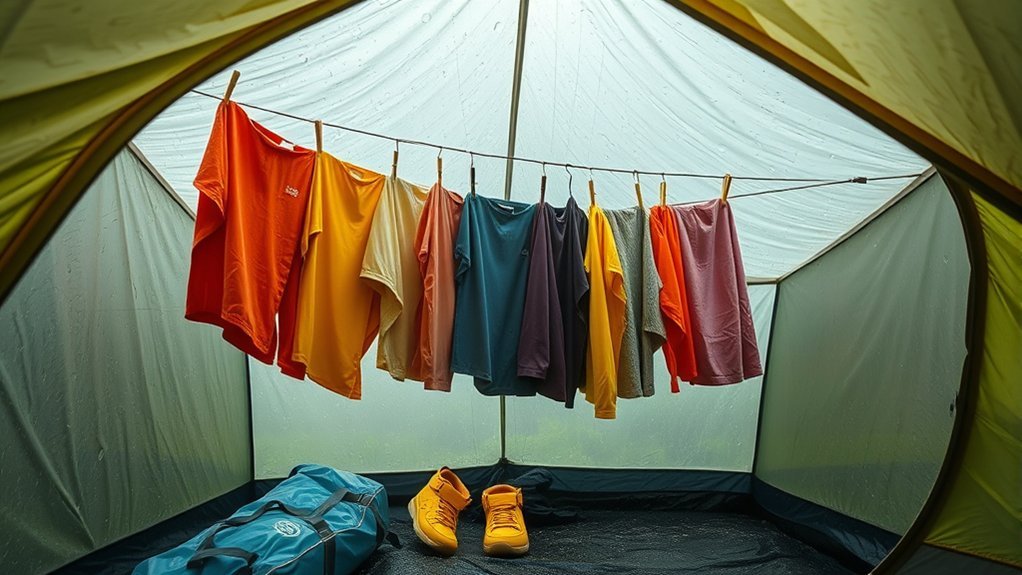
To keep your clothes dry inside a tent during wet weather, squeeze out excess water and use the towel wrap technique for damp items. Hang clothes on a clothesline or utilize campfire warmth while ensuring good ventilation. Create a sheltered hang station with a tarp and use absorbent materials like microfiber towels to control humidity. Opt for quick-dry fabrics for your clothing. There are plenty more tips and techniques to make your camping experience comfortable.
Squeeze Out Excess Water

To keep your clothes dry inside a tent, start by squeezing out excess water before bringing them in. Use effective squeezing techniques—like twisting or pressing the fabric—to force water out, especially for items like socks and towels. Different fabric types respond differently, so adjust your approach accordingly; thicker materials may require more effort.
Towel Wrap Technique
The towel wrap technique is a simple yet effective way to absorb moisture from wet clothes inside your tent. Start by wrapping your damp items in a clean, dry towel and twisting it tightly to squeeze out excess water. For best results, replace the towel with a dry one as needed and guarantee good ventilation in your tent to help speed up the drying process.
Moisture Absorption Method
When you find yourself in a wet situation while camping, the towel wrap technique offers an effective way to keep your clothes dry. Start by choosing the right towel—opt for a highly absorbent one to boost drying efficiency. Wring out excess water from your wet clothes, then wrap them tightly in the dry towel. This method excels in high humidity, where traditional drying struggles. Place the towel-wrapped clothes in a warm area of your tent, near a heat source or close to your sleeping bag, to speed up evaporation. Don’t forget to regularly swap out the wet towel for a dry one, and avoid packing the clothes too tightly—airflow is essential for best moisture absorption.
Effective Wrapping Technique
Building on the towel wrap technique, mastering the effective wrapping method is key for keeping your clothes dry in a tent. Start with the right towel selection; choose a clean, dry towel to maximize drying efficiency. First, wring out your wet clothes thoroughly—this reduces moisture content. Next, wrap the clothing in the towel, ensuring it’s snug. Apply pressure by twisting the towel to draw out excess moisture effectively. This method shines in high humidity, where air circulation is poor, minimizing dampness inside your tent. Remember, the cleaner and drier your towel, the better the outcome. With this technique, you’ll liberate your clothes from moisture, enhancing your camping experience even in wet weather.
Hanging Clothes on a Clothesline
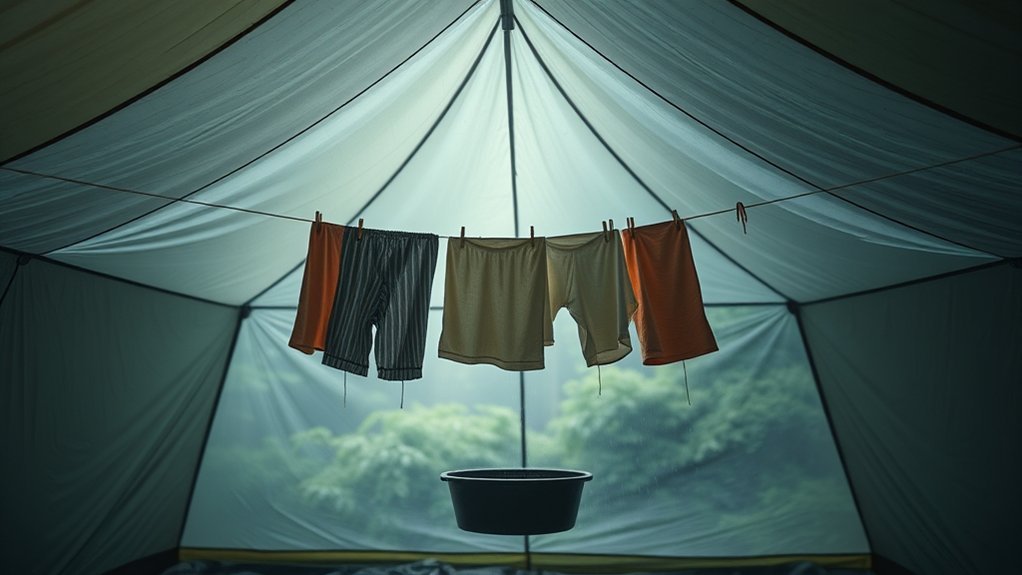
To keep your clothes dry inside a tent, hanging them on a clothesline can be an effective solution. Use durable clothesline materials like paracord or guy lines, securing them to your tent’s internal structure or poles. Position the line away from the walls to avoid moisture seeping in.
Here are a few tips to enhance your drying techniques:
- Clips or clothespins to anchor clothes securely
- Space between items for ideal airflow
- Strategically placed lines to maximize available space
Utilizing Campfire Warmth
Utilizing the warmth from a campfire can be a game-changer for drying clothes inside your tent. Position your makeshift clothesline at least 5 feet away from the fire to guarantee campfire safety while benefiting from the heat. This distance helps prevent any risk of burning or damaging your fabric.
As the campfire radiates warmth, it aids in the evaporation of moisture, making it an effective drying technique in damp conditions. Keep an eye on your clothes to monitor their drying status and avoid smoke damage by guaranteeing proper ventilation in your tent.
Always check campsite safety regulations on open flames, as some areas may have restrictions. By combining campfire warmth with effective drying techniques, you’ll keep your clothes dry and ready for your next adventure without sacrificing safety. Enjoy the freedom of staying comfortable even in wet weather!
Creating a Sheltered Hang Station
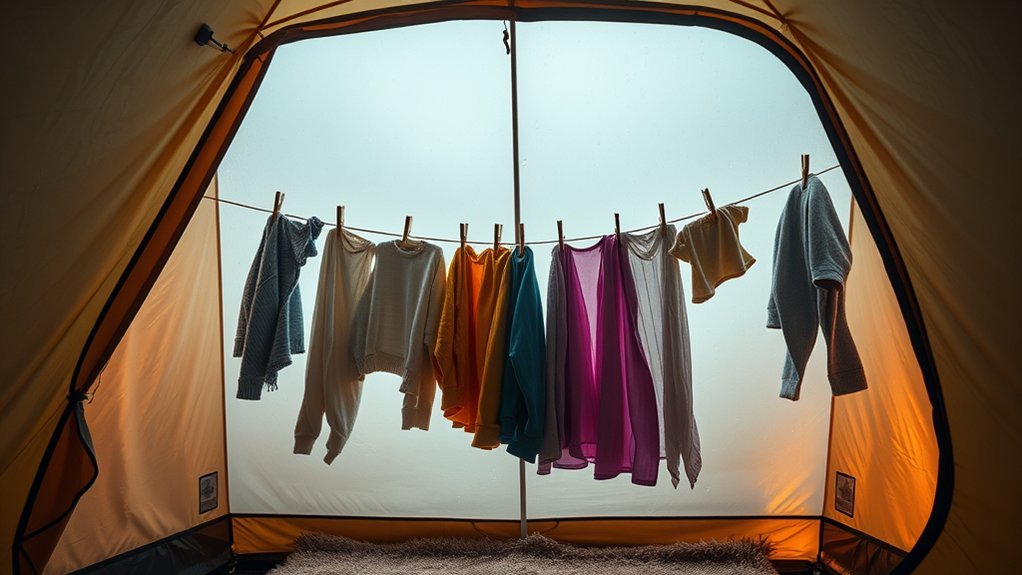
To keep your clothes dry inside a tent, start by setting up a waterproof tarp above your hang station. Use guy lines to secure it at an angle, allowing rainwater to runoff while keeping the area beneath dry. Don’t forget to guarantee good ventilation by slightly opening vents and windows to help reduce humidity and speed up drying.
Tarp Setup Techniques
Creating a sheltered hang station with a waterproof tarp can greatly enhance your camping experience by keeping your clothes dry. Start by ensuring proper tarp positioning above your tent, angling it to facilitate water runoff. This prevents rain from dripping onto your gear and clothing. To maximize drying efficiency, use the tarp to create a makeshift clothesline underneath.
- Sturdy waterproof materials keep the tarp taut and functional.
- Position your hang station near the tent entrance for easy access.
- Securely stake down the tarp to withstand wind and prevent sagging.
With these techniques, you’ll create a reliable space for drying wet clothes, helping you stay comfortable and liberated during your outdoor adventures.
Guy Line Utilization
Building on the tarp setup techniques, guy lines play a key role in constructing a sheltered hang station inside your tent. Securely suspend a waterproof tarp above your drying area, ensuring it’s properly anchored and sloped for rainwater runoff. This protects your clothes from dripping moisture while maximizing airflow for effective drying. For guy line safety, position the tarp and lines to allow easy access, enabling you to monitor your clothes as they dry. Use clothespins or clips to hang wet items on the guy lines, avoiding contact with tent walls to prevent leaks. Regularly check for moisture accumulation and adjust the positioning to optimize airflow. With this setup, you’ll keep your clothes dry, even in wet weather.
Ventilation Importance
While you might be tempted to hang wet clothes anywhere in your tent, proper ventilation is essential for effective drying. Creating a sheltered hang station with a waterproof tarp enhances airflow dynamics while keeping your clothes safe from rain. Secure the tarp with guy lines at an angle, ensuring rainwater runs off and preventing pooling. This setup aids in humidity control, vital for a drier environment.
- Clothes fluttering gently in the breeze
- Warm air rising from a nearby campfire
- Raindrops cascading off the tarp
Position your hang station near a heat source, but keep clothes at least 5 feet away for safety. This designated area outside your tent helps keep moisture at bay, ensuring a comfortable sleeping space.
Hang Drying Inside the Tent
To effectively hang dry clothes inside your tent, start by utilizing the ceiling or guy lines for ideal airflow. These drying techniques maximize ventilation, helping your clothes dry faster. Avoid overcrowding the tent with wet items, as this can increase humidity and slow down the process. Limit the number of hanging clothes to guarantee each piece gets adequate airflow.
Before hanging, use towel or ring-dry methods to remove excess moisture from your clothing. This simple step can greatly speed up drying time. Additionally, keep your tent windows slightly open for ventilation; this reduces moisture buildup and enhances airflow around the hung clothes.
Be mindful of potential drips from wet items. Placing a towel or container beneath the clothes can catch any water that accumulates while drying. By following these tips, you’ll keep your gear dry and maintain a comfortable environment inside your tent.
Managing Moisture With Absorbents
To manage moisture effectively inside your tent, start by using microfiber towels to absorb water from wet gear before bringing it inside. Opt for absorbent materials like wool or synthetic layers for clothing, as they wick moisture away from your body better than cotton. Also, keep wet items outside in a designated spot to prevent them from dripping onto your dry belongings.
Use Microfiber Towels
Microfiber towels are essential for managing moisture inside your tent. Their incredible absorbent qualities can soak up to seven times their weight in water, making them a powerful ally against dampness. Here’s how you can maximize their microfiber benefits with effective drying techniques:
- Place a towel underneath wet clothes to absorb excess moisture.
- Use a towel to wipe down gear and surfaces, minimizing condensation.
- Hang damp items on a towel to keep your sleeping area cozy and dry.
With their lightweight and compact nature, these towels are easy to pack. Plus, they dry quickly, allowing you to reuse them throughout your trip. Embrace the freedom of a drier tent, and enjoy your camping experience even in wet weather!
Employ Absorbent Materials
While camping, managing moisture inside your tent is essential for keeping your clothes dry. Start by using absorbent pouches or moisture-absorbing silica gel packs to control humidity levels. These small but powerful tools help draw moisture from the air, keeping your space drier. Place a dry towel or absorbent cloth at the tent entrance to wipe off wet gear before it enters, preventing water from pooling inside. When hanging damp clothes, consider using a designated absorbent line, allowing moisture to escape rather than accumulate on the floor. Remember to regularly check and replace your absorbent materials, as their effectiveness diminishes once saturated. With these strategies, you’ll enjoy a more comfortable, dry camping experience.
Keep Wet Items Outside
Keeping wet items outside your tent is essential for maintaining a dry environment. Designate a protected spot just outside the entrance for wet shoes and clothes. Use a waterproof tarp to create a sheltered hang station, allowing airflow and drainage. Here are a few tips for effective wet gear storage:
- Hang damp clothing on a makeshift clothesline to dry quickly.
- Store wet gear in plastic bags to prevent moisture transfer.
- Use absorbent materials like microfiber towels to dry off items before placing them outside.
Ventilation Strategies for Reducing Humidity
To effectively reduce humidity inside your tent, prioritize proper ventilation. Keeping vents and windows slightly open lets moist air escape while minimizing water entry during rain. Choose a tent with built-in ventilation features like mesh panels or adjustable vents to enhance tent airflow and support humidity control. Position your tent wisely, avoiding low-lying areas where air circulation is limited and humidity can build up.
If you have a covered area outside, hang wet clothes there instead of inside the tent. This strategy helps keep the interior drier while still benefiting from airflow. Regularly check for condensation on the tent walls and wipe it down to prevent moisture buildup. By implementing these ventilation strategies, you’ll create a more comfortable and invigorating camping experience, ensuring that your clothes stay dry and your tent remains a refreshing retreat from the elements.
Choosing Quick-Dry Fabrics
Maintaining dry clothes inside your tent becomes much easier when you choose the right fabrics. Opt for quick-dry materials like polyester and nylon, designed to wick moisture away and evaporate rapidly. Look for clothing labeled as moisture-wicking, indicating effective moisture management.
Consider these fabric types for your adventures:
- Hydrophobic fibers: Treated nylon that repels water and dries faster than cotton.
- Breathable base layers: Combine these with outer layers for added comfort.
- UV protection garments: Perfect for outdoor activities under changing skies.
Packing and Storing Wet Clothing Safely
While wet clothing can dampen your camping experience, proper packing and storage techniques can help manage moisture effectively. To keep everything organized and dry, consider these packing techniques and storage solutions:
| Technique | Description |
|---|---|
| Sealed Bags | Store wet clothing in a sealed plastic or dry bag to contain moisture. |
| Ventilated Areas | Keep wet items outside your sleeping area in a vestibule or under a rainfly. |
| Microfiber Towels | Wrap damp clothes in absorbent microfiber towels to reduce moisture before packing. |
When possible, hang damp items outside using a makeshift clothesline to promote ventilation and drying. This way, you maintain a drier tent environment and protect your gear from unwanted moisture. By following these strategies, you can guarantee your camping adventure stays enjoyable, regardless of the weather.
Frequently Asked Questions
Can I Use a Hairdryer to Dry Clothes Inside My Tent?
You can use a hairdryer to dry clothes inside your tent, but guarantee safety by keeping it away from flammable materials. Consider drying alternatives like a portable clothesline or moisture-wicking fabrics for better results.
What Types of Fabrics Dry the Fastest in Wet Conditions?
When it comes to rapid drying, opt for quick drying fabrics and moisture wicking materials. They’ll liberate you from dampness, ensuring your clothes dry swiftly, keeping you comfortable and focused on your adventure.
How Can I Prevent My Clothes From Smelling Musty in the Tent?
To prevent musty odors in your tent, focus on moisture control. Use moisture-wicking fabrics, air out clothes regularly, and keep the tent ventilated. Avoid damp items, and pack odor-preventing products for effective odor prevention.
Is It Safe to Use a Portable Heater Inside the Tent?
Using a portable heater inside your tent can be risky, like inviting a fox into the henhouse. Prioritize heater safety and guarantee proper tent ventilation to avoid carbon monoxide buildup and guarantee a safe environment.
How Do I Maintain Airflow Without Compromising Tent Security?
You can maintain airflow by utilizing ventilation techniques like mesh panels or vents in your tent design. Keep zippers slightly open or use a small fan, ensuring security while promoting a fresh atmosphere inside.
Conclusion
Keeping your clothes dry inside a tent during wet weather doesn’t have to be a struggle. By using techniques like towel wraps, hanging clothes, and managing moisture, you can stay comfortable and dry. Coincidentally, you might find that the little things, like choosing quick-dry fabrics or ensuring proper ventilation, make a big difference. So, next time you’re camping in the rain, remember these tips, and you’ll enjoy your adventure without the discomfort of soggy clothes!