


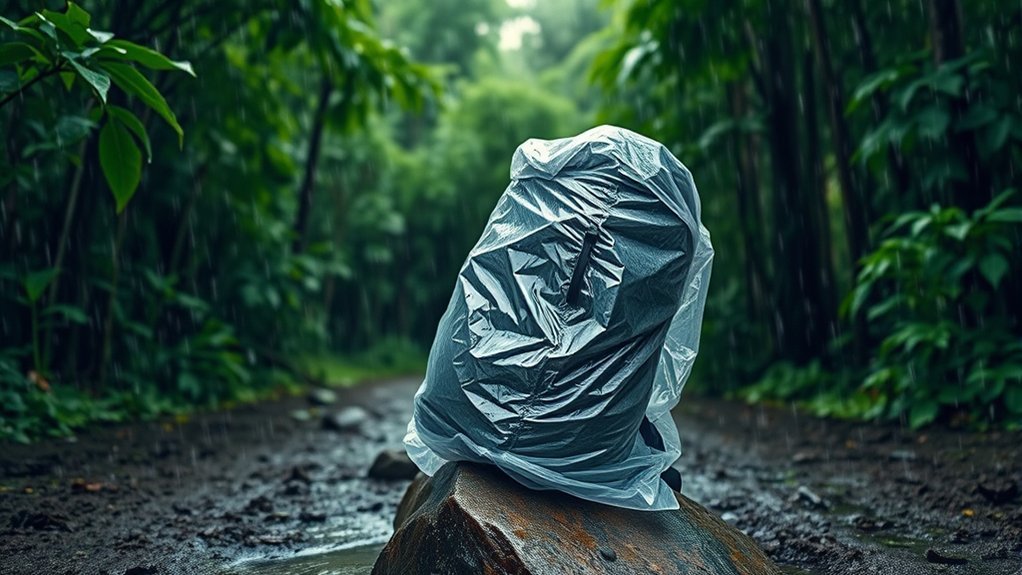
To keep your backpack dry in the rain, pack your gear in waterproof stuff sacks or dry bags. Use a custom rain cover for added protection and secure it tightly. Minimize pack openings by storing frequently accessed items in hipbelt pockets. During breaks, elevate your pack on logs or rocks to avoid damp ground. Finally, monitor weather forecasts and stay alert for changing conditions. There are plenty more tips to explore for keeping your gear safe!
Pack Your Gear in Waterproof Stuff Sacks or Dry Bags

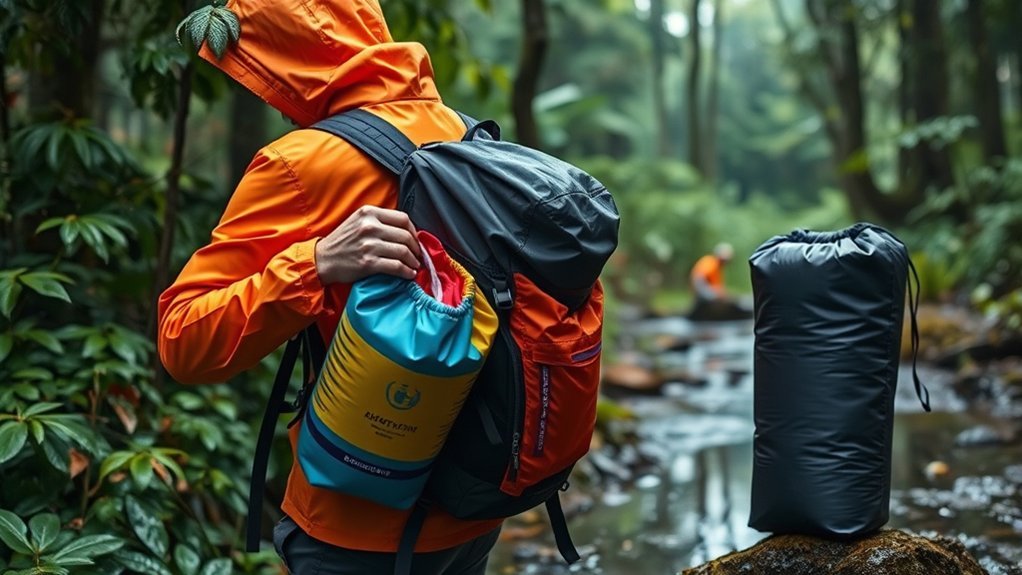
When you’re heading out into the rain, packing your gear in waterproof stuff sacks or dry bags is a must. Most backpacks aren’t inherently waterproof, so using these bags can be a game-changer. The Sea to Summit’s 3L Ultra-Sil Dry Bag is a top choice for stormy conditions, keeping your sleeping bag and clothing safe and dry.
If you’re looking for a budget-friendly option, Zip-Lock storage bags work well too. They provide decent moisture protection while allowing you to easily see what’s inside. For an even simpler solution, thick plastic trash bags can serve as basic pack liners—just cut them to size to fit your gear.
Use a Custom Rain Cover

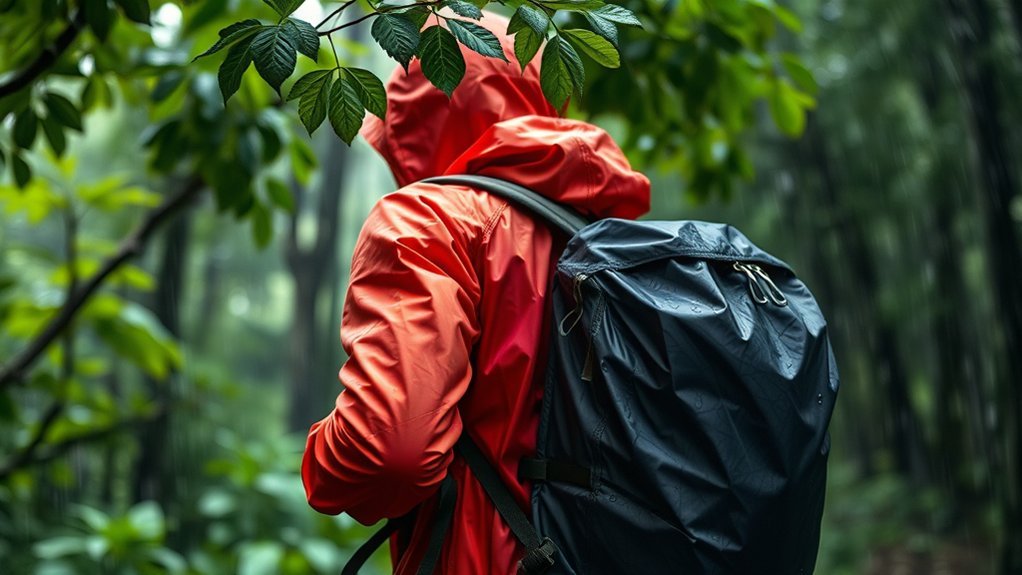
To keep your backpack dry during unexpected rain, using a custom rain cover is vital. These covers are specifically designed to fit your backpack model, guaranteeing maximum protection and minimizing water seepage through exposed areas. Made from durable, water-resistant materials like nylon or polyester, a high-quality rain cover can shield your gear from heavy downpours.
To guarantee effective coverage, secure the rain cover tightly using the shock cord. Check for any gaps where water could sneak in. While these covers are a great defense against moisture, remember they can make it tricky to access your pack’s contents, so plan ahead to limit openings during rain.
Also, take a moment to regularly inspect your rain cover for any signs of wear and tear. Keeping it in top condition guarantees your backpack stays dry, allowing you to enjoy your adventures without the worry of wet gear.
Minimize How Much You Open Your Pack
Keeping your backpack closed during rain is essential for preventing water from seeping in, so it’s wise to minimize how often you open it. To do this, stash snacks and frequently used items in side or hipbelt pockets. This way, you can quickly access what you need without exposing your pack to moisture. Plan your meals and breaks strategically to limit your access to the pack during inclement weather.
For essential items you may need, use waterproof bags that allow for quick access without fully opening your backpack. Organize your gear so that less frequently used items are at the bottom; this guarantees you only dig deep when absolutely necessary. Finally, practice quick access techniques, like using a top-loading pack or side access zippers, to retrieve items efficiently while keeping your gear dry. By adopting these strategies, you can keep your belongings safe and dry, no matter the weather.
Keep Gear Elevated During Breaks
Elevating your gear during breaks is a simple yet effective way to keep it dry and protected from the elements. When you lift your pack off the ground, you prevent moisture from seeping in and ruining your essentials. Look for natural features like rocks or logs to create a barrier between your gear and wet surfaces. If you can, hang your pack from a tree branch or lean it against a sturdy rock for extra protection against rain.
This elevation also makes it easier to access your items quickly, so you won’t have to dig through soggy packs. Remember, keeping your gear elevated is especially important in rainy conditions, as it minimizes the risk of water accumulating around your belongings. By taking these small steps, you guarantee your gear stays dry, allowing you to focus on enjoying your adventure without worry.
Monitor Weather Conditions and Plan Accordingly
While you might be enthusiastic to hit the trail, staying informed about the weather conditions can make all the difference in keeping your backpack dry and your adventure enjoyable. Here are some steps to help you stay prepared:
- Check Weather Forecasts: Always look up forecasts before your trip and monitor for sudden changes while on the trail.
- Be Ready to Alter Plans: If severe weather warnings arise, like heavy rain, don’t hesitate to change your route or campsite to guarantee safety and protect your gear.
- Observe the Sky: Keep an eye out for ominous clouds or sudden temperature drops, as these could signal an approaching storm.
Frequently Asked Questions
Can I Use a Regular Backpack Instead of a Waterproof One?
Yes, you can use a regular backpack, but it won’t offer the same protection. To keep your belongings dry, consider using rain covers, trash bags for items, or packing them in waterproof pouches.
How Can I Tell if My Pack Cover Fits Properly?
To check if your pack cover fits properly, make certain it fully envelops your backpack without sagging or leaving gaps. Adjust the straps for a snug fit, allowing easy access to pockets. You’ll feel secure and protected!
What Should I Do if My Backpack Gets Wet?
If your backpack gets wet, remove everything inside, dry the items, and shake off excess water. Hang the pack upside down in a well-ventilated area to air dry, avoiding direct sunlight to prevent damage.
Are There Specific Materials That Are More Waterproof?
When it rains, choose materials like nylon, polyester, or PVC. These fabrics act like umbrellas for your gear, keeping moisture at bay. Look for waterproof coatings to guarantee your backpack’s ready for any stormy adventure.
How Often Should I Check My Gear for Waterproofing?
You should check your gear for waterproofing at least once a season. Regularly inspect seams and coatings, especially before trips, to guarantee your gear’s ready for whatever nature throws at you. Stay prepared and adventurous!
Conclusion
Just like a sturdy ship maneuvering stormy seas, keeping your backpack dry in the rain requires preparation and vigilance. By packing your gear in waterproof sacks and using a rain cover, you’ll shield your essentials from the downpour. Remember to keep your pack zipped tight and elevated during breaks, ensuring it stays dry as you sail through the elements. With a keen eye on the weather, you’ll confidently explore the great outdoors, rain or shine.