


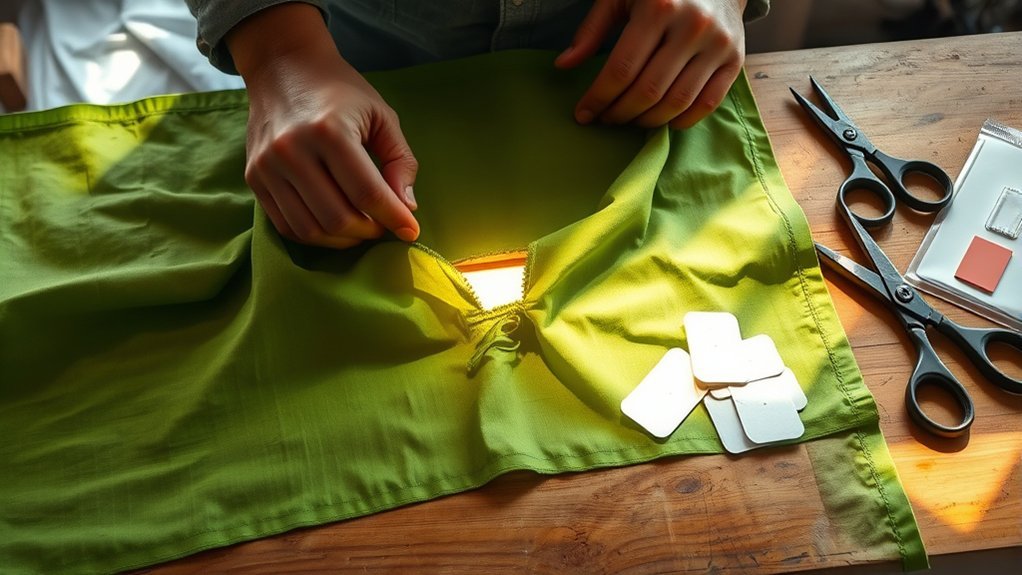
To fix a torn rainfly, first, identify the type of tear. Clean the area with isopropyl alcohol before applying a patch like Tenacious Tape for a permanent fix, ensuring it’s at least ½ inch larger than the hole. For quick fixes, use medical tape or duct tape, rounding the corners. If the tear is too large, temporarily stitch it with weather-resistant thread, then cover with a patch. After repairs, maintain waterproofing to extend its lifespan, with more tips available if you keep going.
Understanding the Importance of a Functional Rainfly


While you might not think about it often, a functional rainfly is fundamental for your tent’s performance in inclement weather. The right rainfly materials, like ripstop nylon or polyester, provide excellent weather protection, guaranteeing you stay dry during rainstorms. Beyond keeping water out, a rainfly helps minimize condensation by acting as a barrier between your tent’s interior and external moisture. This is essential for maintaining a comfortable environment, especially in fluctuating temperatures, as it provides additional insulation.
Regular maintenance of your rainfly not only preserves its waterproof properties but also extends your tent’s lifespan by preventing water damage and mold growth. If you notice any tears, repairing them promptly is critical to safeguard against leaks. By understanding the importance of a functional rainfly, you can enhance your outdoor experience and guarantee your shelter remains a reliable refuge in challenging weather conditions.
Identifying Types of Tears in Your Rainfly
To effectively address tears in your rainfly, it is crucial to first identify the type of damage present. Tears can generally be categorized into two types: solid fabric holes and mesh holes. Each requires a different approach for repair.
- Solid fabric holes: Small tears or punctures can often be fixed with adhesive patches like Tenacious Tape or Tear Aid Type A.
- Mesh holes: Assess these for distinct holes; sometimes, bunched fibers can be realigned without needing patches.
- Frayed edges: Look for frayed threads along the edges of holes, which indicate significant tears that need immediate attention.
- Regular inspection: Frequently check your rainfly for signs of wear or damage to catch tears early.
Essential Tools for Rainfly Repair

Having the right tools for rainfly repair can make all the difference in your outdoor experience. Equip yourself with a thorough repair kit that includes essential items for effective adhesive types and patching methods.
| Tool | Purpose |
|---|---|
| Tenacious Tape | Permanent fixes for nylon, plastic, rubber |
| Clean Cloth | Prepares the area for patching |
| Isopropyl Alcohol | Cleans the damaged area |
| Scissors | Cuts patches to size, guaranteeing ½ inch clearance |
| Needle & Thread | Temporarily stitches smaller tears |
With these tools at your disposal, you can efficiently address any rainfly damage. Remember to apply the tape after cleaning the area to guarantee ideal adhesion. Having this repair kit on hand not only enhances your preparedness but also liberates you from the stress of unexpected issues during your adventures.
Cleaning the Damaged Area
Before you apply any repair patches, it’s essential to clean the damaged area thoroughly. Use isopropyl alcohol or a mixture of soap and water to remove any dirt and oils that could hinder adhesion. After cleaning, make certain the fabric is completely dry to guarantee a strong bond for your repair.
Use Isopropyl Alcohol
While you might be keen to repair your torn rainfly, it is vital to start by cleaning the damaged area with isopropyl alcohol. This effective cleaning agent removes dirt, oils, and contaminants, ensuring a strong bond for your patch.
Follow these steps for ideal cleaning:
- Use at least 70% isopropyl alcohol for best results.
- Soak a clean cloth or cotton ball in the alcohol.
- Gently wipe the area around the tear or hole.
- Allow the surface to dry completely before applying patches or tape.
Proper cleaning techniques with isopropyl alcohol help prevent peeling and enhance the durability of your repair, setting you up for a successful fix. Don’t skip this critical step—your rainfly deserves a solid foundation for repairs.
Soap and Water
After using isopropyl alcohol to clean the damaged area, it’s important to further guarantee the surface is free of contaminants by washing it with soap and water. Choose a mild soap option, like dish soap, mixed with water to avoid damaging the fabric while effectively removing dirt and debris. Use a clean cloth or sponge to gently scrub the area, ensuring you cover all the surfaces that will bond with your repair patch. After scrubbing, rinse the area thoroughly with clean water to eliminate any soap residue that could interfere with adhesion. Regularly employing these cleaning techniques can help you spot potential issues early, preventing larger problems during your outdoor adventures. Allow the area to dry completely before proceeding with repairs.
Dry Thoroughly Before Repair
Ensuring your rainfly is completely dry is essential for effective repairs, as moisture can greatly compromise the adhesion of patches or tape. Follow these steps to minimize moisture risks:
- Clean the damaged area with soap and water or isopropyl alcohol to remove dirt and oils.
- Use drying techniques like setting the rainfly up in a well-ventilated area to expedite the drying process.
- Air dry thoroughly; any residual moisture can lead to peeling patches over time.
- Inspect for additional damage around the area, as this cleaning and drying phase allows you to spot other potential issues.
Using Duct Tape or Medical Tape for Quick Fixes
When you face a tear in your rainfly, duct tape and medical tape provide quick and effective solutions. Apply the tape to a clean, dry area around the tear for maximum adhesion, but remember, these fixes are temporary and should be replaced with a permanent repair later. To avoid damaging the fabric, remove the tape promptly after your trip, ensuring no sticky residue remains.
Quick Application Techniques
A simple fix for a torn rainfly can be achieved using either duct tape or medical tape, both of which are lightweight and easy to carry in your camping gear. Here are some quick application techniques to guarantee a secure repair:
- Clean the area around the tear to guarantee proper adhesion.
- Cut a piece of tape slightly larger than the tear for full coverage.
- Apply the tape directly over the tear, pressing firmly to create a strong bond.
- Remove the tape as soon as you return home to avoid damaging the rainfly fabric.
These tape alternatives provide effective repair techniques for temporary fixes, allowing you to enjoy your outdoor experience without worry. Always keep a roll handy in your emergency repair kit!
Temporary vs. Permanent Fixes
While quick fixes with duct tape or medical tape can save your outdoor experience from a sudden downpour, it’s important to understand their limitations. Duct tape provides a versatile, temporary solution for urgent repairs, allowing you to continue camping without worry. Medical tape minimizes sticky residue, making it a practical option for quick fixes that you can easily remove after your trip. However, neither should be considered permanent solutions. Once you’re home, it’s vital to implement long-term strategies, such as proper patching methods, to guarantee your rainfly’s durability. Remember, while these tapes are effective for immediate needs, they can’t replace thorough repairs that maintain your gear’s integrity for future adventures.
Clean Removal Tips
To guarantee clean removal of duct tape or medical tape after a quick fix on your rainfly, follow a few essential steps. Employing effective cleaning techniques helps achieve minimal residue from adhesive types. Here’s how to achieve that:
- Apply tape to completely cover the tear and extend at least ½ inch beyond.
- Remove the tape immediately after your trip to prevent sticky residue.
- For less adhesive left behind, prefer medical tape over duct tape.
- Store a roll of each in your camping kit for quick access during emergencies.
Applying Tenacious Tape for a Stronger Repair
When tackling a tear in your rainfly, Tenacious Tape™ offers a reliable, long-lasting solution. This self-adhesive tape bonds permanently to nylon, plastic, and rubber, making it perfect for repairs. Start by cleaning the area around the tear with isopropyl alcohol or soap and water. For effective patch sizing, cut the Tenacious Tape at least ½ inch larger than the hole and round off the corners to minimize peeling risks.
Here’s a quick reference table for your repair:
| Step | Action | Tips |
|---|---|---|
| 1. Clean | Use isopropyl alcohol | Confirm surface is dry |
| 2. Cut | Size patch at least ½ inch larger | Round corners |
| 3. Apply | Press firmly | Verify good adhesion |
| 4. Cure | Allow to set | Wait for ideal strength |
Follow these applying techniques for a durable repair and get back to enjoying your outdoor adventures.
Stitching the Tear as a Last Resort

Stitching the tear in your rainfly should be a last resort, as it can lead to further damage if not done carefully. If you choose to proceed, use a strong, weather-resistant thread and guarantee the area around the tear is clean to prevent any compromise in the stitch integrity. Remember, a temporary stitch can help keep your shelter functional until a more permanent solution is applied after your trip.
Temporary Repair Method
Although stitching a tear in your rainfly should be a last resort, it can provide a temporary solution to prevent further water entry during your trip. If you find yourself in this situation, follow these steps for effective emergency repairs:
- Use a needle and strong, weather-resistant thread.
- Employ a whip stitch or zigzag stitch for strength and flexibility.
- Make certain tight, secure stitches to minimize water entry.
- Apply a patch of Tenacious Tape or similar material over the stitched area for added waterproofing.
Prevent Additional Damage
While temporary stitching may seem like a quick fix for a torn rainfly, it’s crucial to tread carefully to avoid exacerbating the damage. Consider stitching a last resort; improper technique can create additional punctures. To minimize risks, make sure your stitches are clean and tight, steering clear of overlapping stitches that weaken the fabric. This method can help maintain your shelter’s integrity until you can apply a permanent fix, like patches or professional repairs. After temporary stitching, clean the rainfly thoroughly to prevent mold and deterioration before storing or using it again. Remember, regular inspections and preventative maintenance can help you catch potential issues early, reducing the need for stitching in the first place.
Maintaining Waterproof Capabilities Post-Repair
To guarantee your rainfly remains waterproof after a repair, reapplying a waterproofing treatment is essential, as repairs often compromise the fabric’s water resistance. Here’s how to maintain waterproof capabilities effectively:
Reapply waterproofing treatment after repairs to ensure your rainfly retains its water resistance.
- Use a waterproofing treatment specifically designed for nylon or polyester after any repairs.
- Allow adhesive patches or tape to cure for the recommended time before exposing the rainfly to moisture.
- Conduct regular seam inspections to check for any signs of leakage, especially in repaired areas.
- Consider applying a silicone-based waterproofing spray periodically to enhance overall water resistance.
Preventing Future Damage to Your Rainfly
When you take proactive steps to protect your rainfly, you greatly reduce the risk of future damage. Implementing effective rainfly care is essential. Here are some maintenance tips to take into account:
| Action | Purpose | Frequency |
|---|---|---|
| Use a footprint under your tent | Protects against ground abrasions and punctures | Every setup |
| Set up away from campfires/sharp objects | Minimizes accidental damage | Always |
| Inspect for wear | Identifies frayed threads or small holes | Before every trip |
| Store in a cool, dry place | Prevents mildew and degradation | When not in use |
| Avoid overloading your tent | Reduces stress on the rainfly | Every packing |
When to Seek Professional Help for Repairs
Recognizing when to seek professional help for rainfly repairs can save you time and prevent further damage. Here are key situations where you should consider professional services:
- If a tear exceeds 3 inches, as larger tears often require specialized techniques.
- When stitching is necessary, and you lack sewing skills, to avoid worsening the damage.
- For extensive damage, like multiple holes or structural issues, to guarantee repairs maintain the rainfly’s integrity.
- If you notice significant pole damage, submit the poleset for repair instead of attempting makeshift solutions that compromise safety.
The repair cost may vary, but professional services can assure a durable fix and possibly warranty coverage if your rainfly is still under guarantee. Don’t hesitate to reach out to the manufacturer’s repair department for assistance with complex issues. Prioritizing proper repairs guarantees your rainfly remains reliable for your adventures.
Frequently Asked Questions
Can I Use Regular Tape Instead of Tenacious Tape?
You can use regular tape for temporary fixes, but it won’t provide the same durability as tenacious tape. Different tape types offer varying stickiness and weather resistance, so consider your situation before choosing.
How Long Does the Repair Last?
The repair’s longevity depends on conditions and materials used. With proper application, you can expect durability expectations around several months to a year, ensuring your gear remains functional during your outdoor adventures.
Is It Safe to Wash the Rainfly After Repair?
Yes, it’s safe to wash your rainfly after repair, but use gentle washing techniques. Proper rainfly maintenance keeps it functional longer, ensuring you stay dry and protected during your adventures, instead of risking damage from neglect.
Can I Repair a Rainfly With Fabric Glue?
Yes, you can repair a rainfly with fabric glue. Make certain the surfaces are clean for maximum fabric glue effectiveness. Regular rainfly maintenance will help preserve its integrity, enhancing durability against harsh weather conditions.
What Should I Do if the Tear Is Very Large?
If the tear’s very large, consider using patching techniques like fabric adhesive or a strong, waterproof tape. For emergency solutions, cut a durable material to size, secure it tightly, and guarantee it fully overlaps the tear.
Conclusion
With your rainfly now repaired, you can venture into the great outdoors like a seasoned adventurer, ready to face nature’s elements. Just remember, maintaining your gear is as essential as knowing how to wield it. Keep an eye out for future damage, and don’t hesitate to apply your newfound skills at the first sign of wear. After all, even the mightiest of heroes needed to patch their armor before heading into battle. Happy camping!