


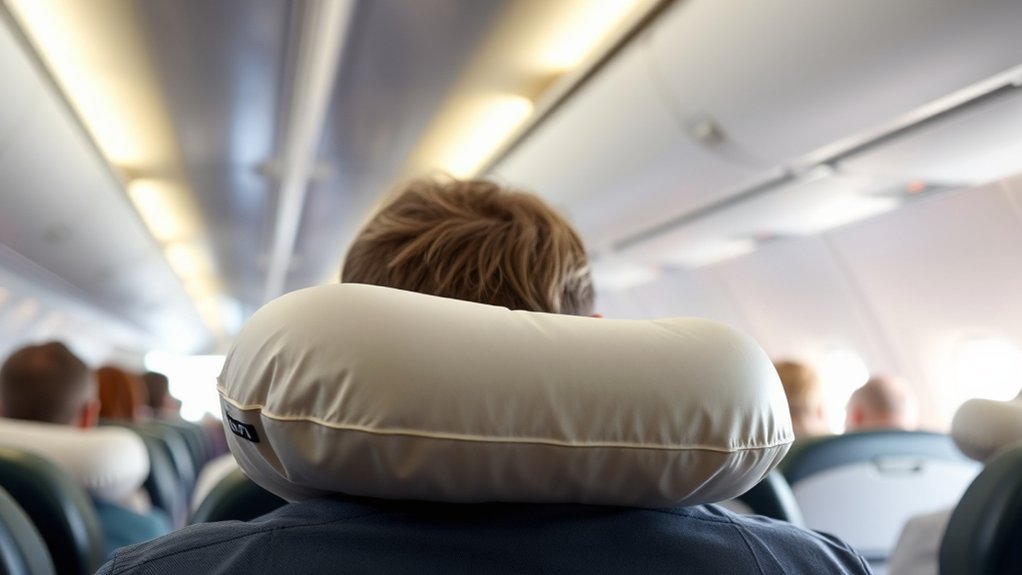
Inflatable travel pillows can indeed pop from cabin pressure changes during flights. When the cabin altitude drops, the air inside these pillows expands rapidly, increasing the risk of explosive ruptures. This poses significant health risks, like disrupting blood flow to critical areas. To mitigate these risks, it’s important to choose pillows with safety features, like pressure release valves, and to inflate them correctly. Understanding these factors is imperative for a safe travel experience on your next trip.
Are Inflatable Travel Pillows Safe During Flights?


Are inflatable travel pillows truly safe during flights? The answer’s complex. Safety regulations surrounding these pillows are increasingly scrutinized due to significant risks. Should cabin pressure drop suddenly, the potential for explosion poses severe health implications. Ultrasound tests reveal that the rapid inflation can disrupt blood flow in the carotid arteries, risking interrupted blood supply to the brain. This could lead to dire outcomes, including brain damage or death. Experts like Ian Perry advocate for rigorous testing and regulatory reviews, highlighting the dangerous design of inflatable neck cushions. Given the alarming evidence, it’s essential to reconsider their use in aircraft. Until proven safe through thorough evaluations, a ban might be necessary to protect passengers’ well-being.
Understanding Cabin Pressure and Its Effects on Inflatable Travel Pillows
Although you may not think about it, cabin pressure plays an essential role in the safety and functionality of inflatable travel pillows during flights. The significant pressure differential, as planes maintain a cabin altitude of around 8,000 feet, can jeopardize material durability. If cabin pressure suddenly drops, the rapid expansion of air within these pillows may result in explosive ruptures, posing severe risks to passengers. Manufacturers must reassess designs to guarantee they can withstand such changes without health hazards.
| Pressure Scenario | Risk Level | Recommended Action |
|---|---|---|
| Normal Cabin Pressure | Low | Standard use |
| Sudden Pressure Drop | High | Avoid using inflatable pillows |
| High Internal Pressure | Critical | Immediate redesign needed |
| Material Weakness | Moderate | Select stronger materials |
| Gradual Air Leakage | Low to Moderate | Regular inspections required |
Myths vs. Facts About Inflatable Travel Pillows
When using inflatable travel pillows, it’s essential to understand the pressure-related risks involved. Many people believe these pillows are entirely safe, but they can burst under sudden cabin pressure changes, leading to serious injuries. Safety standards for these products remain a concern, highlighting the need for further evaluation to protect travelers.
Pressure-Related Risks Explained
While many travelers believe inflatable travel pillows enhance comfort during flights, the pressure-related risks associated with their use are often underestimated. When cabin pressure drops, these pillows can expand up to three times their normal size, posing a risk of explosion. This rapid inflation can disrupt blood flow in carotid arteries, considerably increasing the risk of serious health complications. Experts, including vascular surgeon Mark Whiteley, assert that these neck cushions are dangerous unless rigorously tested for safety. The potential for strangulation from an inflating cushion can interrupt blood supply to the brain, leading to severe consequences. Regulatory bodies are urged to reassess safety regulations regarding inflatable travel pillows due to these alarming pressure effects during air travel.
Safety Standards Overview
The safety standards surrounding inflatable travel pillows are often clouded by misconceptions that downplay their potential hazards. These pillows can expand rapidly during sudden cabin pressure loss, posing serious risks, including potential explosions. Research by vascular surgeon Mark Whiteley highlights how these neck cushions disrupt carotid artery flow, raising safety concerns in aviation settings. Experts like Ian Perry deem them dangerous, advocating for thorough testing and evaluation before approval under current safety regulations. Regulatory bodies must reassess industry standards for inflatable travel accessories, as existing designs lack proven safety for airborne use. The rapid expansion can lead to strangulation risks and inadequate blood supply to the brain, making a strong case for immediate restrictions until their safety is confirmed.
What Factors Influence Pillow Integrity at High Altitudes?
As cabin altitude increases during a flight, several factors can greatly impact the integrity of inflatable travel pillows. The pressure dynamics play a vital role; as external pressure decreases, the internal pressure of the pillow rises, which can lead to rupture if the pillow is over-inflated. Additionally, the material durability of these pillows often falls short, as manufacturers typically use thin and porous materials that may exacerbate air leakage under high altitude conditions. If a pillow isn’t designed to withstand these pressures, it risks popping or deflating. Consequently, rigorous testing and safety evaluations are essential for ensuring that inflatable travel pillows maintain their integrity throughout the flight, safeguarding your comfort and enhancing your travel experience.
Essential Safety Features Every Inflatable Travel Pillow Should Have
Understanding the integrity of inflatable travel pillows at high altitudes naturally leads to the discussion of their safety features. Essential features include:
| Safety Feature | Description |
|---|---|
| Pressure Release Valve | Gradually deflates during sudden pressure loss, preventing expansion risks. |
| Material Durability | Constructed from puncture-resistant materials compliant with safety standards. |
| Airflow Design | Ergonomically shaped to guarantee unobstructed airflow to the head and neck. |
| Rigorous Testing | Manufacturers must certify pillows for safety under varying cabin pressures. |
| Health Safety | Designed to minimize health risks like strangulation or restricted blood supply. |
Properly Inflating Your Travel Pillow
To properly inflate your travel pillow, first inflate it partially at ground level, leaving space for air expansion during flight. This technique minimizes the risk of over-inflation and guarantees the pillow maintains its structural integrity under changing cabin pressure. Adhering to the manufacturer’s inflation guidelines is essential for achieving peak comfort while avoiding potential damage to the pillow.
Optimal Inflation Techniques
How can you guarantee your inflatable travel pillow provides ideal support without risking damage during flights? Start by inflating it just enough to maintain travel comfort without over-inflating. Leaving a small amount of space inside allows for air expansion as cabin air pressure changes, preventing seam strain. Inflate your pillow at lower altitudes to mitigate the risk of air pressure differentials causing bursts during ascent. Consider models equipped with pressure-release valves, which automatically adjust to cabin pressure fluctuations, greatly reducing the chance of popping. Always consult the manufacturer’s guidelines for best inflation levels, ensuring you strike a balance between support and safety. This careful consideration will enhance your travel experience while safeguarding your pillow’s integrity.
Avoiding Over-Inflation Risks
While ensuring comfort during your travels, it’s essential to avoid over-inflation of your travel pillow, which can lead to damage from cabin pressure changes. To address over-inflation concerns, inflate your pillow to about 80% of its capacity. This allows adequate space for air expansion as cabin pressure fluctuates. Always consult the manufacturer’s guidelines for ideal inflation instructions, as different pillows may vary in their requirements. Regularly monitor your pillow during the flight for any signs of over-inflation or damage, which can help manage pressure effectively. By adopting these practices, you not only enhance your comfort but also prolong the lifespan of your travel accessory, ensuring a more liberated travel experience.
Maintaining Cushion Integrity
Maintaining the integrity of your inflatable travel pillow requires careful attention to inflation practices, as improper techniques can lead to damage during flights. To guarantee the best pillow maintenance and effective pressure management, follow these guidelines:
- Inflate your travel pillow to the manufacturer’s recommended pressure, avoiding over-inflation to prevent bursting during altitude changes.
- Inspect the pillow for visible defects or leaks before use; even small weaknesses can compromise performance under cabin pressure.
- Partially deflate the pillow before flying to accommodate slight expansion without risking damage.
Additionally, store your pillow in a cool, dry place away from sharp objects, and regularly check the valve mechanism to confirm it seals properly. By adhering to these practices, you enhance both comfort and durability during your travels.
How to Spot When Your Inflatable Pillow Needs Replacing
When should you consider replacing your inflatable travel pillow? Regular inspections are essential for peak performance. Look for visible punctures or tears, as these compromise integrity. Listen for hissing sounds during inflation, indicating a slow leak. Monitor firmness; if the pillow requires frequent reinflation or doesn’t maintain pressure, it’s time for a replacement. Inspect the valve area for wear indicators that could cause air loss. Discoloration or material degradation also serves as replacement signs.
| Condition | Action |
|---|---|
| Visible punctures | Replace immediately |
| Hissing sounds | Check for leaks, consider replacing |
| Loss of firmness | Replace if reinflation is frequent |
Stay vigilant to guarantee your comfort during travel.
Choosing the Best Inflatable Travel Pillow
Selecting the right inflatable travel pillow is vital for ensuring comfort during flights, especially given the unique challenges posed by cabin pressure changes. Here are key factors to take into account:
- Material Durability: Choose a pillow that resists punctures, as durability is significant at high altitudes.
- Inflation Methods: Look for pillows with secure valves that facilitate easy inflation and deflation, enabling quick comfort adjustments.
- Support Design: Opt for models offering adequate neck and head support, with customizable firmness for ideal travel comfort on long journeys.
Tips for Maintaining Your Inflatable Travel Pillow While Traveling
To guarantee your inflatable travel pillow remains functional and comfortable throughout your journey, it’s vital to adopt a proactive maintenance approach. Start by checking for visible damage or leaks before packing; this assures your pillow stays intact. Implement effective packing strategies by storing your pillow in a protective bag to prevent punctures from sharp objects. Inflate your pillow only to the recommended level—over-inflation risks popping under altitude pressure. After use, deflate the pillow completely to avoid pressure build-up. Regularly inspect the valve and seams for wear or deterioration; compromised integrity can lead to failure during travel. By following these travel pillow maintenance tips, you’ll enhance your comfort and peace of mind on the go.
Frequently Asked Questions
Can I Use My Inflatable Pillow for Camping or Outdoor Activities?
You can definitely use your inflatable pillow for camping. It offers camping comfort and outdoor convenience, providing support during rest. Just guarantee it’s durable enough to withstand rugged conditions while maintaining its shape and functionality.
How Do I Clean My Inflatable Travel Pillow?
To clean your inflatable travel pillow, use mild soap and water, gently wiping the surface. For effective pillow maintenance, avoid harsh chemicals and guarantee it dries completely to prevent mildew or deterioration.
Are There Any Weight Limits for Inflatable Travel Pillows?
Inflatable travel pillows typically don’t have specific weight restrictions, but excessive weight can affect air pressure, causing discomfort or damage. It’s best to use them as intended to maintain their integrity and effectiveness during travel.
What Materials Are Commonly Used in Inflatable Travel Pillows?
You’ll find inflatable travel pillows made from materials like PVC, nylon, and TPU. Each offers varying durability concerns. Superior inflation techniques can enhance comfort, but always consider material resilience to guarantee long-lasting use during travels.
Can I Get a Warranty for My Inflatable Travel Pillow?
Yes, you can often get a warranty for your inflatable travel pillow. Check warranty policies for coverage details, as they reflect product durability and your right to a reliable, comfortable travel companion on every journey.
Conclusion
In summary, inflatable travel pillows are generally safe during flights, as they’re designed to withstand cabin pressure changes. However, understanding the factors that affect their integrity is essential. By properly inflating your pillow and recognizing when it needs replacement, you can guarantee comfort throughout your journey. So, as you soar through the skies, remember: a well-maintained travel pillow can be your best travel companion, cushioning your adventures and keeping you well-rested at new heights.