


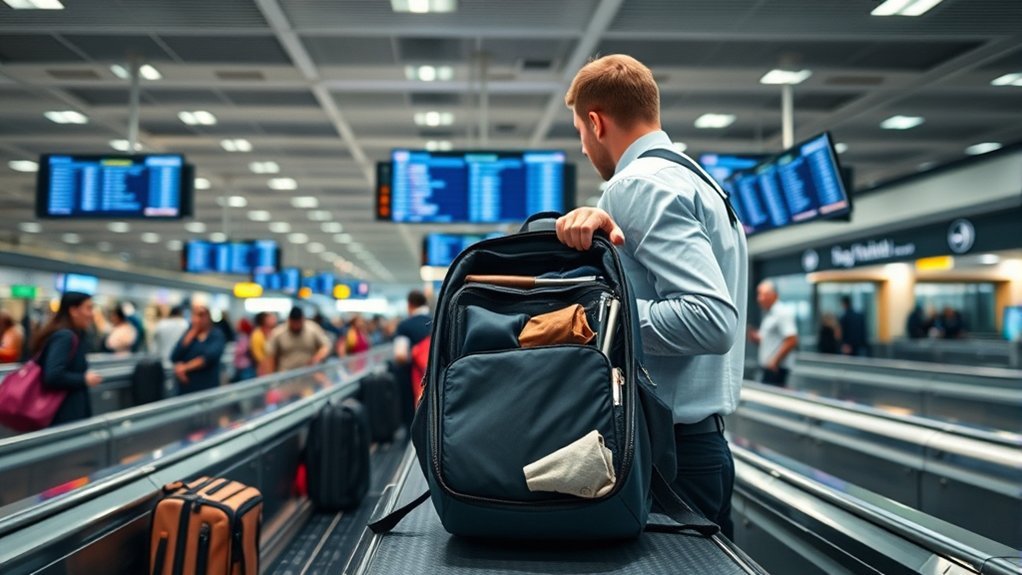
When flying internationally, it’s essential you understand carry-on backpack rules. Most airlines allow sizes up to 21.6 x 14.9 x 8.6 inches, with weight limits typically between 7-10 kg. Pack smartly: keep essential documents accessible, and remember TSA guidelines for liquids and electronics. While backpacks offer hands-free convenience and save on checked baggage fees, be mindful of potential drawbacks like limited protection for fragile items. Ready to equip yourself with expert packing strategies?
Understanding Carry-On Backpack Regulations

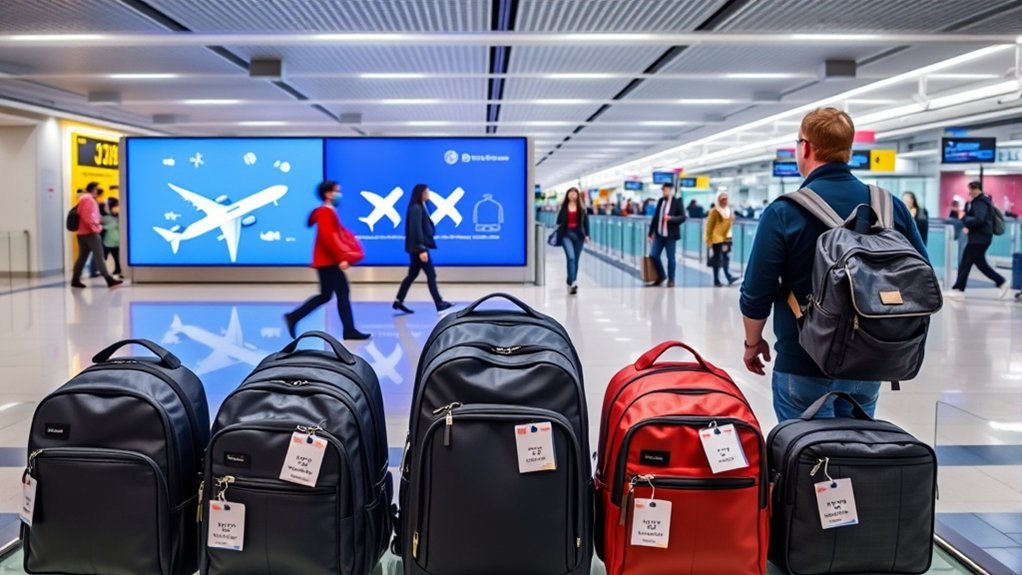
When you’re planning an international flight, understanding carry-on backpack regulations is essential to guarantee a smooth travel experience. Each airline has its own rules, usually limiting your backpack size between 15.7 x 7.8 x 9.8 inches and 21.6 x 14.9 x 8.6 inches. So, measure your pack beforehand to avoid any surprises. Keep in mind that liquids must be in containers no larger than 3.4 ounces, fitting snugly within a quart-sized clear plastic bag for security checks. Many carriers also enforce strict weight limits, often around 7 kg, so it’s wise to check your airline’s guidelines. Additionally, be ready to pull out electronics larger than a phone during screening. Finally, double-check the list of prohibited items to steer clear of any security hassles. By staying informed, you can travel light and free, making the most of your journey.
Size and Weight Restrictions for Backpacks
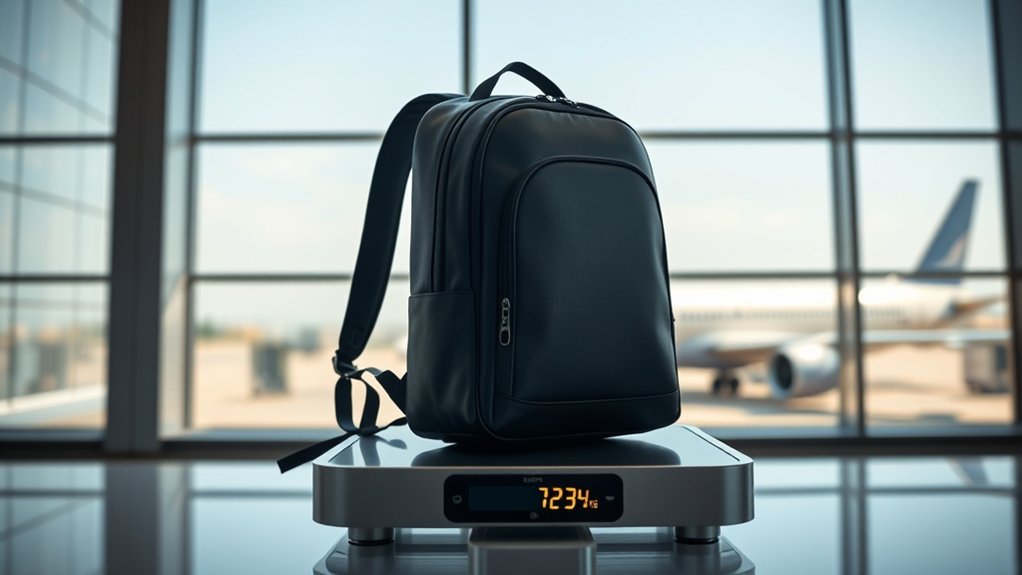
Maneuvering size and weight restrictions for carry-on backpacks can be a game changer for international travelers. Most airlines allow a maximum size of 21.6 x 14.9 x 8.6 inches (55 x 38 x 22 cm) for economy class passengers. However, weight limits vary: some airlines allow up to 10 kg (22 lbs), while others like Emirates cap it at 7 kg (15.4 lbs). Lufthansa grants a bit more leeway, permitting 8 kg (17.6 lbs). It’s crucial to measure your backpack, including any external pockets, to verify compliance with these regulations before you head to the airport. Remember, non-compliance can lead to extra fees or the hassle of checking your bag. By understanding these limits, you can pack wisely, guaranteeing your journey remains smooth and liberating as you explore new horizons without unnecessary burdens.
TSA Guidelines for Carry-On Luggage
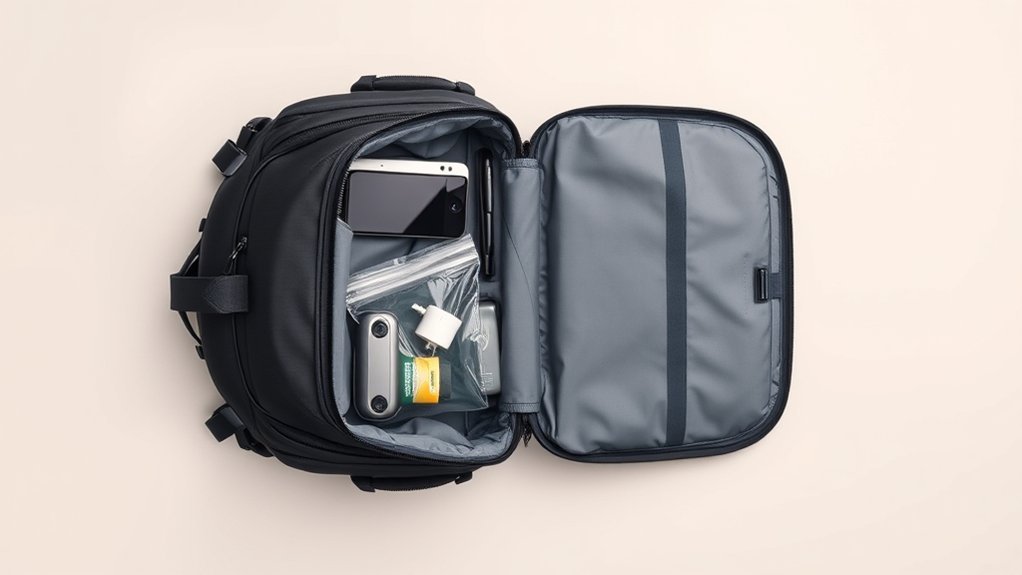
Maneuvering TSA guidelines for carry-on luggage can feel overwhelming, but understanding the essentials makes your airport experience much smoother. First, remember that liquids should be in containers of 3.4 ounces (100 milliliters) or less, neatly packed in a clear, quart-sized plastic bag for screening. This simple step can save you time at security.
Next, don’t forget to remove electronics larger than a cell phone from your backpack and place them in a separate bin for X-ray inspection. It’s vital to keep your belongings flowing smoothly through the checkpoint.
Also, be aware that sharp objects, firearms, explosives, and certain chemicals are strictly prohibited. To stay informed about any changes, check the TSA’s “What Can I Bring?” list before traveling. By complying with these guidelines, you’ll sail through security without delays or the stress of confiscated items. Enjoy your journey!
Packing Essentials for Your Backpack
Packing your backpack efficiently for an international flight can make a world of difference in your travel experience. Start by ensuring that your liquids are in containers of 3.4 ounces (100 milliliters) or less and stowed in a clear quart-sized plastic bag, complying with TSA regulations. Prioritize your essentials: keep your passport, travel documents, medication, and a change of clothes accessible.
Utilize packing cubes to categorize your items, making it easy to find what you need without digging through your backpack. If you’re bringing electronics, pack them in a designated compartment for hassle-free access during security checks. Finally, pay attention to weight distribution—place heavier items close to your back and lighter ones around the edges. This not only enhances comfort while carrying but also keeps your load balanced. By following these tips, you’ll be well on your way to a smooth, liberating travel experience!
Tips for Choosing the Right Backpack
Choosing the right carry-on backpack can greatly enhance your travel experience. Start by verifying it meets airline size restrictions, typically not exceeding 22 x 14 x 9 inches. Opt for a backpack with multiple compartments, making it easier to access essentials like travel documents and electronics. Lightweight, durable materials such as nylon or polyester are ideal, especially those with water-resistant features to safeguard your belongings.
Consider a clamshell opening for effortless packing and unpacking, allowing you to grab what you need without the hassle. Comfort matters too; choose adjustable straps with padded support to ease those long airport walks and guarantee proper weight distribution.
With the right backpack, you’ll not only streamline your travel but also embrace the freedom to explore with ease and style. So, take your time selecting a backpack that fits your needs, and get ready for your next adventure!
Advantages of Using a Backpack as Carry-On
Using a backpack as your carry-on offers several compelling advantages that can transform your travel experience. First off, it provides hands-free convenience, making it easier to navigate crowded airports while keeping your essentials close at hand. With flexible packing options and multiple compartments, backpacks let you maximize space and stay organized, unlike rigid suitcases. Plus, opting for a backpack helps you dodge those pesky checked baggage fees, simplifying your travel budget whether you’re on a quick getaway or an extended adventure. Most airlines allow carry-on backpacks with dimensions up to 22 x 14 x 9 inches, making compliance a breeze. Designed for travel, many backpacks are made from durable, water-resistant materials and feature comfortable straps, ensuring both usability and protection for your belongings. Embracing a backpack can truly liberate your travel style, allowing you to move freely and enjoy the journey ahead.
Potential Drawbacks of Carry-On Backpacks
While carry-on backpacks offer convenience, they can leave fragile items vulnerable to damage during your travels. If you pack too heavily or unevenly, you might find yourself struggling with shoulder strain as you navigate through crowded terminals. Additionally, the casual appearance of a backpack could clash with the professional image you want to project in business settings.
Limited Fragile Item Protection
When packing for an international flight, you might find that carry-on backpacks, though convenient, provide limited protection for fragile items. Unlike hard-shell luggage, backpacks are made from softer materials that don’t absorb impacts well. If you’re carrying glass bottles or delicate electronics, you risk damage during handling unless you pack them with extra care. The lack of structured compartments means your fragile items won’t have the cushioning they need, increasing the chance of breakage. Additionally, in crowded spaces, your backpack may get jostled more than wheeled luggage, further compromising the safety of its contents. To travel worry-free, make sure to pad and secure your fragile items carefully to minimize movement and protect your treasures on the go.
Potential Shoulder Strain
Carrying a backpack on your international flight can lead to unexpected discomfort, especially if you don’t pay attention to how you pack it. Overloading your backpack or packing it improperly can strain your shoulders, making your journey less enjoyable. Here are three key points to keep in mind:
- Weight Limits: Verify your backpack doesn’t exceed recommended weight limits to avoid strain.
- Proper Packing: Pack heavier items closer to your back for better weight distribution and support.
- Take Breaks: Regularly adjust or remove your backpack to alleviate pressure and prevent muscle fatigue.
Smart Packing Techniques for Air Travel
Packing smartly can transform your travel experience, making it more organized and stress-free. By using packing cubes and rolling your clothes, you’ll maximize space while keeping essentials easy to access during your flight. Plus, sticking to TSA regulations for liquids guarantees you won’t face any surprises at security.
Efficient Packing Methods
To maximize space and efficiency in your carry-on backpack, consider employing smart packing techniques that streamline your travel experience. Here are three methods you can use:
- Roll Your Clothes: This saves space and minimizes wrinkles, allowing you to fit more in your backpack.
- Utilize Packing Cubes: Organizing items by category not only saves time but also keeps your essentials easily accessible.
- Wear Bulky Items: Donning jackets or boots can free up valuable space, making your packing even more efficient.
Layer heavier items at the bottom of your backpack for better weight distribution. Keep frequently used items in accessible compartments to breeze through security. With these techniques, you’ll travel light and stress-free!
Organizing Essentials Effectively
After mastering efficient packing methods, you’re ready to organize your essentials effectively for air travel. Start by using packing cubes to categorize your items, making it easy to locate clothing, toiletries, and tech gear when you need them. Roll your clothes instead of folding them; this not only saves space but also reduces wrinkles. Keep frequently accessed items like snacks, travel documents, and electronics in outer compartments for quick retrieval during security checks and in-flight. Prioritize versatile clothing that can mix and match, maximizing your outfits while minimizing bulk. Finally, layer heavier items at the bottom of your backpack and distribute weight evenly for comfort as you navigate through the airport. Enjoy the liberation that comes with smart packing!
Final Considerations for Smooth Travel
While your excitement for international travel may be building, it’s crucial to keep a few final considerations in mind to guarantee a smooth journey. Here are three key points to remember:
As your anticipation for international travel grows, remember these vital tips for a seamless experience.
- Check Airline Regulations: Always verify the specific size and weight restrictions for carry-on backpacks with your airline. They can differ greatly, especially for international flights.
- Pack Smart: Make sure your liquids, aerosols, and gels are in containers of 3.4 ounces (100 milliliters) or less, stored in a clear quart-sized plastic bag, to comply with TSA regulations.
- Maximize Space: Utilize packing cubes and efficient layering techniques to organize your backpack, ensuring you can easily access essentials during your flight.
Frequently Asked Questions
Can I Bring Food in My Carry-On Backpack?
Yes, you can bring food in your carry-on backpack, but check the specific rules. Sealed snacks work best, while liquids and gels have restrictions. Enjoy your travel munchies, but stay informed to avoid surprises!
Are There Restrictions on Carrying Electronics?
Yes, you can carry electronics, but there are restrictions. Laptops, tablets, and larger devices must be easily accessible for security checks. Make sure your gadgets comply with airline regulations to avoid any travel hiccups.
What Happens if My Backpack Exceeds Size Limits?
If your backpack exceeds size limits, you’ll face delays, potential fees, or even have to check it in. Think of it as a balloon; too big, and it can’t soar freely through the skies.
Can I Pack a Duty-Free Purchase in My Backpack?
Yes, you can pack a duty-free purchase in your backpack. Just make sure it’s securely sealed and compliant with your destination’s regulations. Enjoy your new items, but check for any additional restrictions before boarding.
Are There Special Rules for International Flights?
Yes, international flights often have special rules. You’ll need to limit liquids, remove electronics during screening, and guarantee your backpack meets size requirements. Always check your airline’s specific guidelines before packing for a smoother journey.
Conclusion
As you prepare for your next adventure, remember that the right carry-on backpack can make all the difference. Envision this: you’re breezing through the airport, your essentials neatly packed, and the freedom of movement at your fingertips. But wait—what if you miss an essential rule or overlook packing tips that could save you time? Stay informed and travel smart, because the excitement of your journey deserves nothing less than a seamless experience. Are you ready to take off?