


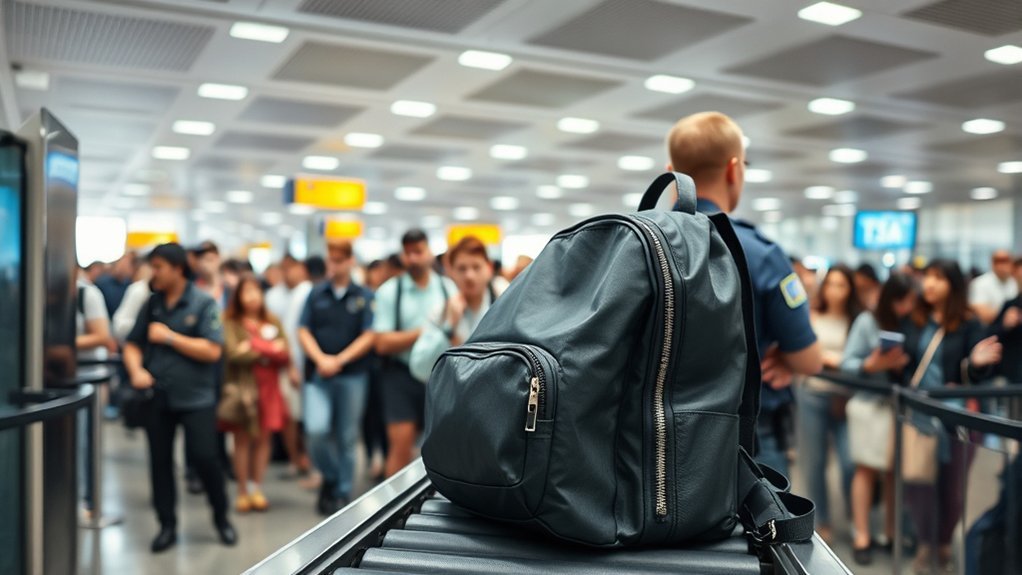
Yes, you can bring a backpack through airport security as long as it meets TSA regulations and your airline’s policies. Verify it’s within the typical size limit of 22 x 14 x 9 inches and that you follow the 3-1-1 rule for liquids. Remove larger electronics for inspection and check that you aren’t carrying any prohibited items. Using a backpack offers convenience and flexibility for your travel. There’s even more to explore about making your journey smoother.
Understanding TSA Regulations for Backpacks


When you’re packing your backpack for air travel, it’s essential to understand TSA regulations to guarantee a smooth security screening process. Most U.S. airlines allow backpacks as carry-on items, but they typically must fit within size limits of 22 x 14 x 9 inches. Remember the 3-1-1 rule for liquids, aerosols, and gels: containers must be 3.4 ounces or less and packed in a clear quart-sized bag.
When you get to security, be prepared to remove electronics larger than a cell phone for X-ray inspection. Also, keep in mind that certain items—sharp objects, firearms, and explosives—are strictly prohibited in your carry-on. The TSA officer ultimately decides what’s allowed, so it’s important to be aware of these rules. Finally, check your airline’s specific policies regarding weight limits and any additional restrictions for your backpack to avoid surprises at the airport.
Benefits of Using a Backpack as Carry-on Luggage

Understanding TSA regulations for your backpack sets the stage for a seamless travel experience, but the advantages of using a backpack as your carry-on luggage are equally important. The hands-free convenience of a backpack allows you to navigate crowded airports with ease, leaving your hands free for essentials. Its flexible packing options mean you can fit more items than a rigid suitcase, maximizing your packing efficiency for any trip length.
With multiple compartments and accessible pockets, you can keep essential items within easy reach, enhancing your travel experience. Additionally, using a backpack helps you avoid checked baggage fees, simplifying your travel costs and granting you more freedom during transit. Whether you’re heading out for a weekend getaway or an extended journey, a backpack adapts to your needs, offering versatility that enhances your overall travel experience. Embrace the liberation a backpack provides on your next adventure!
Airline Carry-on Policies for Backpacks

When packing your backpack for a flight, it’s essential to know the size limits set by your airline, usually around 22 x 14 x 9 inches. While most airlines don’t enforce strict weight regulations for carry-ons, they may weigh your bag if it looks heavy. Familiarizing yourself with these guidelines will guarantee a smoother airport experience.
Size Limitations for Backpacks
Most U.S. airlines permit carry-on backpacks with dimensions up to 22 x 14 x 9 inches (56 x 36 x 23 cm). However, each airline may have unique policies, so it’s essential to check their specific guidelines before you travel. Here are a few key points to remember:
- Personal Items: You can usually bring personal items like purses or small laptop bags in addition to your backpack.
- International Travel: Be aware that international airlines often enforce weight restrictions, unlike most U.S. carriers.
- Weight Checks: Even if weight limits aren’t standard, airlines might check your bag if it looks too heavy.
Stay informed to guarantee your backpack meets all requirements, making your journey smoother and more liberating.
Weight Regulations Overview
Many travelers overlook weight regulations for carry-on backpacks, which can lead to unexpected complications at the airport. While most U.S. airlines don’t impose specific weight limits, they may check your bag if it looks excessively heavy. Standard carry-on size limits allow dimensions up to 22 x 14 x 9 inches. However, international airlines often enforce weight restrictions, so it’s wise to weigh your backpack ahead of time. Each airline has its own carry-on policies, making it important for you to check specific guidelines before your flight. Even if weight limits aren’t enforced domestically, adhering to size regulations remains essential to avoid delays or issues at the gate. Stay informed, and travel freely!
Choosing the Right Backpack for Air Travel
When you’re selecting a backpack for air travel, focus on size and weight to guarantee it meets airline carry-on regulations and remains lightweight for easy mobility. Look for features like multiple compartments to keep your essentials organized and accessible at security. A well-designed backpack not only enhances your travel experience but also keeps you looking professional if you’re traveling for business.
Size and Weight Considerations
Choosing the right backpack for air travel hinges on understanding size and weight considerations. To guarantee a hassle-free experience, keep these factors in mind:
- Dimensions: Most US airlines permit carry-on backpacks up to 22 x 14 x 9 inches (56 x 36 x 23 cm). Measure your backpack, including pockets, to comply with these guidelines.
- Weight Limits: While many US airlines don’t enforce specific weight restrictions, international airlines often do. Weigh your backpack beforehand to avoid surprises.
- Capacity: A backpack with a capacity of 30-45 liters is usually ideal for most travelers, balancing space and manageability.
Features for Convenience
Selecting a backpack with thoughtful features can greatly enhance your travel experience. Aim for a capacity between 30-45 liters—perfect for both short trips and longer adventures without exceeding carry-on limits. Look for padded laptop sleeves and multiple compartments to keep your electronics and essentials organized and accessible during security screenings. Make sure the backpack dimensions comply with standard carry-on sizes, typically up to 22 x 14 x 9 inches, to avoid delays at checkpoints. Choose lightweight, durable materials to ease strain on your shoulders and back. Additionally, consider water resistance and external attachment points for added convenience. These features empower you to travel freely and confidently, making your journey more enjoyable.
Efficient Packing Tips for Your Backpack
To maximize space and efficiency in your backpack, start by rolling your clothes instead of folding them. This technique saves space and minimizes wrinkles, allowing you to fit more items in your bag. Consider these additional packing tips to enhance your travel experience:
- Utilize packing cubes: Organize items by category, making it easier to access essentials during your journey.
- Layer heavier items at the bottom: This improves weight distribution and enhances comfort while carrying your backpack.
- Keep frequently used items accessible: Store travel documents and electronics in outer compartments to streamline security checks.
Lastly, create a carry-on essentials checklist. This guarantees you pack all necessary items, like toiletries and chargers, without exceeding TSA regulations. By implementing these strategies, you’ll travel lighter and more efficiently, giving you the freedom to explore without extra baggage.
Pros and Cons of Using a Backpack as Carry-on
While backpacks offer a convenient alternative to traditional luggage, there are both advantages and drawbacks to evaluate when using one as your carry-on.
| Pros | Cons |
|---|---|
| Hands-free mobility for easy navigation | Less protection for fragile items |
| Flexible packing options maximize space | May lack organization compared to suitcases |
| Fits well under seats and in overhead compartments | Limited capacity for larger items |
| Multiple compartments for easy access | Can become uncomfortable if overloaded |
Ultimately, a backpack can enhance your travel experience with its versatility and efficiency. However, you should assess your packing needs and preferences. If you prioritize mobility and organization, a backpack is a fantastic choice. Just remember to weigh the protection of your belongings, especially fragile items, before making your decision.
Popular Backpack Recommendations for Travelers
When it comes to choosing the right backpack for your travels, several standout options cater to a variety of needs. Here are three top recommendations:
- Osprey Farpoint 40L – Perfect for durability and comfort during extended trips. It balances capacity and ease of carrying, making it a traveler favorite.
- Patagonia Refugio – Ideal for light packers and day trips. Its sleek design and practical compartments keep your essentials organized without bulk.
- Tortuga Outbreaker 45L – Highly praised for its organization features, this backpack excels in carry-on travel, making airport navigation a breeze.
When selecting your backpack, remember to take into account features like water resistance, multiple compartments, and comfort elements such as padded straps and waist belts. These enhancements ultimately enrich your travel experience, giving you the freedom to explore without worry.
Final Checks Before Heading to the Airport
Before you head to the airport, it’s crucial to conduct a final check of your backpack to guarantee a smooth travel experience. Start by verifying your backpack is completely empty before packing. This helps you avoid carrying any prohibited items that might be hidden in pockets. Next, double-check that all liquids, aerosols, and gels comply with the 3-1-1 rule—each container must be 3.4 ounces or less and fit into a quart-sized clear bag.
Also, verify your backpack meets airline carry-on size limits, typically not exceeding 22 x 14 x 9 inches. Make sure all travel documents, identification, and essential items are easily accessible for quick retrieval during security screening. Finally, review the TSA’s “What Can I Bring?” list and any specific airline policies to confirm compliance. Taking these final checks can save you time and stress at the airport.
Frequently Asked Questions
Can I Bring Snacks in My Backpack Through Security?
Yes, you can bring snacks in your backpack through security. Just verify they comply with the TSA regulations, like keeping liquids under 3.4 ounces. Enjoy your travel snacks without worry!
Are There Size Restrictions for Backpacks at Airport Security?
Yes, there are size restrictions for backpacks at airport security. They generally must fit under the seat or in the overhead bin. Check your airline’s guidelines to confirm your bag meets their requirements before traveling.
Do I Need to Remove My Backpack for Screening?
Yes, you’ll need to remove your backpack for screening at airport security. Place it on the conveyor belt separately, ensuring easy access for security personnel to check your belongings without delay.
Can I Bring a Backpack and a Personal Item on Board?
Yes, you can bring a backpack and a personal item on board, like carrying a piece of freedom with you. Just make sure they fit the airline’s size restrictions, and you’re ready to soar!
What Should I Do if My Backpack Is Too Heavy?
If your backpack’s too heavy, lighten the load. Remove unnecessary items, redistribute weight, or consider using a luggage scale. Prioritize essentials to guarantee comfort and compliance, making your travel experience smoother and more enjoyable.
Conclusion
To summarize, using a backpack as your carry-on can simplify your travel experience, offering both convenience and versatility. Imagine gliding through the airport with everything you need easily accessible, while keeping your hands free. Just remember to stay informed about TSA regulations, pack efficiently, and choose the right backpack for your journey. With these tips in mind, you’re all set to navigate the skies comfortably and stylishly. Happy travels!