


A poorly designed travel pillow can definitely cause neck strain, leading to discomfort during your travels. Many travel pillows lack the necessary height and support, resulting in misalignment and strain on your neck muscles. Common flaws, such as inadequate firmness or unstable design, can exacerbate these issues. To guarantee you get proper support, consider your neck shape and travel habits when selecting a pillow. There’s more to learn about how to choose a better travel pillow for your comfort.
How Poor Travel Pillow Design Causes Neck Pain

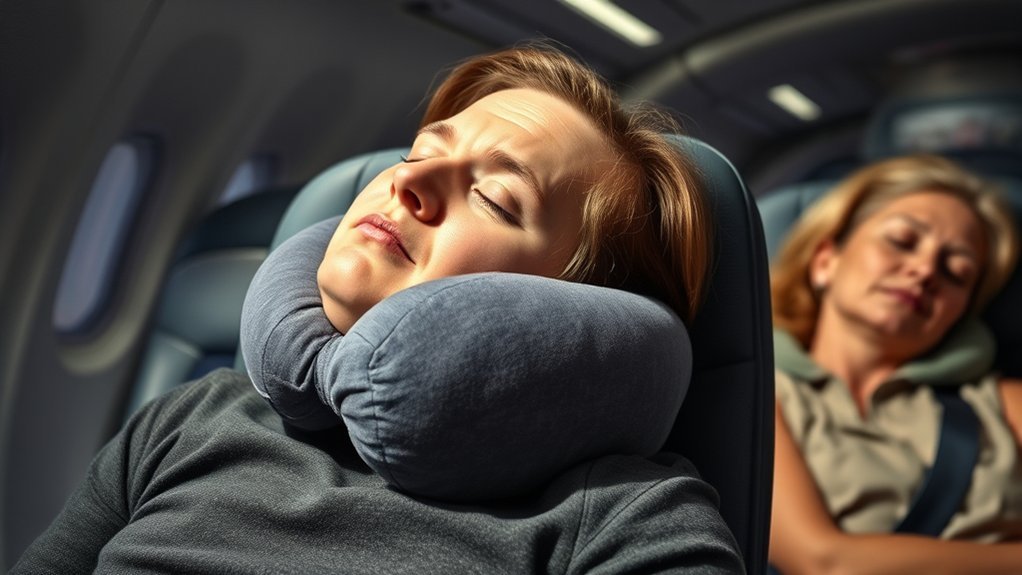
When you rely on a poorly designed travel pillow, you might not realize the impact it can have on your neck until it’s too late. Inadequate pillow ergonomics often lead to insufficient height and support, causing your head to tilt uncomfortably. This misalignment strains vital neck muscles, like the levator scapulae and sternocleidomastoid, making any movement painful. Without proper stabilization, your head may slump, increasing discomfort as you shift during travel. A flat or backward-angled design further exacerbates neck strain, pushing your head forward. Additionally, low-density foam or non-adjustable options fail to keep your spine aligned, amplifying the risk of neck pain. Prioritizing travel comfort means choosing wisely; a supportive travel pillow can liberate you from unnecessary discomfort.
Common Design Flaws to Avoid in Travel Pillows
Choosing the right travel pillow can be a game-changer, especially when you understand the common design flaws to avoid. First, look for pillows with adequate height; those under 5 inches often fail to support your neck and chin, leading to strain. Verify your pillow offers stability; poor designs can cause slumping, worsening discomfort. A flat or backward-angled back pushes your head forward, intensifying neck strain. Also, check for essential features like straps or non-slip panels, which enhance pillow stability while you’re seated. Finally, be cautious of common fillings like microbeads or low-density foam—they might not conform to your neck’s natural curvature. Prioritizing these elements will enhance your travel ergonomics and keep neck pain at bay.
Why Pillow Height and Support Matter for Neck Health
While many travelers underestimate the importance of pillow height and support, these factors play a crucial role in maintaining neck health during journeys. An ideal travel pillow should be about 5 inches high, providing the support needed to keep your cervical spine aligned. Insufficient height can push your head forward, straining neck muscles and disrupting alignment.
| Pillow Firmness | Ideal Height | Travel Habits |
|---|---|---|
| Soft | 5 inches | Frequent Flyers |
| Medium | 5 inches | Road Trip Lovers |
| Firm | 5 inches | Train Commuters |
| Adjustable | 5 inches | Adventure Seekers |
Choosing the right support based on your neck length and shoulder width can liberate you from discomfort and neck strain.
How to Choose the Right Travel Pillow Based on Your Neck Shape
When choosing a travel pillow, it’s essential to take into account your neck shape and support level preferences. Different materials, like memory foam, offer varying degrees of adaptability, helping to align your neck properly. By understanding these factors, you can select a pillow that minimizes strain and enhances your travel comfort.
Neck Shape Considerations
Finding the right travel pillow can make a significant difference in your comfort while on the go, especially when considering your neck shape. If you have a longer neck, opt for a thicker pillow—about 5 inches—to keep your head aligned and prevent strain. For side sleepers, a contoured or adjustable pillow is essential; it fills the gap between your neck and shoulders, accommodating different shoulder widths. If you’ve got broader shoulders, choose a wider pillow to guarantee full support, avoiding misalignment discomfort. Customizable pillows can further enhance your experience, allowing you to adjust firmness and thickness to suit your neck length and personal preferences. Prioritize your neck shape to enhance your travel comfort and well-being.
Support Level Preferences
Choosing the right level of support in a travel pillow is essential for your comfort, especially since your neck shape and sleeping position greatly influence your needs. Consider your support preferences—U-shaped, J-shaped, or wrap-around designs each cater to various body types. Aim for a pillow height of about 5 inches to guarantee adequate neck and chin support, preventing your head from pushing forward and causing strain. A well-fitting pillow should align with your cervical spine’s natural curve, enhancing travel comfort. Customizable pillows with adjustable firmness allow you to tailor the support to your unique neck shape. Always keep your neck measurements and preferred sleeping position in mind to avoid discomfort and achieve a liberating travel experience.
Pillow Material Options
Selecting the right material for your travel pillow can greatly impact your comfort and support during your journeys. Memory foam provides adaptive support, molding to your neck’s shape to maintain proper spinal alignment. If you prefer a softer feel, microbead options contour well to varying neck lengths and shoulder widths, promoting flexibility. On the other hand, inflatable designs allow you to adjust firmness, catering to your specific comfort needs. Remember to measure your neck length and shoulder width, aiming for a height of about 5 inches to prevent strain. Customizable pillows offer further adjustments in thickness and firmness, ensuring they accommodate your unique neck shape and sleeping position, reducing the risk of discomfort or strain on your travels.
Tips for Preventing Neck Pain While Traveling
To prevent neck pain while traveling, focus on choosing a travel pillow with the right height and support for your neck. Remember to take regular stretch breaks every 30-60 minutes to keep your muscles relaxed and maintain good posture throughout your journey. By making these adjustments, you can greatly enhance your comfort and reduce the risk of strain.
Choose Proper Pillow Height
How can the right pillow height make a difference in preventing neck pain while traveling? Choosing a travel pillow with an ideal height of about 5 inches provides essential ergonomic support, keeping your neck aligned and preventing excessive forward tilting. If your pillow’s too low, your head may fall forward or to the side, straining your neck muscles, especially on long trips. Look for pillows with non-slip features or straps to stabilize your head and maintain proper alignment. Additionally, select a design that conforms to the natural curve of your neck, distributing pressure evenly. Regularly assess your travel pillow based on your neck length, shoulder width, and sleeping position for personalized comfort and support on your journeys.
Take Regular Stretch Breaks
While you might be settled into your travel routine, taking regular stretch breaks every 30–60 minutes is essential for preventing neck pain. These brief interludes can alleviate stiffness by promoting blood circulation and muscle relaxation. Aim for a stretch duration of 1-2 minutes, focusing on simple neck movements like tilting your head side to side and gently rotating it. Incorporate shoulder rolls and upper back stretches to enhance your overall posture and relieve tension in your neck and shoulders. Engaging in light physical activity, like walking or standing to stretch, can further improve comfort. By maintaining a consistent stretch frequency, you’ll greatly reduce the likelihood of experiencing discomfort during your journey—giving you the liberation to enjoy your travels fully.
Maintain Good Posture
Good posture is vital for preventing neck pain during travel, as improper alignment can lead to discomfort and fatigue. To achieve ideal alignment, guarantee your seating arrangement supports your natural posture, incorporating additional lumbar support if necessary. A well-designed travel pillow stabilizes your head without pushing it forward, essential for maintaining travel ergonomics. Remember to take breaks every 30–60 minutes to stand and stretch, alleviating stiffness and enhancing comfort. Regularly stretching your neck, shoulders, and back before, during, and after your journey can considerably decrease discomfort and improve mobility. By prioritizing good posture and proper support, you’ll enjoy a more liberated travel experience free from the burden of neck pain.
Why Good Posture Matters When You Travel
When you travel, maintaining good posture is essential for your overall comfort and well-being. Proper posture alignment not only supports your neck but also enhances your travel experience. Here’s why it matters:
- Reduces Strain: Keeping your spine aligned prevents neck strain and discomfort from long hours in cramped spaces.
- Improves Circulation: Good posture boosts blood flow, decreasing fatigue and helping you stay energized throughout your journey.
- Enhances Comfort: Regularly adjusting your position and taking breaks to stretch promotes better travel ergonomics, alleviating stiffness.
Adjusting Your Travel Pillow for Comfort
How can you guarantee your travel pillow provides the support you need for a comfortable journey? Start by making key pillow adjustments. Set the height to about 5 inches to keep your neck and chin aligned, preventing strain. If your pillow includes straps or non-slip panels, use them to stabilize it on your seat, ensuring proper alignment. Don’t forget to tweak the angle and firmness for those much-needed comfort enhancements—especially if you start feeling discomfort. A travel pillow that wraps around your neck or features adjustable components allows for a personalized fit, enhancing support. Finally, remember to stretch your neck and shoulders regularly during your trip to complement your pillow’s support, ensuring a more enjoyable travel experience.
When to Seek Help for Travel-Related Neck Pain?
Experiencing persistent neck pain after your travels can be alarming, but knowing when to seek help is essential for your well-being. If you find yourself suffering from neck pain, consider these key indicators:
- Duration: If your discomfort lasts more than a few days, it’s time for healthcare consultations.
- Symptoms: Accompanying numbness, tingling, or weakness in your arms signals potential serious issues that require immediate attention.
- Support Issues: If your travel pillow isn’t providing adequate support, exploring alternative options or professional advice is vital.
Understanding your neck pain triggers can empower you. Engaging with orthopedic specialists or physical therapists can lead to effective, non-invasive treatments that enhance your travel comfort and overall well-being. Don’t hesitate to prioritize your health!
Frequently Asked Questions
Can Different Sleeping Positions Affect Travel Pillow Effectiveness?
Yes, your sleeping positions can greatly impact travel pillow effectiveness. Proper pillow alignment is essential; if you’re not positioned correctly, the pillow won’t support your neck, leading to discomfort or strain during your travels.
How Often Should I Replace My Travel Pillow?
You should replace your travel pillow every 1-2 years. Look for signs of replacement like flattening, odor, or wear. A shorter travel pillow lifespan means it’s time to invest in a more supportive option for comfort.
Are Foam or Inflatable Pillows Better for Neck Support?
Foam pillows cradle your neck like a gentle hug, offering firm foam density for stability. Inflatable pillows, however, provide adjustable support, letting you customize comfort. Choose based on your preferences for a liberating travel experience.
Can Using a Travel Pillow Improve Sleep Quality on Flights?
Using a travel pillow can greatly enhance your sleep quality during flights. By improving your sleep environment, it adapts to your travel habits, offering essential support and comfort, leading to a more restful journey.
What Materials Are Best for Travel Pillows to Avoid Neck Strain?
For ideal neck support, choose travel pillows made from memory foam or gel infused materials. These options contour to your neck’s shape, promoting comfort and reducing strain, ensuring you feel liberated during long journeys.
Conclusion
In the quest for comfortable travel, a poorly designed pillow can turn your journey into a painful ordeal. Imagine the thrill of exploration overshadowed by nagging neck pain. By choosing the right travel pillow and maintaining good posture, you can embrace the joy of travel without the burden of discomfort. Remember, your neck deserves support just as much as your adventurous spirit does. Don’t let a simple oversight ruin your next adventure; invest in your comfort and well-being.