


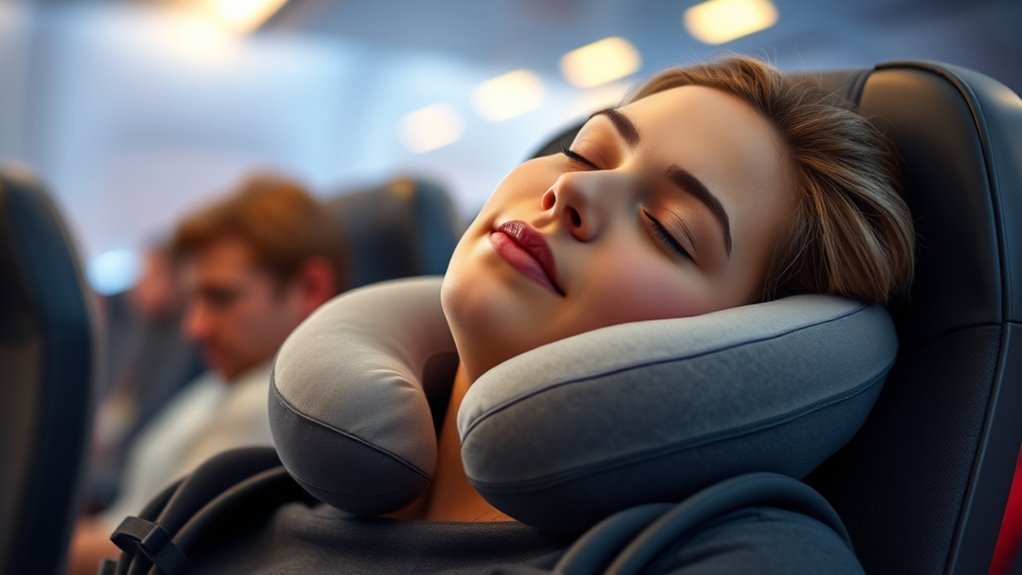
To keep your neck aligned in an economy seat, use a supportive travel neck pillow that maintains cervical alignment. Choose an aisle or bulkhead seat for extra legroom. Slightly recline your seat and sit back fully to align your head with your spine. Incorporate gentle neck stretches mid-flight to relieve stiffness. Regular adjustments improve posture and comfort. There’s plenty more you can explore to enhance your travel experience and prevent discomfort along the way.
Understanding the Importance of Neck Alignment in Economy Seats

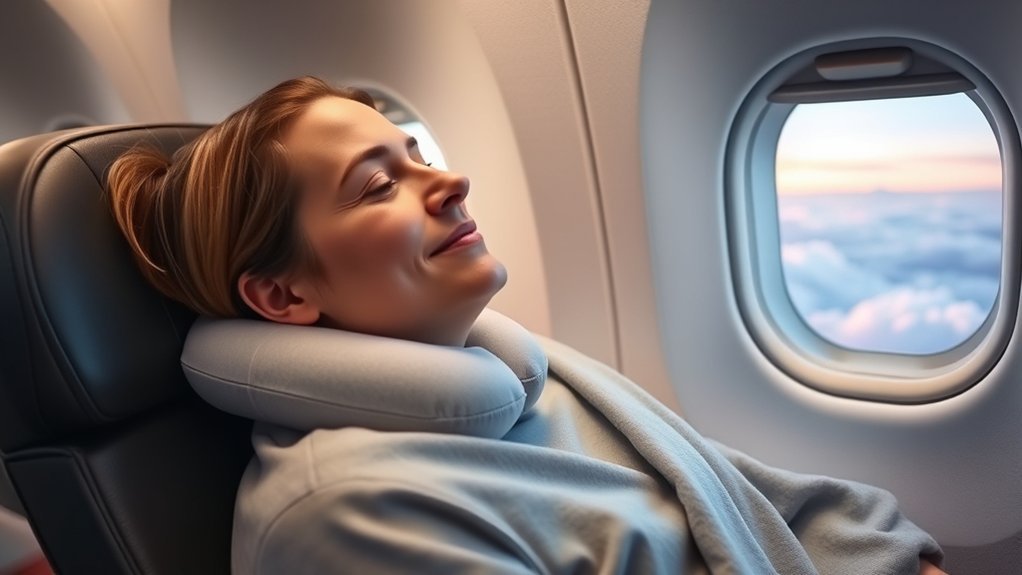
When you sit in an economy seat, maintaining proper neck alignment becomes essential, especially since these seats often lack adequate lumbar support. Poor posture can lead to neck strain, exacerbating discomfort during long flights. To promote posture correction, focus on keeping your ears aligned over your shoulders, which minimizes tension on your cervical spine. A supportive neck pillow can help maintain the natural curve of your neck, reducing stiffness. Additionally, incorporate frequent head and neck stretches to alleviate tension and improve circulation, enhancing your overall comfort. By prioritizing neck alignment, you can liberate yourself from the aches and pains that often accompany cramped seating, allowing for a more enjoyable travel experience. Your neck will thank you!
Choosing the Best Seat for Neck Comfort on Flights
Choosing the right seat can greatly enhance your neck comfort during a flight, especially in the cramped environment of an economy cabin. Here are key considerations for effective seat selection:
| Seat Type | Benefits | Turbulence Factors |
|---|---|---|
| Aisle Seat | Easier access to stand and stretch | Minimal neck strain |
| Bulkhead/Exit Row | Extra legroom for comfort | Better positioning during turbulence |
| Economy Plus/Business | Enhanced recline and lumbar support | Greater stability and alignment |
| Rear Seats | Avoid these for discomfort | Higher turbulence exposure |
Essential Travel Accessories for Neck Support
When traveling, having the right accessories can make a significant difference in neck support. A good travel neck pillow and lumbar support cushions can help maintain proper alignment and prevent discomfort during long flights. Investing in these essentials guarantees you arrive at your destination feeling refreshed and pain-free.
Travel Neck Pillows
Travel neck pillows are essential for maintaining comfort and support during long flights, especially in the cramped confines of economy seats. They help you achieve proper cervical alignment, reducing neck pain and stiffness. Consider these features when selecting your neck pillow:
- Memory Foam: Conforms to your neck shape for personalized support.
- Inflatable Pillows: Allow you to adjust firmness, catering to your comfort level.
- Adjustable Straps: Keep the pillow securely in place, even when you shift.
- Contoured Design: Cradles your head and neck, promoting better spinal alignment.
Using a neck pillow greatly enhances sleep quality, minimizing discomfort and encouraging a restful position, enabling you to arrive at your destination refreshed and ready for adventure.
Lumbar Support Cushions
Lumbar support cushions are a game-changer for maintaining proper neck alignment during flights. These cushions help you maintain the natural curve of your spine, alleviating pressure on your lower back and promoting an upright posture, essential for reducing neck strain in cramped economy seats. Many lumbar support options are portable and inflatable, making them easy to pack for travel. Studies show that lumbar support can notably decrease discomfort, leading to enhanced overall seating comfort.
| Benefit | Description | Advantage |
|---|---|---|
| Alleviates Pressure | Reduces strain on lower back | Supports neck alignment |
| Encourages Posture | Prevents slumping | Minimizes neck strain |
| Portable Support | Easy to carry | Convenient for travel |
| Enhanced Comfort | Improves seating experience | Reduces pain levels |
| Versatile Use | Suitable for various seats | Adapts to your needs |
Techniques for Neck Alignment During Flights
Maintaining proper neck alignment during flights is essential for comfort, especially in the cramped confines of an economy seat. Here are some techniques to enhance your flight comfort:
- Use a supportive neck pillow designed to maintain cervical spine alignment and reduce strain.
- Adjust your seat back slightly to a reclined position, alleviating pressure on your neck.
- Sit back fully in your seat to keep your head aligned with your spine, avoiding leaning forward or slouching.
- Roll up a sweater or blanket for extra support under your neck, helping maintain proper alignment during rest.
Stretching and Moving to Alleviate Neck Discomfort
While you’re confined to your economy seat, incorporating stretching and movement can greatly reduce neck discomfort. Engage in in-flight yoga by performing gentle neck stretches every hour, tilting your head side to side and forward and backward. Use shoulder rolls and neck rotations to boost circulation and combat stiffness. In-seat exercises like neck tilts and chin tucks help maintain neck mobility and relieve pressure on your cervical spine. Don’t forget to walk the aisle every 30-60 minutes for overall body movement. Consider a supportive neck pillow for better alignment while sleeping.
| Stretching Exercise | Duration | Benefit |
|---|---|---|
| Neck Tilts | 30 seconds | Relieves tension |
| Shoulder Rolls | 1 minute | Increases circulation |
| Neck Rotations | 30 seconds | Improves flexibility |
| Chin Tucks | 30 seconds | Aligns cervical spine |
| Aisle Walk | 5 minutes | Overall body movement |
Best Recovery Tips for Relieving Neck Pain After Flights
After a flight, you can effectively relieve neck pain by incorporating targeted stretching exercises and applying heat or cold therapy. Start with gentle neck stretches to alleviate stiffness, then follow up with heat to relax tight muscles or cold therapy to reduce inflammation if necessary. These methods can greatly enhance your recovery and restore comfort to your neck.
Stretching Exercises For Relief
Stretching exercises can markedly alleviate neck pain after a long flight. Incorporating these movements can enhance neck flexibility and provide much-needed tension relief:
- Side Tilts: Gently tilt your head side to side, holding for a few seconds on each side.
- Shoulder Rolls: Move your shoulders up towards your ears and then back down to ease tightness in your neck and upper back.
- Seated Neck Rotations: Slowly turn your head from side to side to release stiffness built up during the flight.
- Chin Tucks: Pull your chin towards your chest to realign your cervical spine and encourage better posture.
Heat And Cold Therapy
Heat and cold therapy can be excellent tools for relieving neck pain, especially after long flights. Before your journey, consider using heat application to minimize stiffness and loosen your neck muscles, helping you maintain alignment during travel. Once you’re off the plane and if discomfort lingers, switch to cold therapy. This can effectively reduce inflammation and alleviate pain in your neck. Pair these methods with a supportive neck pillow during the flight to enhance comfort and support proper cervical spine alignment. After landing, gentle neck exercises and stretches can promote recovery and relieve tightness, ensuring better alignment and mobility. By incorporating these techniques, you can liberate yourself from the constraints of neck pain and enjoy your travels more fully.
How to Know When to See a Specialist for Neck Pain?
When should you consider consulting a specialist for neck pain? If you’re experiencing chronic pain that doesn’t improve, it’s essential to seek help. Here are key indicators:
- Pain persists for more than a few weeks or worsens over time.
- You feel numbness, tingling, or weakness in your arms or hands, suggesting nerve involvement.
- Neck pain is accompanied by severe headaches, dizziness, or loss of balance, requiring immediate attention.
- You have a history of trauma, like whiplash, that needs assessment for long-term damage.
If your pain limits daily activities or disrupts your sleep, don’t hesitate to explore treatment options with a healthcare provider. Your well-being and liberation from pain matter.
Frequently Asked Questions
Can Neck Pillows Be Harmful if Used Incorrectly?
Yes, neck pillows can be harmful if used incorrectly. Certain neck pillow types may not provide adequate support, leading to discomfort or injury. Prioritize travel safety by selecting the right pillow for your needs.
How Do I Choose the Right Neck Pillow Size?
Choose a neck pillow size that fits snugly around your neck without constricting. Consider pillow firmness based on your travel comfort preference; firmer options provide better support, while softer ones offer a cozy, relaxed feel.
Can Sleeping on the Plane Cause Long-Term Neck Issues?
Yes, sleeping on a plane can lead to long-term neck issues. Poor sleep positions and inadequate support may create muscle tension, causing discomfort and potential misalignment. Prioritize proper alignment to minimize these risks during travel.
Are There Specific Stretches for Neck Pain Relief?
Yes, you can relieve neck pain with specific neck exercises like gentle stretches and rotation. Incorporating relaxation techniques, such as deep breathing and mindfulness, further helps ease tension and promotes overall neck comfort.
What Are Signs of Serious Neck Injuries During Travel?
If you experience severe neck pain, numbness, or weakness in your arms, it could signal serious neck injury symptoms. Prioritize travel safety tips like proper posture and breaks to prevent potential issues during your journey.
Conclusion
Maintaining proper neck alignment during flights is essential, especially in cramped economy seats. Did you know that over 50% of travelers experience neck pain after long flights? By choosing the right seat, utilizing supportive accessories, and practicing alignment techniques, you can greatly reduce discomfort. Incorporate stretching and recovery tips to keep your neck in top shape. If pain persists, don’t hesitate to consult a specialist—early intervention can make all the difference in your travel experience.