


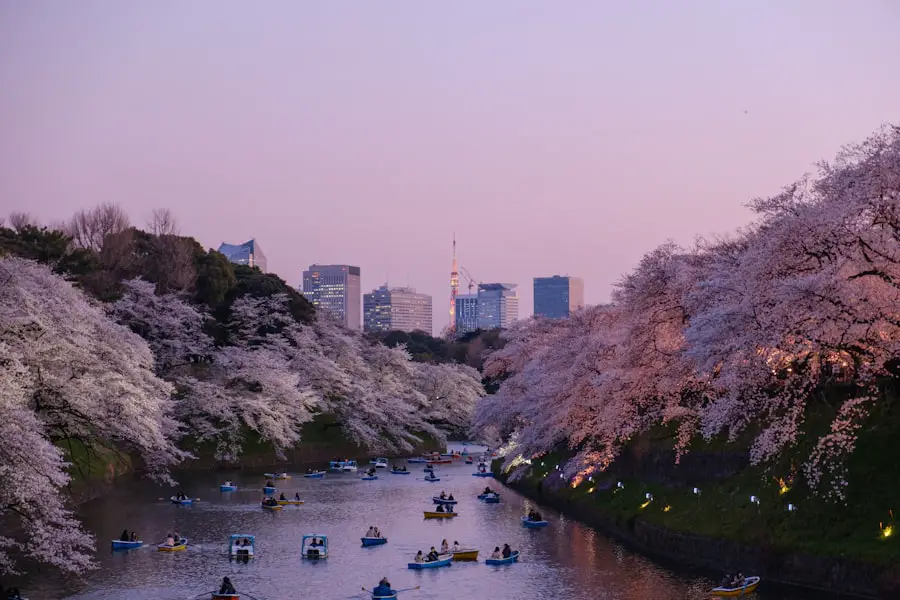
Spring in Japan is synonymous with the breathtaking beauty of cherry blossoms, or sakura, which bloom in a spectacular display of pink and white across the country. This ephemeral season typically begins in late March and lasts until early April, depending on the region. The cherry blossom trees, particularly the Somei Yoshino variety, are celebrated for their delicate petals and fleeting beauty, drawing millions of visitors and locals alike to parks and gardens for hanami, or flower viewing parties.
The tradition of hanami dates back centuries and is deeply ingrained in Japanese culture, symbolizing the transient nature of life. Families and friends gather under the blooming trees, enjoying picnics filled with seasonal delicacies while sharing laughter and stories. The cherry blossom season is not just a visual feast; it also serves as a cultural touchstone that inspires art, poetry, and music.
Many famous poets and artists have drawn inspiration from the blossoms, capturing their beauty in various forms. For instance, Matsuo Bashō, a renowned haiku poet from the Edo period, often wrote about the fleeting nature of cherry blossoms, reflecting on themes of impermanence and beauty. Festivals celebrating sakura are held in numerous locations, such as Tokyo’s Ueno Park and Kyoto’s Maruyama Park, where visitors can enjoy food stalls, traditional performances, and nighttime illuminations that create a magical atmosphere.
The cherry blossom season is a time of renewal and hope, marking the end of winter and the beginning of new life.
Key Takeaways
- Spring: Cherry Blossom Season
- Cherry blossom season in Japan typically occurs in late March to early April.
- The blooming of cherry blossoms, or sakura, is a highly anticipated event and a symbol of renewal and hope.
- Popular spots for cherry blossom viewing include Tokyo’s Ueno Park and Kyoto’s Maruyama Park.
- Many locals and tourists participate in hanami, or flower viewing parties, under the blooming trees.
- Summer: Festivals and Fireworks
- Summer in Japan is marked by lively festivals, known as matsuri, and spectacular fireworks displays.
- Major festivals include the Gion Matsuri in Kyoto and the Tenjin Matsuri in Osaka.
- Fireworks festivals, or hanabi taikai, are held throughout the country, with the Sumida River Fireworks Festival in Tokyo being one of the largest.
- Visitors can enjoy traditional performances, street food, and vibrant summer atmosphere during these events.
- Autumn: Fall Foliage
- Autumn in Japan brings stunning displays of fall foliage, or koyo, in various shades of red, orange, and yellow.
- Popular spots for viewing fall foliage include the historic city of Kyoto and the mountainous region of Nikko.
- Hiking trails and scenic train rides offer opportunities to immerse in the beauty of autumn leaves.
- The autumn foliage season typically peaks in November, attracting both locals and tourists.
- Winter: Skiing and Snow Festivals
- Japan’s winter season offers excellent skiing and snowboarding opportunities in regions such as Hokkaido and Nagano.
- Snow festivals, including the Sapporo Snow Festival, showcase intricate ice sculptures and snow art.
- Visitors can also enjoy relaxing in hot springs, or onsen, to warm up during the cold winter months.
- Winter illuminations and light displays add a magical touch to the season.
- Off-peak Season: Avoiding Crowds
- Traveling during the off-peak season, such as late autumn or early spring, allows visitors to avoid crowds and enjoy more peaceful experiences.
- Accommodation and transportation options may be more readily available and affordable during off-peak times.
- Exploring lesser-known destinations and attractions can provide unique and authentic experiences away from the tourist crowds.
- Off-peak travel also offers opportunities to interact with locals and immerse in the local culture.
- Golden Week: Japan’s Busiest Travel Period
- Golden Week, a series of national holidays in late April to early May, is one of Japan’s busiest travel periods.
- Many locals take advantage of the consecutive holidays for domestic and international travel, leading to crowded tourist attractions and transportation hubs.
- Planning ahead and making reservations well in advance are essential for traveling during Golden Week.
- Some popular destinations, such as Kyoto and Tokyo, may experience heavy crowds and long lines during this period.
- Typhoon Season: Weather Considerations
- Japan’s typhoon season typically occurs from May to October, with peak activity in late summer and early autumn.
- Travelers should stay informed about weather forecasts and potential typhoon warnings during this period.
- It is advisable to have flexible travel plans and consider travel insurance to mitigate potential disruptions caused by typhoons.
- Coastal and low-lying areas are particularly susceptible to typhoon-related impacts, such as heavy rainfall and strong winds.
- New Year: Traditional Celebrations and Customs
- New Year, or Oshogatsu, is a significant holiday in Japan, marked by various traditional customs and rituals.
- Many people visit shrines and temples for hatsumode, the first shrine visit of the year, to pray for health and prosperity.
- Traditional New Year’s dishes, such as ozoni (soup with mochi) and osechi ryori (special New Year’s cuisine), are enjoyed during this time.
- Watching the first sunrise of the year, known as hatsuhinode, is a popular custom to welcome the new year with hope and positivity.
Summer: Festivals and Fireworks
Summer Festivals: A Celebration of Tradition and Culture
Summer festivals, known as matsuri, are held throughout the country, each with its unique traditions and cultural significance. These festivals often feature colorful parades with participants dressed in traditional yukata, lively music, and dance performances that reflect local customs.
Famous Summer Festivals: A Glimpse into Japan’s Rich Heritage
One of the most famous summer festivals is the Gion Matsuri in Kyoto, which takes place in July and showcases elaborate floats adorned with intricate designs. The festival has roots dating back to the 9th century and is a celebration of purification and good fortune.
Fireworks Displays: A Dazzling Spectacle in the Night Sky
Fireworks displays, or hanabi taikai, are another hallmark of summer in Japan. These events draw large crowds to riversides and parks where spectators can enjoy breathtaking pyrotechnics lighting up the night sky. The Sumida River Fireworks Festival in Tokyo is one of the largest and most popular events, attracting over a million attendees each year. The festival features thousands of fireworks launched in synchronized patterns, creating a stunning visual spectacle that captivates audiences. The atmosphere is electric as families and friends gather to enjoy traditional snacks like yakitori (grilled chicken skewers) and kakigori (shaved ice), all while donning colorful yukata. The combination of festivals and fireworks creates an unforgettable summer experience that showcases Japan’s rich cultural heritage.
Autumn: Fall Foliage

As summer fades into autumn, Japan’s landscapes undergo a dramatic transformation as leaves turn vibrant shades of red, orange, and gold. This seasonal change is celebrated through koyo, or fall foliage viewing, which attracts both locals and tourists eager to witness nature’s stunning display. The best time for koyo varies by region but typically occurs from mid-October to early December.
Popular spots for leaf peeping include Kyoto’s Arashiyama Bamboo Grove and Nara’s Todai-ji Temple, where ancient trees provide a picturesque backdrop for the colorful foliage. The cultural significance of autumn extends beyond mere aesthetics; it is also a time for reflection and gratitude. Many Japanese people participate in rituals that honor the harvest season, such as visiting shrines to give thanks for bountiful crops.
Festivals celebrating the autumn harvest are common during this time, featuring traditional music, dance performances, and local delicacies made from seasonal ingredients like chestnuts and persimmons. The combination of natural beauty and cultural festivities makes autumn a particularly enchanting time to visit Japan, as visitors can immerse themselves in both the stunning landscapes and rich traditions that define this season.
Winter: Skiing and Snow Festivals
| Destination | Average Snowfall (inches) | Number of Ski Slopes | Number of Snow Festivals |
|---|---|---|---|
| Aspen, Colorado | 300 | 94 | 8 |
| Whistler, Canada | 360 | 200 | 12 |
| Chamonix, France | 330 | 150 | 6 |
Winter in Japan offers a unique blend of outdoor adventure and cultural experiences that attract visitors from around the globe. The northern regions, particularly Hokkaido, are renowned for their world-class ski resorts that boast powdery snow ideal for skiing and snowboarding. Niseko is one of the most famous ski destinations, offering a range of slopes suitable for all skill levels along with stunning views of Mount Yotei.
The area is also known for its vibrant après-ski scene, where visitors can unwind in cozy lodges or indulge in local cuisine featuring fresh seafood and hearty ramen. In addition to skiing, winter in Japan is marked by spectacular snow festivals that showcase incredible ice sculptures and snow art. The Sapporo Snow Festival is perhaps the most famous event of its kind, attracting millions of visitors each February.
The festival features massive snow sculptures that depict everything from traditional Japanese motifs to contemporary pop culture icons. Artists from around the world come together to create these stunning works of art, transforming Sapporo into a winter wonderland. Alongside the sculptures, visitors can enjoy food stalls offering local delicacies like soup curry and grilled seafood while participating in various winter activities such as sledding and snowshoeing.
The combination of thrilling winter sports and captivating cultural displays makes Japan’s winter season an unforgettable experience.
Off-peak Season: Avoiding Crowds
Traveling during Japan’s off-peak seasons can offer a more tranquil experience for those looking to explore without the hustle and bustle of large crowds. The months of late autumn (November) and early spring (February) are particularly advantageous for travelers seeking to enjoy popular attractions at a leisurely pace. During these times, many tourist sites are less crowded, allowing for a more intimate experience with Japan’s rich history and culture.
For instance, visiting Kyoto’s temples during November can provide an opportunity to appreciate the stunning fall foliage without the throngs of tourists that typically flock there during peak seasons. In addition to fewer crowds, off-peak travel often comes with financial benefits. Accommodations may be more affordable during these times as hotels lower their rates to attract visitors.
Additionally, flights may be less expensive compared to peak travel periods like Golden Week or cherry blossom season. This allows travelers to allocate their budget towards unique experiences such as guided tours or culinary adventures that might otherwise be out of reach during busier times. Exploring Japan during its off-peak seasons not only enhances the overall travel experience but also provides an opportunity to connect more deeply with the local culture.
Golden Week: Japan’s Busiest Travel Period

Golden Week is one of Japan’s most significant holiday periods, occurring at the end of April through early May when several national holidays coincide. This week-long celebration sees millions of Japanese citizens traveling domestically or internationally, resulting in crowded transportation systems and popular tourist destinations. The combination of Showa Day, Constitution Memorial Day, Greenery Day, and Children’s Day creates a festive atmosphere across the country as families take advantage of the time off to explore new places or visit relatives.
During Golden Week, major cities like Tokyo and Kyoto experience an influx of tourists eager to participate in various events and activities. Many attractions offer special programs or extended hours to accommodate the increased number of visitors. However, this surge in tourism can lead to long lines at popular sites such as temples, shrines, and museums.
Travelers planning to visit Japan during this time should consider making reservations well in advance for accommodations and transportation to ensure a smooth experience. Despite the challenges posed by crowds, Golden Week presents an opportunity to witness vibrant celebrations throughout Japan as communities come together to honor their traditions.
Typhoon Season: Weather Considerations
Typhoon season in Japan typically runs from June to October, with August being the peak month for these powerful storms. While typhoons can bring heavy rain and strong winds that disrupt travel plans, they also offer a unique perspective on Japan’s climate and natural beauty. Travelers should be aware of weather forecasts when planning their trips during this period and remain flexible with their itineraries to accommodate potential disruptions caused by severe weather conditions.
Despite the challenges posed by typhoons, there are still opportunities for exploration during this season. Coastal areas may experience dramatic waves and stunning cloud formations that can be captivating to witness from a safe distance. Additionally, many regions have developed robust infrastructure to handle typhoon-related disruptions; thus, travelers can often find alternative activities or indoor attractions if outdoor plans are affected by inclement weather.
It is essential for visitors to stay informed about local advisories and heed safety recommendations while enjoying their time in Japan during typhoon season.
New Year: Traditional Celebrations and Customs
The New Year period in Japan is marked by a rich tapestry of traditions and customs that reflect deep cultural significance. Known as Shogatsu, this holiday is celebrated from January 1st to January 3rd but often extends into a longer holiday period for many Japanese people who take time off work to spend with family. Preparations for Shogatsu begin well before New Year’s Day as families clean their homes thoroughly to welcome good fortune for the coming year—a practice known as o-soji.
On New Year’s Eve, many Japanese people participate in rituals such as visiting shrines or temples to pray for health and happiness in the new year. One popular custom is the ringing of temple bells at midnight; this tradition symbolizes the release of 108 worldly desires according to Buddhist beliefs. On New Year’s Day itself, families gather to enjoy special meals known as osechi ryori—beautifully arranged dishes that include items like black soybeans (for health), herring roe (for fertility), and sweetened chestnuts (for prosperity).
Children often receive money in decorative envelopes called otoshidama from relatives as part of the celebrations. The New Year period is not only a time for family gatherings but also an opportunity for reflection on personal goals for the year ahead. Many people write down their resolutions on small pieces of paper called nengajo that they send to friends and family as New Year’s greetings.
This blend of tradition, family bonding, and personal reflection makes Shogatsu one of the most cherished times in Japanese culture—a celebration steeped in history yet vibrantly alive today.
When planning your trip to Japan, it’s important to consider the best time to visit in order to make the most of your experience. According to a recent article on taketravelinfo.com, the best time to travel to Japan is during the spring months of March to May when the cherry blossoms are in full bloom. This is also a great time to go hiking and explore the beautiful landscapes of Japan. Additionally, it’s recommended to bring a portable white noise machine for travel, as mentioned in another article on taketravelinfo.com, to ensure a peaceful night’s sleep during your adventures.
FAQs
What is the best time to travel to Japan?
The best time to travel to Japan is during the spring season, from March to May, and during the autumn season, from September to November.
What are the weather conditions during the best time to travel to Japan?
During the spring season, the weather is mild and cherry blossoms are in full bloom, creating a picturesque landscape. In the autumn season, the weather is also mild and the colorful foliage is a sight to behold.
Are there any specific events or festivals during the best time to travel to Japan?
During the spring season, Japan celebrates the cherry blossom festival known as Hanami, where people gather to appreciate the beauty of cherry blossoms. In the autumn season, there are various cultural festivals and events celebrating the harvest and changing of the seasons.
What are the tourist attractions to visit during the best time to travel to Japan?
During the spring season, tourists can visit popular spots such as Tokyo, Kyoto, and Hiroshima to witness the cherry blossoms. In the autumn season, places like Hokkaido, Nikko, and Kyoto offer stunning views of the fall foliage.
Are there any travel considerations to keep in mind during the best time to travel to Japan?
It is advisable to book accommodations and transportation in advance, especially during the cherry blossom season, as it is a peak tourist period. Additionally, it is important to be mindful of the Golden Week holiday in late April to early May, as many locals travel during this time, leading to crowded tourist spots and transportation.