
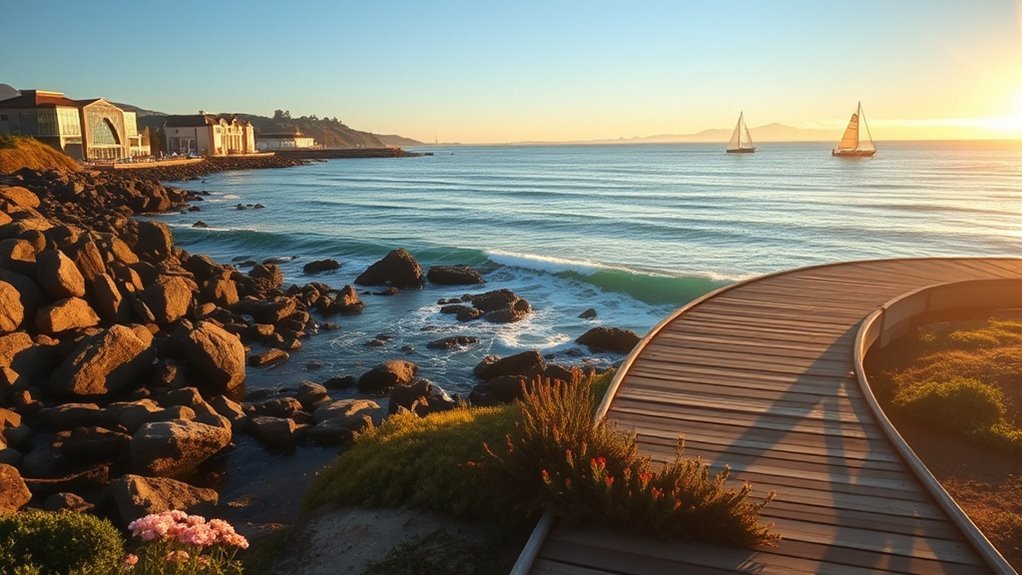
You’ll find Monterey brimming with coastal wonders, from the world-class Monterey Bay Aquarium and whale-watching excursions to the windswept cliffs of Point Lobos and the storied lanes of Cannery Row. You can savor fresh seafood at lively wharves, drive the legendary 17-Mile route, or wander art galleries and historic sites. Each stop offers a different flavor of this seaside city—keep going and you’ll uncover the experiences that should top your list.
Monterey Bay Aquarium
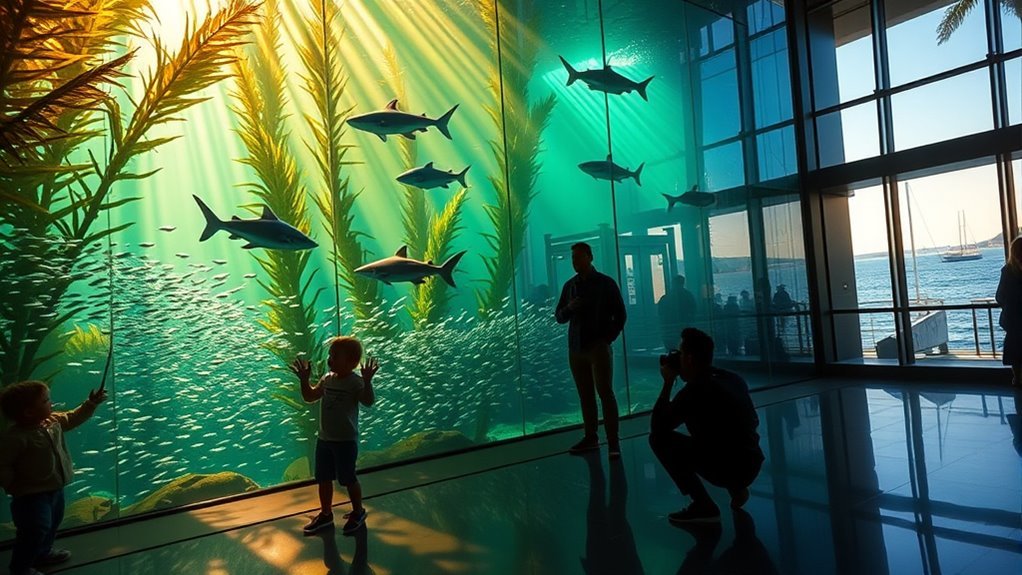
Step inside the Monterey Bay Aquarium and you’ll meet more than 35,000 marine animals and plants, including a towering kelp forest that sways like an underwater cathedral and shelters an astonishing variety of life. You’ll walk through habitats that pioneered naturalistic exhibits, seeing species behave as they do in the wild and feeling how transparent stewardship can transform captive care into advocacy. Touch pools invite your fingertips to connect with sea stars and urchins, dissolving the barrier between observer and oceanist, while daily feeding demos reveal predator-prey dynamics and animal personalities. Educational programs spark curiosity at any age, equipping you with knowledge to act for healthy seas. The aquarium’s research and conservation work isn’t distant rhetoric — it’s active, field-driven, and aimed at protecting ecosystems and promoting sustainable practices. When you leave, you won’t just have memories; you’ll carry practical understanding and a liberated urge to protect the living world that sustained you through those windows into the deep.
Cannery Row Exploration
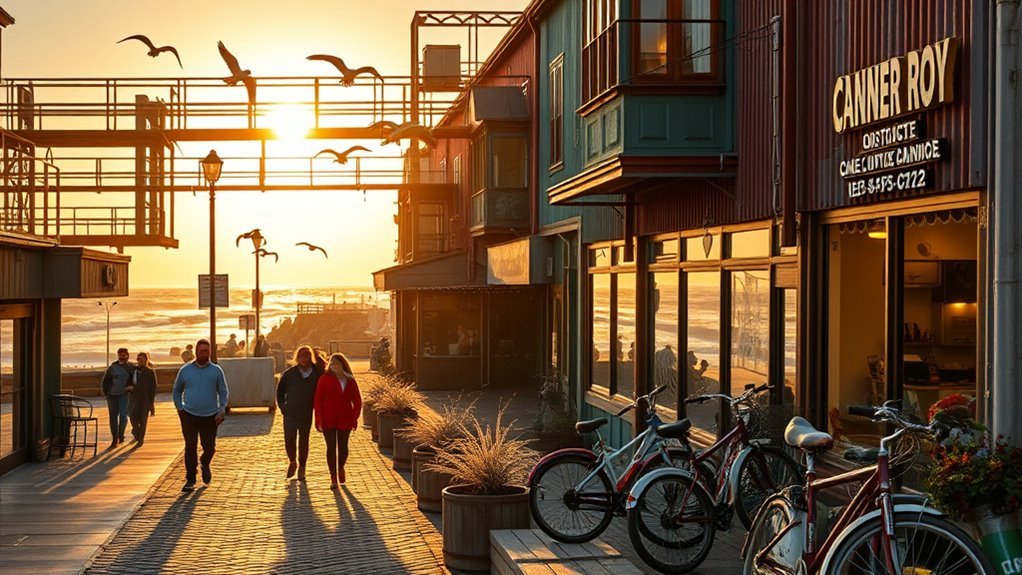
Walk Cannery Row and you’ll feel history underfoot—once the throbbing heart of Monterey’s sardine canning industry and forever immortalized by John Steinbeck—now a lively waterfront strip packed with shops, restaurants, and attractions. You’ll move between restored brick buildings and wide bay views, sensing the past while claiming the present. The Monterey Bay Aquarium anchors the block, drawing you into immersive marine worlds, then you’ll step back out to boutiques, galleries, and eateries that celebrate local flavor and freedom.
Walk Cannery Row—where Steinbeck’s past meets lively bayfront shops, galleries, and the Monterey Bay Aquarium.
- Stroll the Coastal Recreation Trail for sweeping bay vistas and wildlife spotting.
- Visit the Monterey Bay Aquarium’s renowned exhibits and conservation messages.
- Browse unique shops and galleries for art that sparks curiosity.
- Dine at waterfront restaurants offering fresh seafood and liberating perspectives.
- Check seasonal festivals and events that animate Cannery Row’s streets.
You’ll leave energized, having walked a place where history, nature, and community invite you to explore on your own terms.
17-Mile Drive Scenic Route
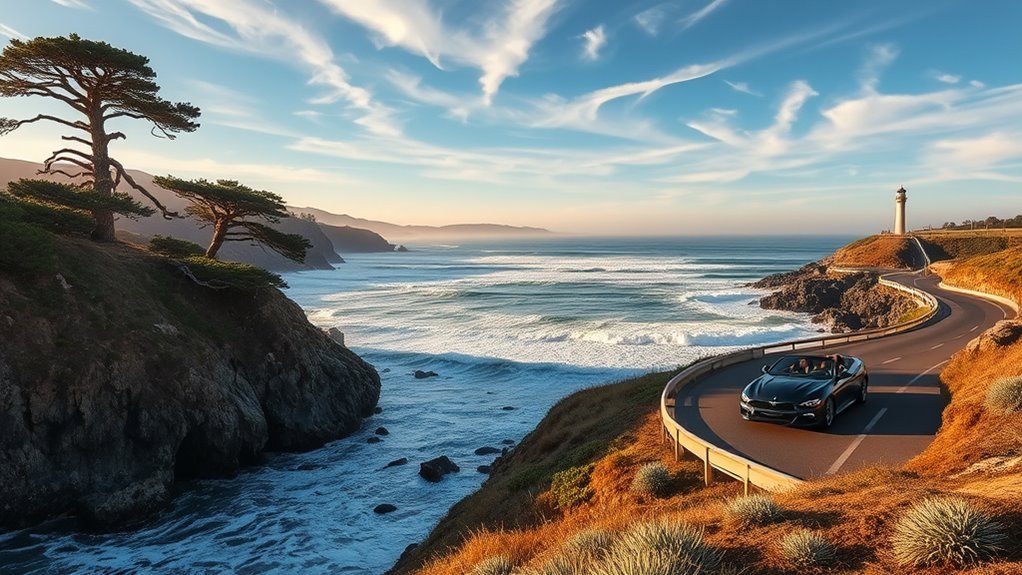
Drive the 17-Mile Drive and you’ll pass iconic coastal highlights like the Lone Cypress and manicured golf courses set against dramatic ocean cliffs. Pull into the many photo stops and short trails to capture sea lions, otters, and panoramic views that reward every turn. A $12 toll helps preserve the scenery so you can enjoy these unforgettable snapshots of Monterey’s coastline.
Iconic Coastal Highlights
When you follow the 17-Mile Drive, you’ll be treated to some of Monterey Peninsula’s most iconic coastal scenery—towering cypress silhouettes, wind-sculpted cliffs, and the lone Cypress perched defiantly on its rocky outcrop—while golf fairways at Pebble Beach sweep toward the Pacific and sea lions and seabirds forage along the shore. You’ll feel liberated by wide ocean vistas and dramatic geology that insist you breathe deeper and move slower. The route is a compact lesson in coastal power and elegance; plan for wildlife sightings and quiet reflection. Note the entrance fee and the option to waive it with a qualifying Pebble Beach purchase. Highlights to seek out as you drive:
- Lone Cypress viewpoint
- Rugged cliff overlooks
- Sandy coves and tide-edge rocks
- Picturesque cypress-lined stretches
- Sea lion and seabird habitats
Photo Stops & Trails
After soaking in the sweeping vistas and sculpted cliffs, you’ll want to stop for the photo ops the 17‑Mile Drive is famous for. Cruise this iconic loop to claim shots of the Lone Cypress framed against endless ocean, cliffs plunging into foam, and the manicured contrast of Pebble Beach Golf Links. Designated pullouts—Bird Rock, Spanish Bay, hidden coves—give you space to compose, wander short trails, and watch sea otters and seals play below. The route opens year‑round; a $12 entrance fee grants access to curated views and moments of wild stillness. Bring a telephoto for wildlife and a wide lens for sweeping horizons, then let the scenery loosen you, prompt fresh perspective, and fuel the urge to roam.
Point Lobos State Natural Reserve
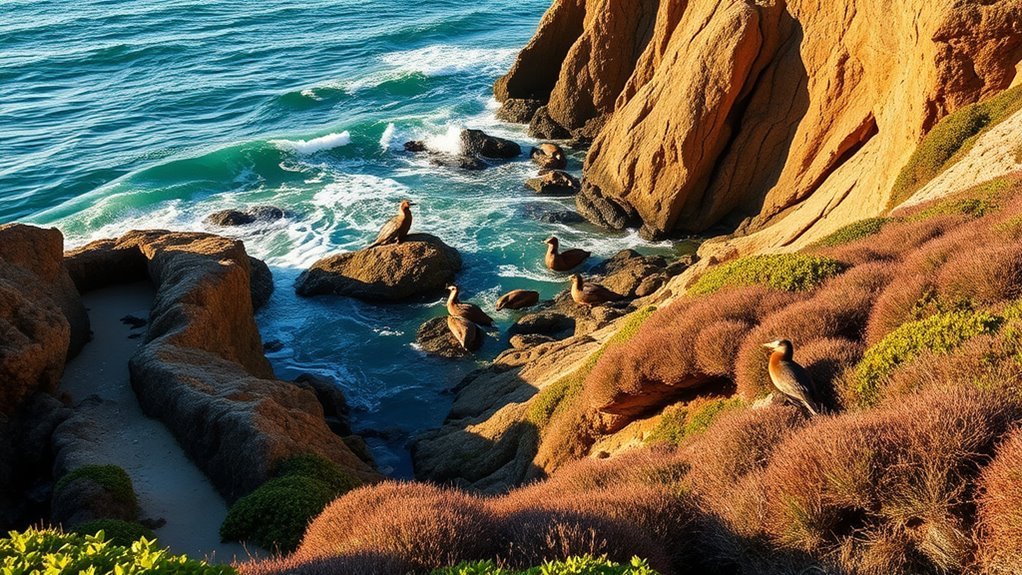
Though the winds and waves shape its dramatic cliffs and hidden coves, Point Lobos State Natural Reserve feels almost like a living gallery—stark ocean vistas, kelp forests swaying below, and tide pools teeming with color invite you to explore. You’ll find over 1,500 acres of protected land threaded with trails that match your pace, from gentle strolls to invigorating climbs, each viewpoint offering another chance to breathe and reclaim yourself. Wildlife appears without warning—sea lions bask on rocks, harbor seals slip through surf, and migrating gray whales trace distant horizons. Cultural echoes linger in the Whalers Cabin and Old Johnson House, reminding you of human stories stitched into this wild edge. Marine protected areas safeguard the underwater forests and colorful intertidal life you’ll glimpse at low tide.
- Hike the Cypress Grove Trail for iconic views
- Watch for whales from headlands
- Explore tide pools at low tide
- Photograph sea lions and birds
- Visit historic Whalers Cabin
Old Fisherman’s Wharf Stroll
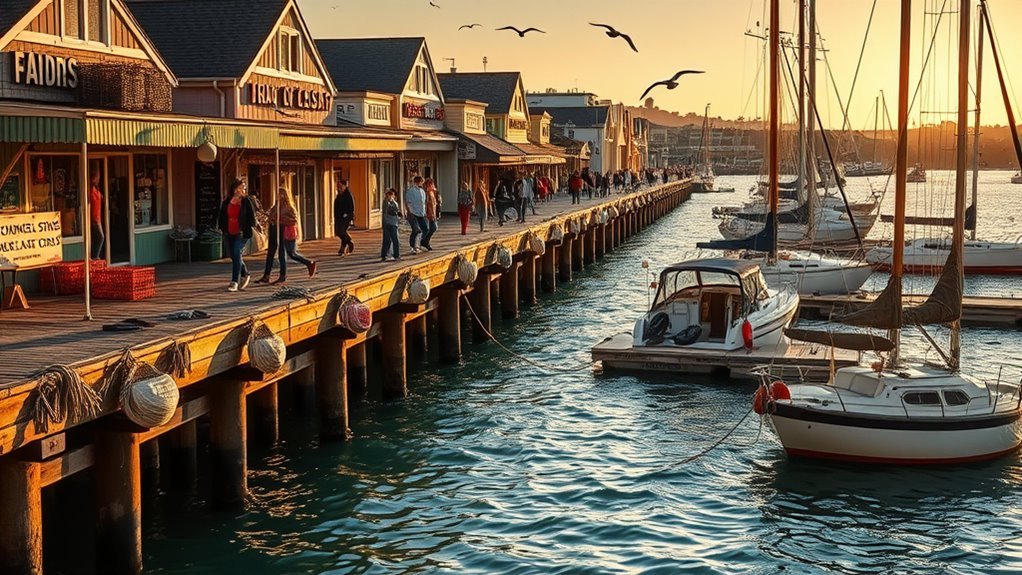
Stroll Old Fisherman’s Wharf and you’ll feel the history in its weathered pilings and classic seaside architecture as you breathe in salt air and shipyard memories. Follow the scent of fresh seafood to clam chowder served in sourdough bowls, lively restaurants, and fishermen’s markets, then pop into shops like Carousel Candies for handmade treats. Look out over the water for lounging sea lions and book a whale-watching or harbor tour to round out the sights and stories.
Wharf History & Architecture
When you step onto Old Fisherman’s Wharf, the wooden planks, colorful storefronts, and creaking pilings instantly tell the story of a mid-1800s fishing hub that helped build Monterey’s economy; weathered beams and maritime details still echo the hard work and sea-weathered craft of generations. You’ll walk where fishermen, traders, and immigrants shaped the town, and the architecture rewards close attention. Look for historic markers and the Old Custom House, whose 1827 presence anchors Monterey’s shift into statehood.
- Wooden piers and pilings showing age and purpose
- Colorful storefronts reflecting maritime trade aesthetics
- Informative plaques and guided tours from Pacific House Museum
- Old Custom House as a tangible early-state landmark
- Design elements that celebrate resilience and freedom
Fresh Seafood & Dining
Stepping off the creaking planks and toward the waterfront eateries, you’ll find Old Fisherman’s Wharf tempts you with the scent of seafood and salt air. You can wander between casual counters and white-tablecloth rooms, choosing clam chowder ladled into a sourdough bowl or a plate from the famed Old Fisherman’s Grotto while the bay glints beside you. Watch candy-makers at Carousel Candies pull bright saltwater taffy, a playful counterpoint to briny bites. The wharf hums with maritime energy—boat horns, seagulls, clinking cutlery—yet it offers escape: you pick your pace, your flavor, your view. Whether you crave bold, vibrant seafood or a relaxed oceanfront meal, this stretch hands you culinary freedom and a lively slice of Monterey Bay.
Shops, Tours, & Sights
Spend an hour—or linger longer—wandering Old Fisherman’s Wharf and you’ll find a lively mix of shops, tours, and scenic vantage points that make the waterfront a must-see. You’ll feel free as you stroll, tasting local life: clam chowder in a steaming bread bowl, saltwater taffy samples, and the call of the sea. Watch candy spun at Carousel Candies, peer at lounging sea lions, or book a whale-watching cruise to chase giants beyond the cove. Let the breeze loosen your pace and curiosity.
- Savor clam chowder in a bread bowl at waterfront eateries
- Watch candy-making and sample taffy at Carousel Candies
- Spot sea lions basking near the beach
- Join whale-watching tours from the wharf
- Browse nautical shops and galleries
Pacific Grove Monarch Grove Sanctuary
A few thousand monarchs carpet the trees at Pacific Grove’s Monarch Grove Sanctuary each winter, creating a living, fluttering mosaic you can wander through along shaded paths. Between late October and early March, you’ll find this 2.5-acre coastal refuge alive with clustering butterflies, their orange wings catching morning light as they feed and warm. Walk the designated trails to observe them up close without disturbing fragile roosts; mornings are best when activity peaks and the spectacle feels most electric. Interpretive signs quietly equip you with facts about their life cycle and the conservation work that keeps migration corridors open, inviting you to care and act. Admission is free, so anyone seeking a restorative, liberating encounter with nature can come easily. Here you’ll feel both small and empowered—witnessing a communal migration that reminds you how interconnected habitats and choices are, and how protecting them preserves freedom for species and people alike.
Whale Watching Tours in Monterey Bay
When you head out onto Monterey Bay, you’ll quickly see why it’s one of the world’s premier whale-watching spots: seasonal migrations bring gray whales in winter and spectacular humpbacks from spring through fall, and the protected marine sanctuary concentrates food that draws whales, dolphins, sea otters, and seabirds close to the boats. You’ll feel liberated on deck as guides steer you into rich feeding zones, translate behavior, and point out identifying features. Tours run year-round, usually 2–3 hours, and have high success rates for sightings.
- Choose a reputable local operator for expert interpretation and safety.
- Book ahead during peak migration to secure your preferred departure.
- Expect encounters with dolphins, sea otters, and abundant seabirds.
- Bring layers, binoculars, and a camera with a steady grip.
- Respect wildlife: listen to guides and maintain distance for humane viewing.
These excursions educate and empower — a direct, active way to connect with the ocean’s wild rhythms.
Products Worth Considering

Lightweight Small Binoculars: You can throw them into your backpack each day without hesitation. The mini pocket binoculars are totally worth the tiny amount of weight they add to your pack

UPGRADED HIGH-POWER BINOCULARS - These premium binoculars feature a high-magnification 20x zoom eyepiece and offer a 168-yard field of view at 1000 yards. This allows you to observe and focus on intricate details of distant targets up to 1000 yards away, delivering exceptionally broad and clear long-distance vision. Ideal for adults engaged in bird watching, hunting, camping, climbing, hiking, safari, travel, opera, concerts, sports events, and stargazing. They are essential gear for camping, hunting, travel, and cruises.
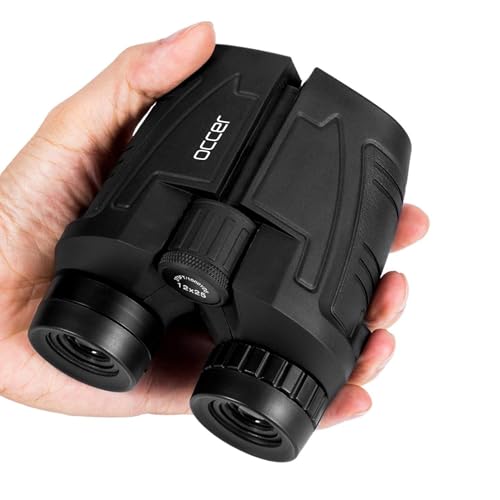
【HIGH-POWERED LARGE EYEPIECE BINOCULARS】 This binoculars for adults has 12x magnification, 25mm objective lens and wide field of view, 273ft/1000yds, letting you look farther and see wider. Coating with FMC Broadband coating and premium BAK4 prism, it ensure imaging verisimilar.
Kayaking and Paddleboarding on the Bay
Because the bay’s waters are often calm and clear in late spring and summer, paddling a kayak or stand-up board lets you glide close to rocky shores, kelp forests, and playful sea otters without disturbing them. You’ll feel the lift of each stroke, smell salty air, and watch seals sunbathe on distant rocks. Rentals and guided tours line the coast, so you can choose solo freedom or an interpretive trip that teaches currents, wildlife ID, and safe etiquette. The bay’s gentle conditions welcome beginners and families; life jackets and basic instruction are provided. Go at golden hour for luminous water and fewer boats, and linger where kelp sways — it’s a quiet rebellion against routine. Whether you want peaceful meditation or bold exploration, paddling here lets you reclaim time and move on your own terms.
| Activity | Best Time | What You’ll See |
|---|---|---|
| Kayak | Late spring–summer | Kelp, otters, seals |
| SUP | Late spring–summer | Calm bays, cliffs |
| Guided tour | Summer mornings | Marine life, tips |
Monterey Bay Coastal Trail Walks
You’ll love strolling the Monterey Bay Coastal Trail, where wide ocean vistas and rocky headlands open up at every turn. Keep your eyes peeled for sea lions, pelicans, and seasonal whales at the trail’s lookout points and interpretive signs. The mostly flat path links Lover’s Point, Asilomar, Cannery Row and the aquarium, so you can mix easy exercise with beach stops and wildlife viewing.
Scenic Bayfront Strolls
Looking for an easy way to soak up Monterey’s coastal beauty? You can wander the Monterey Bay Coastal Trail — an accessible, mostly flat 18-mile ribbon of pavement hugging the Pacific. You’ll move freely between Cannery Row, Fisherman’s Wharf, and Lover’s Point, choosing your own pace: stroll, jog, or bike. Scenic pull-outs and benches invite pauses for photographs and quiet breathing. The path suits every body and every longing for open sky.
- Pick a stretch that fits your energy and time.
- Stop at benches to watch tides and collect thoughts.
- Link attractions without the car; feel liberated.
- Bring a camera but let stillness be your souvenir.
- Choose early morning or golden hour for softer light.
Wildlife & Lookout Points
A coastal vantage like no other, the Monterey Bay Coastal Trail lets you spy sea otters bobbing in kelp, seals sunning on rocks, and dozens of bird species wheeling overhead as you move between viewpoints. You’ll walk or roll along 18 miles of well-maintained paths, feeling wind and freedom as you commute between Cannery Row, Fisherman’s Wharf, and Lover’s Point. Lookouts offer prime whale-watching — gray whales in winter and spring migrations, humpbacks later in the year — so bring binoculars and patience. Interpretive signs punctuate the route, teaching you about the sanctuary’s ecology, local history, and conservation efforts. The trail is accessible for all ages and abilities, inviting you to reclaim time, breathe wide, and witness marine life up close.
Pebble Beach Golf Links Views
One of the most photographed stretches of coastline in California, Pebble Beach Golf Links delivers cliffside vistas that stop you mid-step: turquoise Pacific waters crash beneath emerald fairways, and iconic holes like the par‑3 7th frame golf shots against dramatic ocean backdrops. You’ll feel freed by wide horizons as waves, wind and manicured greens merge into one unforgettable scene. Even if you’re not playing, the resort’s terraces, restaurants and spa let you soak in views that shaped golf legends and U.S. Open history.
- Walk portions of the 17‑Mile Drive for viewpoint stops and photo ops.
- Watch pros and amateurs test nerve on cliffs and signature holes.
- Dine on a patio that faces endless ocean light and sea spray.
- Book a spa moment to unwind while cliffs and surf reset your rhythm.
- Find plaques and history noting Jack Nicklaus, Arnold Palmer and other icons.
This place invites you to breathe, reclaim space, and witness a coastline where sport, history and pure coastal freedom converge.
Carmel-by-the-Sea Village Walk
Cobblestone lanes and storybook cottages lead you into Carmel-by-the-Sea’s village heart, where over 100 galleries, boutiques and cafes invite slow discovery and effortless shopping. You’ll wander under vine-draped archways, pause in sunlit courtyards, and step into tiny shops filled with handcrafted goods and local art. Notice the fairy-tale architecture around you—the whimsical cottages and the stately Carmel Mission, a preserved piece of California history that grounds the village’s charm.
Walk down to Carmel Beach for a breath of ocean freedom: white sand, crashing surf, and dogs running joyfully along the shore. Time your visit with the Carmel Art Festival or the Bach Festival to experience the town’s creative pulse. If you love words, follow the traces of Jack London and John Steinbeck for a literary pilgrimage. The village walk lets you slow down, choose your path, and reclaim a day for curiosity, beauty, and small, meaningful discoveries.
Laguna Seca Raceway Events
From the village’s quiet lanes you can swing inland to WeatherTech Raceway Laguna Seca, where the roar of engines replaces the sea breeze and the famed 2.238-mile circuit tests drivers with its blind crests and the legendary “Corkscrew” drop. You’ll find events that free your senses and spark daring: the Monterey Grand Prix, MotoAmerica, and the Rolex Monterey Motorsports Reunion bring history, speed, and spectacle. You can join track days or driving schools to claim a piece of the circuit, camp on-site to live the weekend, and witness sustainability in action as the venue reduces its footprint.
- Catch world-class pro races and vintage car pageantry
- Enroll in a driving school or take an amateur track day
- Camp beside the paddock for non-stop atmosphere
- Photograph the dramatic elevation changes and Corkscrew action
- Appreciate solar and water-saving efforts behind the scenes
You’ll leave feeling liberated, adrenaline-charged, and closer to the soul of motorsport.
Monterey State Historic Park Sites
Explore more than 30 preserved buildings and sites at Monterey State Historic Park, where you can walk through California’s layered past—from its Spanish colonial roots to its brief stint as the state capital—and see history lived in place. You’ll stand in the Custom House (1827), imagine ships unloading goods, and feel the weight of commerce that shaped this coast. Inside the Pacific House Museum, artifacts and crisp exhibits map Monterey’s role as California’s first capital; you’ll connect objects to stories of power, resilience, and everyday life. Don’t miss the site of California’s First Theatre (1847), where early audiences gathered for spectacle and community. Guided tours and interpretive programs let you ask questions, touch context, and claim understanding; docents guide you toward the voices often overlooked. This park isn’t just preserved timber and plaques—it’s a living archive that invites you to reclaim the past, learn its truths, and move forward with newfound freedom.
Dennis the Menace Playground Visit
A sunny slice of childhood awaits at Dennis the Menace Park, where winding paths, a giant wooden train, and imaginative play structures invite kids to climb, dash, and pretend for hours along the lake. You’ll feel free to wander across 2.5 acres of inventive play space designed by Hank Ketcham, where every slide, rope, and tunnel encourages bold exploration. The park is free to enter, so you can bring a crew without worrying about cost, and the lake’s paddle boat rentals add a gentle, sovereign rhythm to the day. Bring water, snacks, and a sense of curiosity; the layout makes it easy to keep an eye on little ones while they roam. Highlights to try:
A sunny slice of childhood — winding paths, a giant wooden train, and endless imaginative play beside the lake.
- Climb and conquer the giant wooden train
- Race along winding paths and rope bridges
- Explore themed structures that spark imaginative play
- Rent paddle boats for calm lake time
- Relax on grassy banks and watch kids invent games
This park hands you space to breathe and let play lead.
Monterey Bay Whale and Marine Life Cruises
Set aside 2–3 hours to chase breaching giants and playful pods on a Monterey Bay whale and marine life cruise, where guides point out gray whales in winter and humpbacks from spring through fall while you scan for dolphins, sea otters, and seabirds against a backdrop of rugged coastline. You’ll feel liberated on deck as the ocean opens, guided by naturalists who explain behaviors, migration routes, and conservation efforts. Cruises usually last 2–3 hours; many operators guarantee sightings and deliver sharp, informed commentary. Bring layers, a camera, and reservations—peak seasons fill quickly. Expect encounters that humbled sailors have long described: a blow on the horizon, a fluke lifting, dolphins arcing beside the bow. These trips reconnect you to wild freedom and remind you why protecting this marine sanctuary matters.
| Duration | Peak whales | What you’ll see |
|---|---|---|
| 2–3 hours | Winter–Fall | Whales, dolphins |
| Guarantee available | Reserve early | Sea otters, seabirds |
Jacks Peak County Park Hikes
After a morning on the water watching whales breach, head inland to Jacks Peak County Park, where over six miles of trails wind through Monterey pine and coastal live oak toward the park’s 1,078-foot summit. You’ll climb among fragrant pines, catch wind-swept views of Monterey Bay, and feel the freeing quiet of high oak groves. Wildlife slips through the understory — deer and songbirds keep you company, and wildflowers punctuate the trail in season. Pack a light lunch; picnic areas and restrooms make this an easy, restorative day. If you want a shorter outing, choose the gentle 1.5-mile loop that’s ideal for families and new hikers. Trails reward steady steps with expansive panoramas that invite reflection and bold breath.
- Choose the summit for sweeping Bay views and clear horizons.
- Follow shaded pines for solitude and cool relief.
- Time visits for wildflower blooms and bird activity.
- Use picnic areas to rest and regroup.
- Try the accessible 1.5-mile loop with kids.
Fort Ord National Monument Trails
You’ll find over 86 miles of trails at Fort Ord National Monument, winding through coastal scrub, grasslands, and oak woodlands so you can plan anything from a short walk to an eight‑mile loop with sweeping views of the Salinas Valley and Monterey Bay. Keep an eye out for abundant wildlife and seasonal wildflowers — some rare and protected — that make every outing a nature lesson. Cyclists and equestrians are well served too, with dedicated routes and varied terrain that suit all skill levels.
Trail Network Overview
With more than 83 miles of interconnected trails winding across coastal hills, open grasslands, and shaded creek corridors, Fort Ord National Monument invites you to pick routes that match your energy—easy strolls for birdwatching and family outings or steep switchbacks for heart‑pumping climbs and sweeping Monterey Bay views. You’ll find a liberating network that encourages exploration, whether you move on foot, mountain bike, or horseback. Trails vary in difficulty and scenery, and multiple trailheads make access simple. Plan loops or point‑to‑point days that stretch your limits or soothe your mind. Key routes to evaluate:
- Creekside Trail — gentle, shady creekside path
- Fort Ord Switchbacks — steep climbs, panoramic vistas
- Coastal Ridge connectors — ridgewalking with views
- Equestrian loops — wide, forgiving trails
- Multiuse corridors — link multiple trail zones
Wildlife & Wildflowers
Birdsong and sweeping swaths of color greet you on Fort Ord’s trails, where deer, coyotes, and an array of coastal and meadow birds share oak groves, scrub, and cliffside overlooks. You’ll walk among 86+ miles of paths that reveal Monterey Bay vistas and intimate wildlife moments. In spring, poppies and lupines reclaim the hills, urging you to pause, photograph, and feel untethered. Trails vary from gentle walks to testing ascents, so you can choose pace and presence while honoring habitat. Below is a quick guide to what you might encounter.
| Habitat | Wildlife | Peak Bloom |
|---|---|---|
| Oak woodland | Deer, songbirds | April–May |
| Coastal scrub | Coyotes, raptors | March–May |
| Cliff overlooks | Seabirds | Year-round |
| Meadow | Wildflowers | April–June |
Biking and Equestrian Routes
When you hop on a bike or saddle a horse at Fort Ord National Monument, 86-plus miles of multi-use trails unfold across rolling hills, oak groves, and bay-facing ridgelines that challenge and reward in equal measure. You move through sunlight and wind, choosing routes that push your limits or soothe your spirit. The Fort Ord Loop tests your legs with climbs and teases you with fast descents, while quieter tracks let you tune into scrub, wildflowers, and resident wildlife. Access is free, so you can come often and roam without constraint.
- Varied terrain for all skill levels
- Fort Ord Loop: climbs and descents
- Oak-studded singletrack
- Bay views and wildlife sightings
- Free, family-friendly access
Pinnacles National Park Day Trip
Though it’s about an 80-mile drive southeast of Monterey, Pinnacles National Park feels a world away, where jagged spires and winding talus caves invite you to hike, climb, and search the skies for California condors. You’ll trade coast for sculpted volcanic rock born 23 million years ago, learning the land’s deep story as you move through narrow chutes and open ridgelines. Choose from over 30 miles of trails—the High Peaks Trail rewards you with panoramic views and real chances to spot condors riding thermals. Spring and fall bring mild temperatures and wildflower bursts, perfect for shedding routine and reclaiming wide-open space. Keep your eyes peeled for bobcats, mule deer, and 200-plus bird species; bring binoculars and a camera to witness wildlife up close without disturbing it. Whether you scramble a cliff or stroll a valley, Pinnacles liberates you with raw geology, brisk air, and the simple joy of standing beneath ancient spires.
Monterey Farmer’s Market Shopping
After a morning among towering spires and open ridgelines, head back toward town for a different kind of local revelation at the Monterey Farmer’s Market. You’ll arrive at the fairgrounds between 4 and 7 PM on Tuesdays to find tables piled with seasonal fruit, flowers, and vegetables that smell of sun and sea. Vendors proudly sell organic and sustainably grown goods, so you can choose produce that aligns with your values while supporting small farms.
After ridge-top mornings, return to town for Tuesday evenings at Monterey Farmer’s Market—seasonal, sun‑kissed produce and sustainable local goods.
The market’s homemade baked treats, preserves, and one-of-a-kind crafts invite you to taste and take home local stories. Live music and cooking demos turn shopping into celebration, giving you space to breathe, connect, and reclaim simpler pleasures.
- Fresh, seasonal produce from local farms
- Organic and sustainably grown options
- Homemade baked goods and preserves
- Unique local crafts and gifts
- Live music and cooking demonstrations
Wine Tasting in Carmel Valley
If you follow the winding road into Carmel Valley, you’ll find sun-drenched vineyards and cozy tasting rooms where Pinot Noir and Chardonnay shine, each glass reflecting the valley’s unique soils and microclimates. You’ll slip into intimate tasting rooms—over 20 in Carmel Valley Village—where flights let you compare nuances side by side, often paired with artisanal cheeses and charcuterie that sharpen each sip. Guided scenic tours lead you through rows of vines, teaching you the craft of winemaking while framing sweeping valley views that free your mind. Time your visit for the Carmel Valley Wine, Beer & Spirits Festival to sample the region’s best, enjoy live music, and celebrate local makers. Many wineries stage vineyard picnics, curated food pairings, and live performances, so you can choose a quiet tasting or a festive afternoon. Whether you’re exploring solo or with friends, the valley invites you to savor, learn, and reclaim simple pleasures.
Steinbeck Center Museum Experience
Swap vineyards for pages and head inland to Salinas, where the National Steinbeck Center puts you inside the world that shaped one of America’s greatest storytellers. You’ll move through interactive exhibits and original artifacts that reveal how Steinbeck wrote, thought, and fought for ordinary people. Manuscripts, letters, and photographs strip away myth and show his craft—drafts scrawled with edits, correspondence that maps his alliances, images that place you in dusty fields and crowded camps.
Explore themed galleries that animate The Grapes of Wrath and Of Mice and Men, and join programs that spark conversation about justice, labor, and human dignity. Before you leave, browse the shop for books and local gifts that carry his spirit.
- Interactive exhibits bring scenes to life
- Original manuscripts reveal his process
- Photographs connect you to people and places
- Workshops provoke critical dialogue
- Gift shop offers meaningful mementos
Scenic Drive Along Highway 1 to Big Sur
You’re in for relentless, heart-stopping scenery as Highway 1 peels away from Monterey toward Big Sur, where sheer cliffs and the Pacific unfold in endless, dramatic vistas. Pull over at iconic photo stops like Bixby Creek Bridge to capture the bridge’s elegant span against a backdrop of crashing waves and rugged coastline. Take your time—wildlife sightings and hidden overlooks reward those who stop and look.
Dramatic Coastal Vistas
Wind in your hair and the Pacific stretching to the horizon, the scenic drive along Highway 1 from Monterey to Big Sur delivers relentless, jaw-dropping coastal vistas—towering cliffs, ribboned surf, and panoramic viewpoints that photographers and nature lovers flock to. You’ll feel small and free as you follow the winding road, spotting dramatic outcrops and marine life below. Expect about 90 minutes of sublime shoreline, with hiking access and pullouts that invite lingering. Bixby Creek Bridge rises as an architectural highlight against the ocean, while seals, sea otters, and coastal birds animate the scene. Pack a light jacket, stop often, and let the raw coast reset your senses.
- Bixby Creek Bridge viewpoint
- Scenic pullouts and overlooks
- Short trail access points
- Wildlife sightings (otters, seals, birds)
- Panoramic ocean views
Iconic Photo Stops
When you follow Highway 1 toward Big Sur, prepare to stop often: each pullout unfolds a new postcard-worthy scene, from the sweeping span of Bixby Creek Bridge to the lone silhouette of the Lone Cypress and the tumble of McWay Falls onto a sandy cove. You’ll feel free to wander between vantage points — Bixby Creek’s 714-foot arch frames endless ocean light, while Garrapata State Park offers cliffside panoramas and wildflower swaths that beg for a slow, steady lens. At Point Lobos you’ll catch crashing surf, kelp beds and curious sea otters against jagged rock. On 17-Mile Drive the Lone Cypress stands defiant and iconic. Julia Pfeiffer Burns delivers McWay Falls’ dramatic, 80-foot plunge — a final, unmissable image.
Scenic Sunset Cruises and Sailing Tours
Ever wondered how the Monterey coast looks as the day melts into color from the deck of a sailboat? You’ll feel the Pacific open up around you as dolphins arc nearby and sea lions bark their evening chorus. These 2–3 hour sailing tours give you space to breathe, watch the sun spill molten hues over the horizon, and taste small luxuries like wine and cheese offered on many boats. Book ahead—seats fill fast in high season—so you can claim a rail-side view with a knowledgeable crew guiding the vessel. Operators like Monterey Bay Sailing and Chris’ Whale Watching Tours bring expertise and calm, letting you loosen constraints and move with the tide.
- Duration: typically 2–3 hours, perfect for sunset light
- Wildlife: dolphins, sea lions often alongside the boat
- Refreshments: complimentary, sometimes wine and cheese
- Reservation: recommended during peak times
- Operators: Monterey Bay Sailing, Chris’ Whale Watching Tours
Art Galleries and Local Museums Tour
If you love wandering rooms where brushstrokes and history meet, Monterey and its neighbors deliver a compact gallery-and-museum circuit that’s both intimate and revealing. You can start with the Monterey Museum of Art, where California’s light and spirit unfold across contemporary works and early-20th-century pieces that honor local creators. In nearby Carmel-by-the-Sea, slip into small galleries like Gallery at the Park or the Thomas Kinkade Gallery to discover originals, prints, and sculptures you can take home as keepsakes of personal freedom. Head to Pacific Grove Museum of Natural History to connect with the region’s flora, fauna, and geology through hands-on displays that invite curiosity. Visit the Custom House at Fisherman’s Wharf to trace Monterey’s maritime roots through artifacts from Spanish and Mexican eras. Then drive to Salinas for the National Steinbeck Center, where interactive exhibits situate his stories in social and historical context. This curated loop feeds imagination and untethers you from the ordinary.
Dining on Fresh Monterey Seafood
After wandering galleries and museums, follow your curiosity out to the water where Monterey’s culinary story comes alive—fresh seafood is the city’s most persuasive exhibit. You’ll taste ocean breeze in every bowl, from clam chowder ladled into warm sourdough at Old Fisherman’s Grotto to cioppino brimming with mussels, crab, and fish at Monterey Fish House. Restaurants work with local fishermen and farm-to-table principles, so what’s on your plate was swimming this morning. The Monterey Bay Aquarium deepens that connection, teaching sustainable fishing and why your choices matter. Dining here is an act of freedom: choose bold flavors, learn, and support a living sea.
- Savor clam chowder in a sourdough bowl by the waterfront.
- Order cioppino for a communal, hearty experience.
- Seek out catch-of-the-day specials for peak freshness.
- Visit aquarium exhibits to learn sustainability lessons.
- Dine al fresco and let Pacific views amplify each bite.
Products Worth Considering


Used Book in Good Condition

Used Book in Good Condition
Frequently Asked Questions
Are There Child Care or Babysitting Services Nearby?
Yes — you’ll find licensed childcare, on-demand babysitters, and resort/nanny services nearby; check trusted apps, local agencies, and community centers for vetted sitters, flexible hours, and empowering caregivers who respect your family’s needs and autonomy.
What Are the Best Family-Friendly Hotels With Ocean Views?
Like a lighthouse guiding you, you’ll love Monterey Plaza, Spindrift, InterContinental, and Portola Beach Resort for ocean views; they’re family-ready, spacious, offer pools and suites, private beach access, and staff who’ll help free your family’s spirit.
Is Monterey Walkable With a Stroller or Wheelchair?
Yes — you’ll find Monterey largely walkable with a stroller or wheelchair. Sidewalks, flat waterfront paths, and accessible attractions make movement easy, though some historic streets and crowded spots may require patience and occasional detours.
Are There Public Transportation Options to Nearby Attractions?
Yes — you’ve got buses, shuttles, and trolleys connecting Monterey to Cannery Row, Carmel, and Big Sur; they’re affordable, eco-friendly, and accessible, letting you move freely, explore boldly, and reclaim your time on the coast.
Can I Bring My Dog to Beaches and Trails?
Yes — you can bring your dog to some beaches and many trails, but leash rules and seasonal restrictions apply; you’ll want to check local signs, respect wildlife, carry waste bags, and embrace carefree, responsible exploration together.
Conclusion
As the Pacific tucks its silver blanket around Monterey, you’ll carry more than memories — each tide, gallery, and salt-worn street becomes a charm on your own compass. Wander Cannery Row like a page from history, taste the sea in every bite, and watch cliffs stitch sky to ocean along 17-Mile Drive. Let this coastline be a small lighthouse in your mind: guiding you back to wonder whenever you need to find your way.
