

About 40% of Alameda County is open space, so you’ve got plenty of trails to choose from. You’ll find towering redwoods, volcanic outcrops, bay views and family-friendly shorelines all within a short drive. I’ll point out the best routes for scenery, difficulty and access, and note parking and peak times to avoid — keep going if you want the quickest routes and exact trail picks for every skill level.
Redwood Regional Park
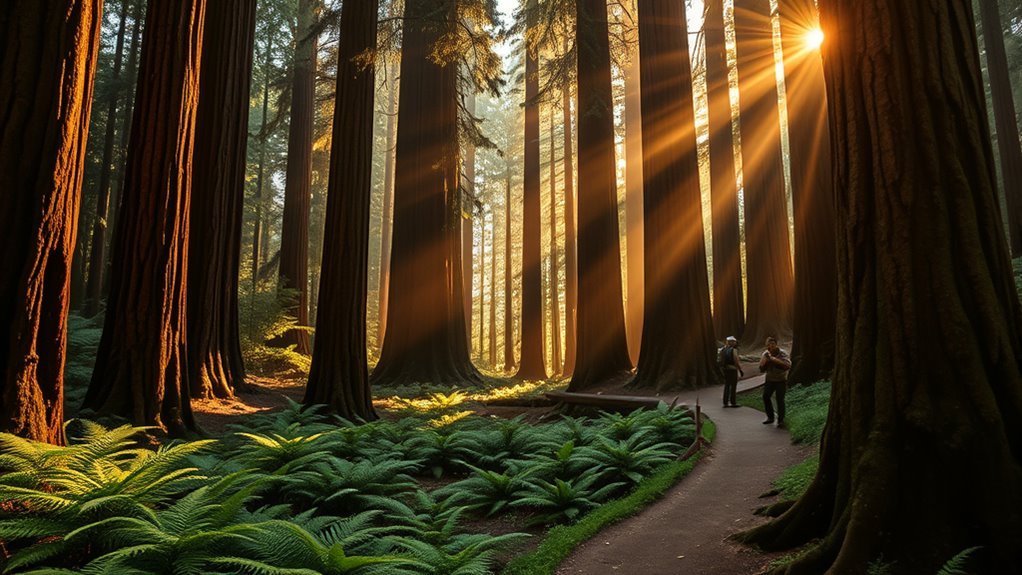
Redwood Regional Park puts you beneath a stand of surviving redwoods about 150 years old, the result of regrowth after much larger originals were cut for housing in the 1800s. You’ll find trails that balance shade and sun, so you can choose cooling canopy routes or open ridge stretches to suit your pace. Start from the Waterloo parking area on Skyline Blvd to reach the Tres Sendas trail; it’s a clear, scenic entry that connects you to broader loops. Link Tres Sendas with the popular three-mile French Trail when you want a longer, purposeful hike that expands exploration without getting lost. Along the stream, watch for rainbow trout in clear pools — a small, attentive ecosystem that rewards quiet observation. You’ll move with intent here: pick routes that match your stamina, carry water, and use trail junctions to shape time on your terms. The park gives you both refuge and routes to roam free.
Joaquin Miller Park
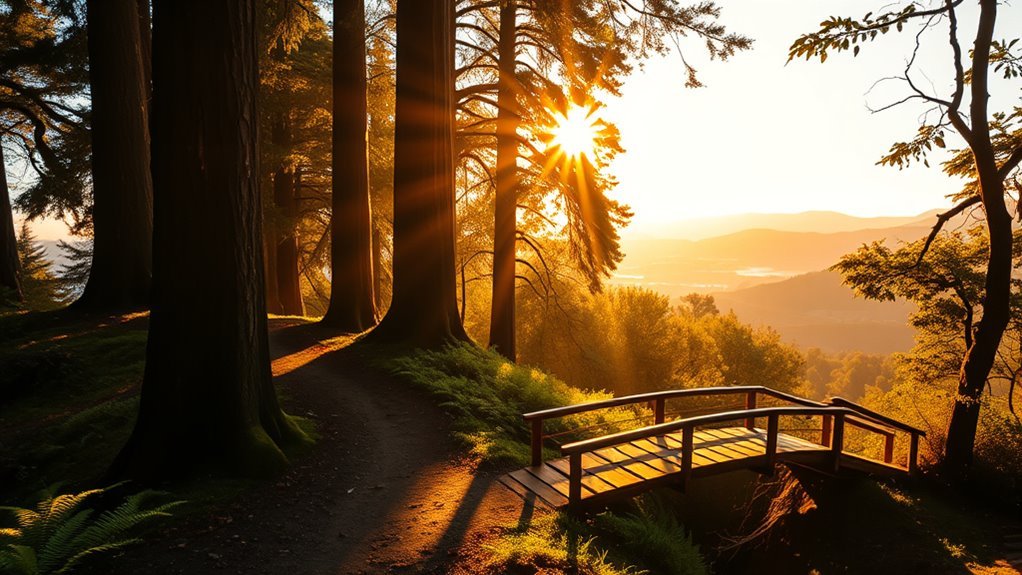
If you enjoyed the cathedral-like shade of Redwood Regional Park, head west to Joaquin Miller Park, where you’ll find a different kind of urban forest and history. You’ll walk among second-growth redwoods planted by poet Joaquin Miller, who transformed the land with some 75,000 trees. The Big Trees and Sunset trails deliver dense-forest immersion without pretension; they’re well-marked, varied in grade, and suitable whether you want a short escape or a longer, liberating push.
You’ll also encounter WPA-era art deco features—pools, cascades, and stonework—that root the park in regional history and offer striking photo and rest spots. Picnic grounds are plentiful, so you can gather, refuel, and organize community outings with ease. Trail choices span easy to challenging, letting you choose your pace and test limits. Navigate confidently: maps and clear junctions make route-finding simple. Joaquin Miller Park gives you solitude, civic memory, and the terrain to reclaim time outdoors.
Huckleberry Botanic Regional Preserve
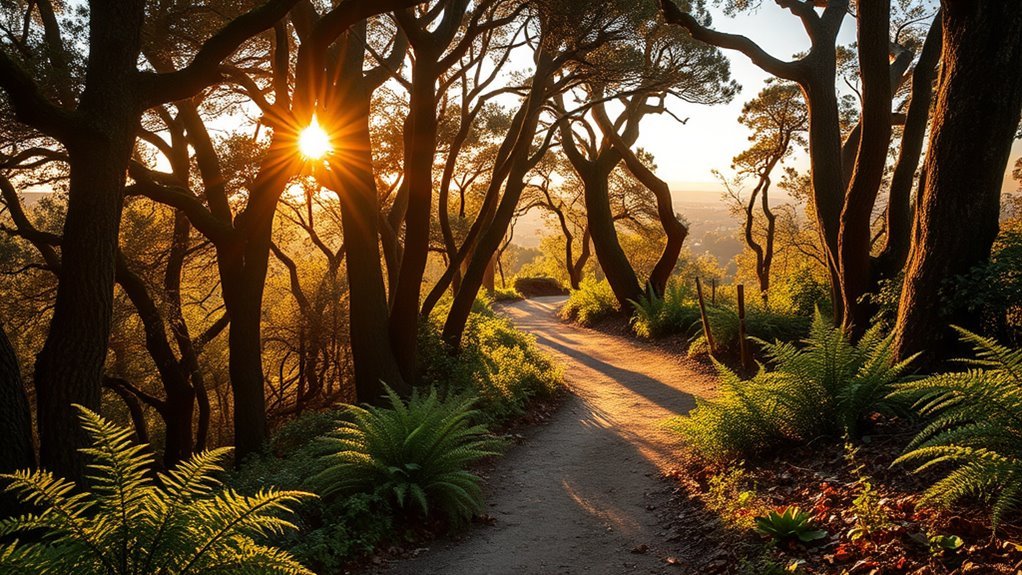
You can follow the 1.7-mile Huckleberry Trail Loop for a compact, well-marked hike that highlights the preserve’s native plant communities. The trail map points out 17 tree and shrub species and notes peak viewing windows for seasonal blooms like currants, Western leatherwood, and late-spring huckleberry. Plan your visit around those peak bloom times to get the most color and quiet on the trail.
Huckleberry Trail Loop
While winding through the Huckleberry Botanic Regional Preserve, the 1.7-mile Huckleberry Trail Loop gives you a compact, moderate hike that highlights native trees and shrubs—17 species are marked on the trail map—and offers excellent seasonal wildflower viewing, with currants and Western leatherwood blooming from winter into spring and huckleberries coloring the path in late spring. You’ll move through diverse ecosystems in under two miles, so you can explore deliberately without sacrificing time or autonomy. The trail’s clear markers teach you to identify species, and the moderate grade makes it accessible for families and solo hikers seeking renewal. Pack water, wear sturdy shoes, and take the map; use this short, focused route to reconnect with native flora and reclaim calm.
Seasonal Wildflower Timing
After exploring the loop and its labeled trees, check the preserve’s trail map for peak bloom windows so you can time a visit around the best displays. You’ll find a 1.7-mile loop that stages seasonal color: currants and Western leatherwood open from winter into spring, offering early contrast against evergreen backdrops. Late spring brings huckleberry blossoms, intensifying the display and scent along the trail. The map identifies 17 tree and shrub species and marks their ideal viewing periods, so you can plan hikes that match your liberation from routine—morning light and cooler temps often reveal more blooms. Use the map to choose dates, pack water and camera, and claim those vivid, politically free moments in nature.
Leona Canyon Regional Open Space
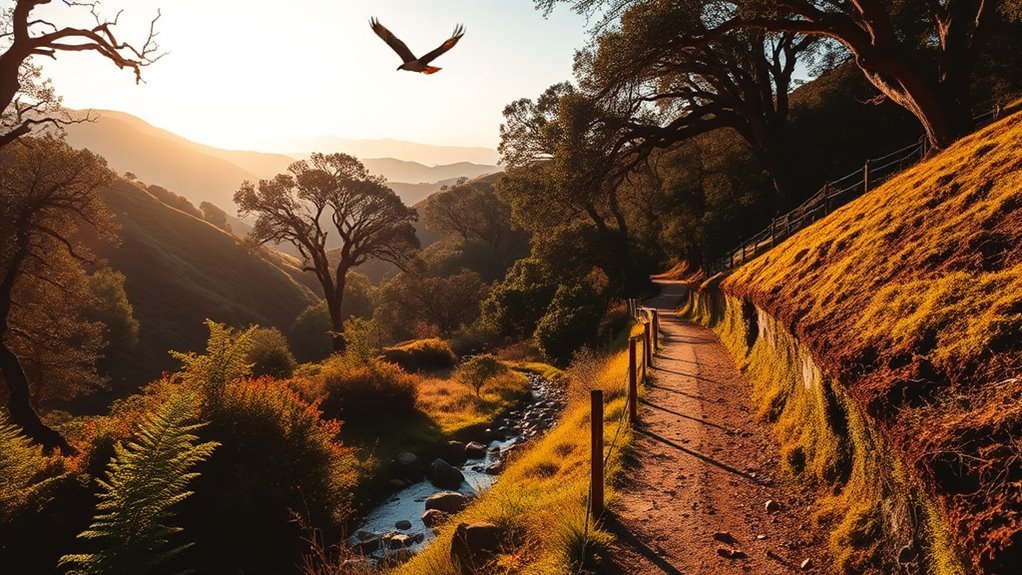
You’ll find two main trailheads into Leona Canyon—one behind Merritt College and another off Fruitvale Avenue—each offering different route options through the ravine. Expect lush stands of madrone, live oak, and Monterey pine lining Sausal Creek, with the creek bed serving as the path in places that can wash out after heavy rain. Stick to marked approaches and check conditions before you go so you can safely enjoy the flora and creek-side views.
Trailheads & Routes
Leona Canyon Regional Open Space offers two main trail options—Leona Canyon Trail behind Merritt College and the Dimond Canyon Trail off Fruitvale Avenue—so you can pick a shorter neighborhood walk or a more varied hillside route. Start at Merritt College for direct access to the Sausal Creek bed route; follow the marked path but be ready to turn back after heavy rains when sections can become impassable. From Fruitvale Avenue, ascend Dimond Canyon for steeper grades, scenic outlooks near Leimert Bridge, and a route that leads deeper toward a fern glade. Trails are well-defined but narrow in places; travel light, wear grippy shoes, and move deliberately. Choose the trail that matches your pace and claim a stretch of urban-wild freedom.
Flora & Creek
When you step into the canyon, a mix of madrone with its reddish bark, live oak, Monterey pine and bay trees creates a layered, shaded canopy that frames Sausal Creek as it threads through the valley. You’ll follow trails that hum with bird song and the creek’s steady murmur, and you can use the shade to move deliberately, feeling liberated from city noise. Note that after rain the streambed often becomes the path; sections can turn impassable, so plan routes and timing. Look for fern glades deeper in the canyon—quiet pockets that reward careful travel. Respect the ecosystem, stay on durable surfaces, and carry out what you bring in so this corridor of wild stays open for everyone.
Sibley Volcanic Regional Preserve
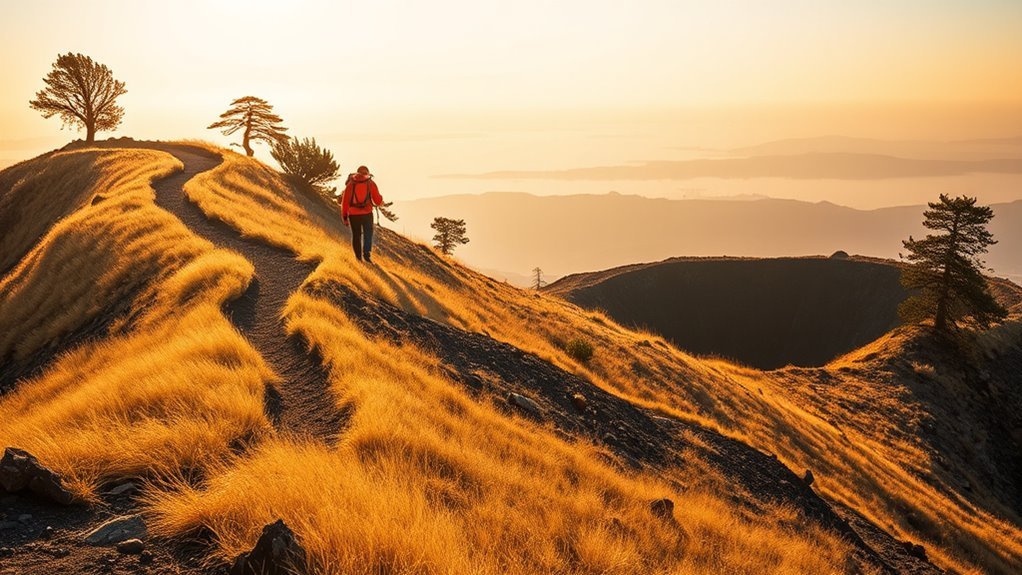
A short drive into the Oakland Hills brings you to Sibley Volcanic Regional Preserve, a 928-acre park centered on Round Top, a dormant volcano formed by lava and volcanic debris from an eruption about 10 million years ago. You’ll feel the geological story underfoot as you follow trails that expose ancient flows and rock textures; the park’s name honors Robert Sibley and the regional legacy he helped build. Choose the Sibley Volcanic Trail for direct access to distinctive formations and open vistas. If you want a gentler outing, the Sibley Volcanic Trail Labyrinths offer a 2-mile loop with only 144 feet of elevation gain — ideal for steady breathwork, mindful walking, and clear thinking. Across varied ecosystems, you can watch wildlife, frame crisp landscape photographs, and move with purpose. The preserve gives you space to loosen constraints, learn the land’s deep history, and return refreshed, grounded, and ready to keep exploring.
Lake Chabot Regional Park Loop
You’ll tackle an 8.65-mile loop with about 1,263 feet of climbing at Lake Chabot Regional Park, where well-marked trailheads make it easy to start and finish from several convenient points. You’ll move through mixed terrain—open ridgelines, shady groves, and lakeside paths—so bring layered clothing and steady shoes. The route circles the reservoir, offering clear scenic vistas and regular spots where anglers cast lines; those pauses double as moments to breathe and reset. Wildlife is abundant: expect birds, deer, and varied flora that shift with the seasons, giving you a living backdrop that invites attention and calm. At a moderate 4.0 difficulty, the loop suits both committed hikers and people seeking a purposeful escape from routine. Navigation is straightforward, with junctions labeled and multiple access points letting you shape distance and rhythm. Move deliberately, respect the lake, and use this trail to reclaim time, clarity, and a sense of open possibility.
Products Worth Considering

Rubber outsoles offer the optimal balance of traction and durability, with a responsive feel on unpredictable terrain.circular lug patterns provide grip during movement

Lightweight hiking shoes made in part with a blend of recycled and renewable materials.

Men's versatile trail running shoes for comfort and durability
Mission Peak Regional Preserve
One of the Bay Area’s most demanding day hikes, Mission Peak rises about 2,100 feet over roughly 6 miles round trip and rewards you with sweeping summit views that draw crowds at sunrise and sunset. You’ll usually start at the Ohlone College parking lot because Stanford Avenue’s trailhead parking is scarce; arrive early to secure a spot and reclaim your day from traffic. The climb is steep and steady, a physical test that liberates you as you push past fatigue and reach open ridgelines. Carry plenty of water, wear sturdy shoes, and layer for wind and sun; the trail gives no concessions. Pack out all trash so the preserve stays wild and available for everyone seeking freedom on the hills. At the summit, take deliberate time to breathe, take in panoramic Bay views, and plan your descent before light fades. Mission Peak rewards effort with clarity and perspective—both literal and mental—if you come prepared and respectful.
Products Worth Considering

VERSATILE TRAIL STYLE: Adventure-ready design transitions from rugged trails to casual wear, blending outdoor performance with modern everyday comfort

Go Further: Balanced Cushioning platform places the heel and forefoot the same distance from the ground, which encourages low-impact landings.

OUTDRY SUPERIOR WATERPROOFING: For moderate to heavy rain or snow. Discover our highest performing, waterproof-breathable footwear, designed with an impenetrable membrane, and bonded construction that seals water out.
Tilden Regional Park and Wildcat Peak
Tilden Regional Park sits just minutes from Oakland and gives you easy access to scenic overlooks and family-friendly trails, with Inspiration Point and the paved 2-mile stretch of Nimitz Way leading up to Wildcat Peak’s 360-degree summit views. You’ll park at Inspiration Point, step onto Nimitz Way and choose a steady, accessible climb to a broad summit where the Bay, hills, and city align. Families picnic, photographers frame horizons, and you move with purpose — reclaiming time and space outdoors.
| Feature | Experience |
|---|---|
| Inspiration Point | Immediate Bay views |
| Nimitz Way | Smooth 2-mile approach |
| Wildcat Peak | 360° summit panorama |
You can also explore Seaview Trail’s quieter ridges for expansive vistas. The park’s proximity to Oakland makes it a practical, liberating escape — short drive, big reward. Pack water, sit, and let the view reset your bearings.
Products Worth Considering

Mesh upper with synthetic overlays and gusseted tongue


【Wide/Extra-Wide Toe Box】With a roomy forefoot design, you may feel more natural toe movement and easy comfort. Pressure points can be reduced, so enjoy longer hikes without the tight, cramped feeling
Point Pinole Regional Shoreline
A stroll along the Bay View Trail at Point Pinole Regional Shoreline offers shady, flat paths and wide-open vistas of San Pablo Bay and Marin County, so you can take an easy, photo-ready hike without breaking a sweat. You’ll move along level ground beneath eucalyptus and oak, keeping effort low while your senses open to bay wind, salt-scented air, and long water views. The trail culminates in picture-perfect vistas and a pier where Mount Diablo punctuates the horizon — an ideal spot to pause, frame a shot, and breathe like you mean it. Families and anyone seeking a gentle escape will appreciate the easy terrain and clear sightlines for birdwatching or mindful walking. Access is straightforward: park at the staging area at the end of Atlas Road in Richmond, then set off. Point Pinole delivers liberation through simplicity — a place to slow, look outward, and reclaim calm without uphill struggle or distractions.
Frequently Asked Questions
Are Dogs Allowed Off-Leash on These Trails?
Generally, you can’t let dogs off-leash on most trails; rules vary by park, so check signs or park websites. You can seek designated off-leash areas or quieter trails where you can responsibly free your dog under voice control.
Which Hikes Are Stroller or Wheelchair Friendly?
Like a wide, steady river: you’ll find stroller/wheelchair-friendly paths at Lake Merritt promenade, Morcom Rose Garden loops, and Joaquin Miller’s paved sections; they’re mostly flat, accessible, well-maintained, and let you move freely with confidence and ease.
Where Can I Find Restroom Facilities on These Trails?
Restrooms are usually at trailheads, park visitor centers, and larger picnic areas; check park maps or websites before you go. Carry hand sanitizer, plan breaks at trailhead facilities, and advocate for more accessible restrooms when needed.
Are There Seasonal Trail Closures or Wildfire Burn Scars?
Yes — closures and burn scars happen seasonally; don’t pretend they won’t. Check park alerts and fire maps before you go, pack sturdy boots, water, and a map, and choose routes that match your risk tolerance.
What Permits or Parking Fees Are Required?
You’ll need regional park entrance or day-use fees, occasional trail permits for protected areas, and parking permits at some trailheads; check park websites for current costs, vehicle pass requirements, and any reservation systems before you go.
Conclusion
You’ve got trails that soothe, trails that challenge, and trails that teach—Redwood groves that calm your breath, volcanic outcrops that sharpen your curiosity, and ridgelines that test your legs. You’ll find family strolls at Point Pinole, wildflower meadows at Tilden, and summit views from Mission Peak. Plan your route, pack water, respect the rules, and leave no trace. Hike smart, hike steady, and come back ready to explore more.
