


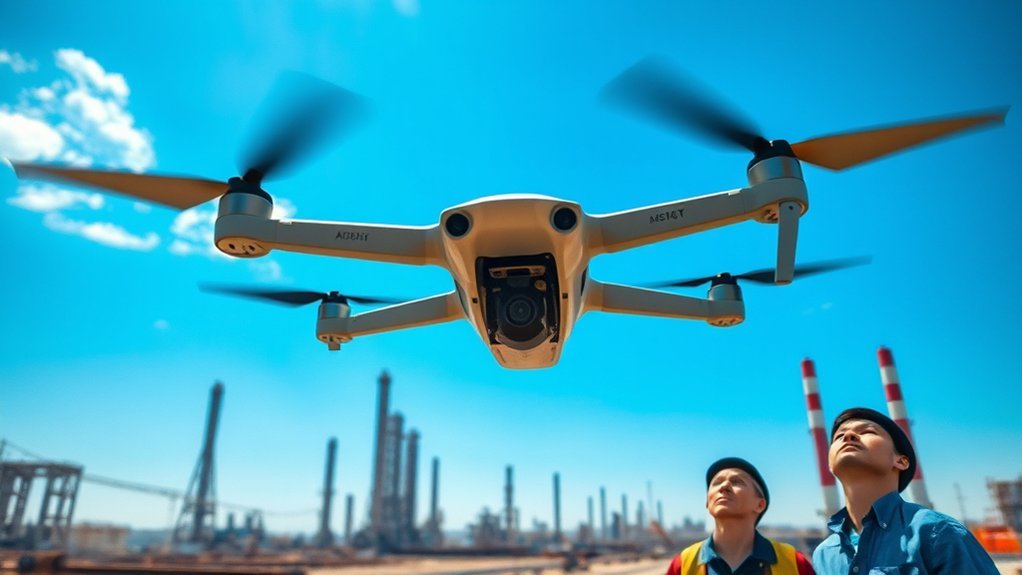
When considering drones for industrial inspections in 2026, the Autel EVO II Dual 640T offers excellent thermal imaging and an impressive 50MP visible camera. It excels in durability and flight time, with 38 minutes of operation. Meanwhile, the FIFISH M100A provides underwater capabilities with a 4K camera and robust construction. Look for features like high-resolution imaging, long flight times, and resilience to harsh conditions. You’ll want to explore the key factors that can enhance your inspection capabilities even further.
| Autel EVO II Dual 640T Thermal Imaging Drone |  | Best for Thermal Imaging | Camera Resolution: 50MP visible camera, 640×512 thermal imaging | Flight/Dive Time: 38 minutes flight time | Control Type: Smart Controller V3 | VIEW LATEST PRICE | Read Our Analysis |
| FIFISH M100A Underwater Drone with 4K Camera |  | Best Underwater Versatility | Camera Resolution: UHD 4K, 12-megapixel camera | Flight/Dive Time: Approximately 1.5 hours dive time | Control Type: VR Intelligent Head Tracking | VIEW LATEST PRICE | Read Our Analysis |

More Details on Our Top Picks
Autel EVO II Dual 640T Thermal Imaging Drone
The Autel EVO II Dual 640T Thermal Imaging Drone is an essential tool for professionals in fields like search and rescue, power inspection, and public safety. With its 640×512 thermal imaging and 50MP visible camera, you can easily capture detailed evidence and detect subjects from up to 100 meters away. The drone offers over ten temperature measurement modes, allowing for accurate assessments. Plus, with a flight time of 38 minutes and advanced SkyLink 2.0 technology, you’ll enjoy seamless communication and extended range. This drone’s capabilities make it a game-changer for industrial inspections, ensuring safety and efficiency in your operations.
- Camera Resolution:50MP visible camera, 640×512 thermal imaging
- Flight/Dive Time:38 minutes flight time
- Control Type:Smart Controller V3
- Applications:Search & rescue, power inspection, public safety, hunting
- Battery Capacity:3 batteries included (capacity not specified)
- Communication Range:15km video transmission range
- Additional Feature:10+ temperature measurement modes
- Additional Feature:D-RI detection and identification
- Additional Feature:Picture-in-picture display
FIFISH M100A Underwater Drone with 4K Camera
For professionals in industries like pipeline inspection and underwater photography, the FIFISH M100A Underwater Drone stands out with its impressive 4K UHD camera and versatile robotic arm. This drone’s 14400mAh battery allows for about 1.5 hours of dive time, while the rugged design guarantees durability against corrosion and sand. With a 100m tether and a depth rating of 100m, it’s perfect for various underwater tasks. The immersive VR capabilities, combined with 240 FPS slow-motion filming, provide unparalleled imaging. Whether you’re inspecting pipelines or filming marine life, the FIFISH M100A delivers exceptional performance and reliability.
- Camera Resolution:UHD 4K, 12-megapixel camera
- Flight/Dive Time:Approximately 1.5 hours dive time
- Control Type:VR Intelligent Head Tracking
- Applications:Pipeline inspection, fishery, professional underwater shooting
- Battery Capacity:14400mAh super-capacity battery
- Communication Range:Standard 100m tether length for underwater operation
- Additional Feature:VR intelligent head tracking
- Additional Feature:240 FPS slow-motion filming
- Additional Feature:Rugged Kevlar cable
Factors to Consider When Choosing Drones for Industrial Inspections
When choosing drones for industrial inspections, you need to evaluate several key factors. Camera quality, flight time, and payload capacity can greatly impact your inspection tasks. Additionally, durability, weather resistance, and navigation features play essential roles in ensuring your drone performs effectively in various environments.
Camera Quality Requirements
Selecting the right camera for industrial inspections is essential to capturing the necessary details for accurate assessments. A high-resolution camera, like a 4K UHD, guarantees you capture vital images to identify structural issues. Aim for a high megapixel count, such as 50MP, to provide clearer evidence that aids in analyzing inspected sites. Consider a wide field of view, like a 166° ultra-wide angle, which helps cover larger areas in one shot. Advanced features, such as slow-motion filming or vision enhancement algorithms, can enhance insights into dynamic processes or challenging conditions. Additionally, thermal imaging capabilities, with resolutions like 640×512, enable you to measure temperatures and detect heat anomalies, essential for identifying electrical or mechanical failures.
Flight Time Considerations
Camera quality plays a significant role in industrial inspections, but flight time is just as essential for ensuring that you can cover large areas efficiently. When you choose a drone, aim for a flight time exceeding 30 minutes to minimize interruptions from battery changes or landings. This extended duration is vital for large-scale inspections, allowing you to gather more data in one go. Keep in mind that environmental factors like wind and temperature can impact actual flight time, so consider these when planning your operations. Additionally, look for drones equipped with advanced battery technology, such as quick charge capabilities, to enhance readiness. Understanding your specific inspection tasks will help you determine the flight time you’ll need to complete the job effectively.
Payload Capacity Needs
Understanding the payload capacity of a drone is vital for successful industrial inspections. You need to guarantee it can carry all necessary equipment, like cameras or sensors, without sacrificing flight performance. Typically measured in grams or kilograms, higher payload capacities allow for advanced imaging technology or tools. Assess the total weight of your payload, including any accessories, to prevent exceeding the drone’s maximum weight limit, which can affect stability and flight time. Many drones have specific payload thresholds, so knowing these limits is significant for tasks like thermal imaging or high-resolution photography. For peak efficiency, choose a drone that meets your payload needs while also offering enough battery life to cover your inspection area without constant recharging.
Durability and Weather Resistance
When it comes to industrial inspections, the durability of your drone can be the difference between a successful operation and costly downtime. You need a robust build that can withstand harsh conditions like corrosion and sand exposure. Weather resistance is equally important; your drone should operate in rain or high humidity, so look for waterproof or water-resistant features. Materials like Kevlar for cables enhance flexibility and strength during deployment. Additionally, make sure it has safety mechanisms and protective casing to safeguard core components from damage, boosting longevity and reliability. Finally, consider how well the drone performs in varying temperatures and windy conditions, as these factors greatly impact its durability and overall performance during inspections.
Navigation and Control Features
Durability and weather resistance are important, but effective navigation and control features can greatly enhance your drone’s performance during industrial inspections. Look for drones with advanced movement capabilities like elevating, strafing, and yawing to navigate complex environments precisely. Real-time control systems are essential; they let you adjust flight paths based on live data and changing conditions, boosting operational efficiency. Consider drones with immersive VR capabilities for an intuitive first-person perspective, making navigation feel more natural. If you’re inspecting underwater, guarantee the drone has a reliable tether length to maintain a connection while providing adequate distance. Finally, prioritize safety mechanisms like corrosion resistance and protective designs to guarantee your drone thrives in harsh industrial settings.
Frequently Asked Questions
What Is the Typical Lifespan of Industrial Inspection Drones?
Industrial inspection drones typically last about 5 to 10 years, depending on usage and maintenance. You’ll want to keep an eye on their performance, as regular care can extend their effective lifespan considerably.
How Do I Maintain My Drone for Optimal Performance?
Like a well-tuned engine, your drone thrives on care. Regularly inspect components, clean sensors, update firmware, and check battery health. Treat it like a trusty steed, and it’ll soar through inspections, delivering unmatched performance.
Are There Regulations for Flying Drones in Industrial Areas?
Yes, there’re regulations for flying drones in industrial areas. You must comply with local laws, obtain necessary permits, and guarantee safety measures are in place. Always check for specific guidelines before flying in such zones.
Can Drones Be Used at Night for Inspections?
Ever wondered if drones can operate at night? Yes, they can! With proper lighting and compliance with regulations, you can use drones for inspections after dark, enhancing efficiency and safety in your industrial projects.
What Are the Costs Associated With Drone Inspections?
Drone inspection costs vary based on factors like equipment, labor, and location. You’ll typically spend between $150 to $500 per hour for services, plus potential additional fees for specialized technology or regulatory compliance.
Conclusion
In the world of industrial inspections, choosing the right drone is like picking the perfect tool from a toolbox. Whether you’re soaring above rooftops with the Autel EVO II or diving deep with the FIFISH M100A, each has its unique strengths. By considering camera quality, flight time, and durability, you’re not just flying; you’re revealing a new perspective on efficiency and precision. So gear up, take to the skies, and let these drones help you navigate your inspection needs!