


When camping in bear country, understanding bear behavior is essential. Always hike in groups and make noise to alert bears of your presence. Store food securely in bear-proof containers, hanging it at least 10 feet high and away from your tent. Keep your campsite clean and dispose of trash properly. Carry bear spray and know how to use it. Stay aware of bear activity in the area. Want to learn more effective strategies for staying safe?
Understanding Bear Behavior

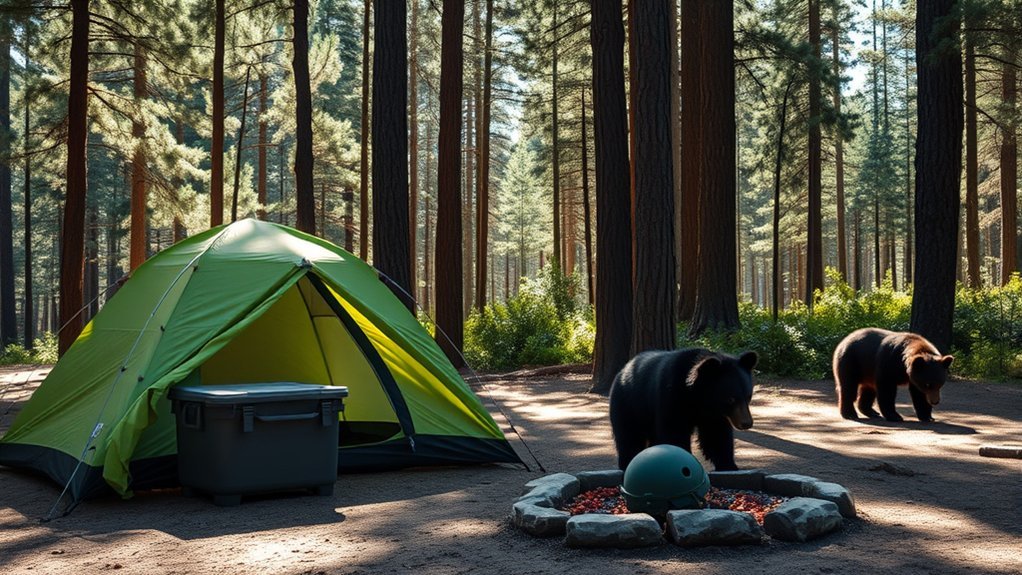
When you venture into bear country, understanding bear behavior is vital for your safety. Recognizing bear instincts helps you respond appropriately to encounters. Black bears often flee from humans, while grizzly bears may observe and linger. Knowing the type of bear you might encounter can influence your actions. Bears have a remarkable sense of smell, which allows them to detect food from afar. This emphasizes the importance of proper food storage to avoid attracting them.
Additionally, bear communication plays a significant role in how they interact with their environment. Fresh bear scat indicates recent activity, suggesting you’re in an area with bears nearby. In active bear country, making noise is essential to alert bears of your presence, reducing the chance of surprising them. By understanding these behaviors, you can adopt strategies to minimize risks and enjoy your outdoor experience safely and liberatingly.
Hiking Safety in Bear Country
When hiking in bear country, it’s essential to stay aware of your surroundings and understand the current bear activity in the area. Make noise to alert bears of your presence, and try to hike in groups whenever possible to reduce the chances of an encounter. Carry bear spray for added safety, ensuring it’s easily accessible if needed.
Bear Awareness Levels
Understanding bear awareness levels is essential for anyone hiking in bear country. These levels categorize your hiking environment, helping you assess risks effectively:
- Don’t worry about: No bear activity present, but stay informed.
- Might be bear territory: Remain alert for bear signs, like scat or marked trees, indicating recent bear presence.
- Active bear country: Make noise to announce your presence and reduce surprise encounters, and always carry bear spray.
Before you head out, check with park rangers for the latest on bear activity. Recognizing bear signs can transform your approach, ensuring you treat your environment with the caution it deserves. Stay informed, stay safe, and enjoy the freedom of the great outdoors!
Noise and Group Hiking
Hiking in groups not only enhances your safety but also considerably reduces the chances of unexpected bear encounters. Increased noise levels from group dynamics alert bears to your presence, making it less likely for them to surprise you. Implementing effective noise strategies, like talking or singing, is essential in bear country.
| Activity | Noise Level | Bear Awareness |
|---|---|---|
| Solo Hiking | Low | High Risk |
| Small Group | Moderate | Moderate Risk |
| Large Group | High | Low Risk |
Being aware of your surroundings is important. Look for signs of bear activity, and adjust your noise-making accordingly. In areas identified as “Active bear country,” consistent noise can help prevent startling bears nearby. Stay safe and enjoy the wilderness!
Essential Bear Encounter Preparedness
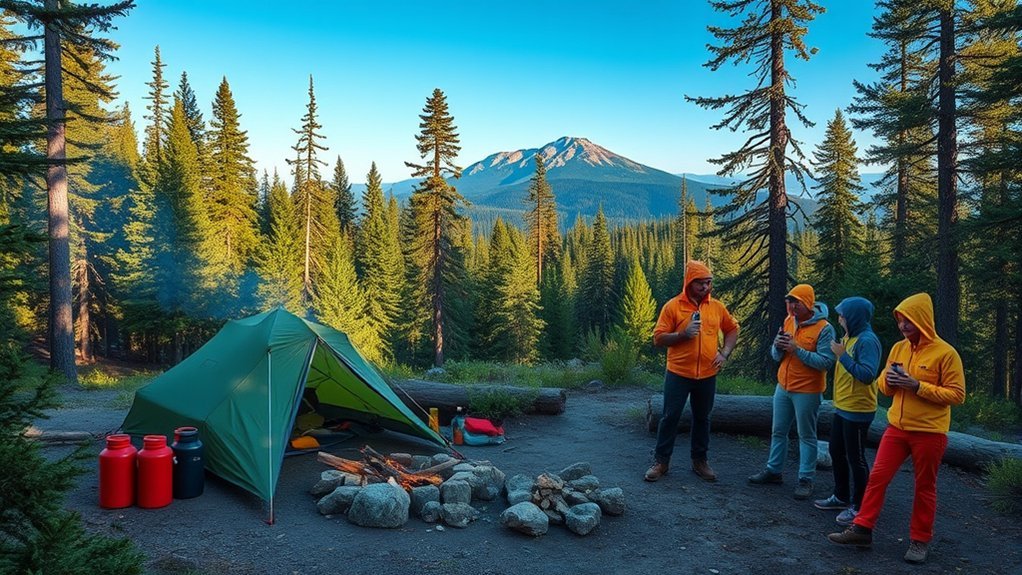
Being prepared for a bear encounter is vital for your safety while tent camping. Effective bear encounter preparation can greatly reduce risks. Here are three important steps to take:
Being prepared for a bear encounter is crucial for tent camping safety and can significantly reduce risks.
- Carry Bear Spray: Always have bear spray within reach. Studies show its effectiveness, with 98% of users in an Alaskan study remaining uninjured during encounters.
- Maintain Distance: If you spot a bear, keep at least 100 feet away and calmly communicate your presence. This can prevent startling the bear.
- Make Noise While Hiking: Create sounds to alert bears of your approach. This reduces surprise encounters and lowers the chance of an attack.
Understanding bear behavior and recognizing signs of their activity, like fresh scat or marked trees, can also enhance your preparedness. By taking these steps, you empower yourself to enjoy nature while minimizing risks associated with bear encounters.
Food Storage and Campsite Management
When you’re camping in bear country, proper food storage is essential for your safety. Use bear-proof containers and hang your food at least 10 feet high, ensuring it’s far from any vertical supports. Keeping your campsite clean and trash-free will further reduce the risk of attracting bears.
Bear-Proof Containers Usage
To keep bears from raiding your campsite, using bear-proof containers is essential for effective food storage and campsite management. These containers lock in odors and deter bears, ensuring your supplies remain safe. Here are three key options:
- BearVaults: Durable containers with secure locking mechanisms.
- Yeti Coolers: Heavy-duty coolers designed to withstand bear attacks.
- Bear Resistant Bags: Lightweight, portable options for additional food storage.
Store food and scented items at least 200 feet away from your tent to minimize attraction. Dispose of grey water and trash properly to maintain a clean campsite. By utilizing these bear-proof solutions, you can greatly reduce the risk of unwanted bear encounters while enjoying your outdoor adventure.
Proper Hanging Techniques
Properly hanging your food is essential for preventing bears from raiding your campsite. Aim to hang your food at least 10 feet above ground and 4 feet away from any vertical support. This distance makes it harder for bears to access your supplies. If hanging isn’t feasible, consider bear-proof storage canisters or bags that lock in odors and resist bear attacks. Always store food and scented items at least 200 feet away from your sleeping area and cooking site to minimize attraction. Utilize designated bear hanging systems or bear cables at some campsites for extra security. Remember, employing effective hanging techniques is an important step in bear safety, ensuring you enjoy your wilderness experience without unwanted visitors.
Clean Campsite Practices
Maintaining a clean campsite is essential not only for your enjoyment but also for minimizing bear encounters. Follow these smart cleaning routines to keep your area bear-safe:
- Store food properly: Use bear-proof containers and hang food caches at least 10 feet high and 4 feet away from any vertical supports.
- Designate a cooking area: Establish a separate “cook shack” at least 100 yards from your tent to further reduce risks.
- Dispose of trash responsibly: Clean up spills immediately and place all trash in bear-proof containers, or pack it out to prevent attracting bears.
Strategies for Reducing Attractants
Reducing attractants is essential for keeping bears at bay while tent camping. By following a few strategic steps, you can markedly enhance your safety and enjoyment in the wilderness.
| Strategy | Details |
|---|---|
| Store Food Securely | Use bear-proof containers or heavy-duty coolers with locks. |
| Proper Food Disposal | Dispose of grey water using designated methods away from the tent. |
| Hang Food Properly | Suspend food bags at least 10 feet high and 4 feet away from supports. |
| Maintain Cleanliness | Keep your campsite tidy and discard trash immediately. |
Implementing these attractant reduction techniques not only protects you but also respects the natural habitat of bears. With a clean campsite and proper food disposal, you’ll create a safer environment for both you and the wildlife.
Community Resources and Engagement
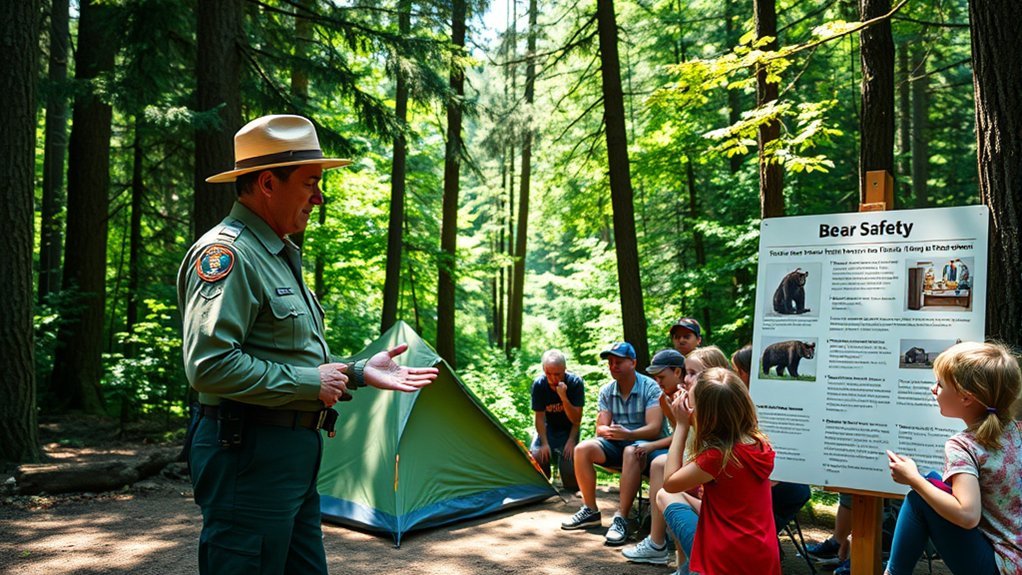
Engaging with your community can greatly enhance your bear safety knowledge while tent camping. By tapping into local resources, you can learn from others’ experiences and stay informed about best practices. Here are three key ways to get involved:
- Attend community workshops: Many outdoor organizations host educational sessions on the latest bear safety protocols and gear recommendations.
- Join local forums: Participating in discussions with fellow campers allows you to share experiences and strategies for dealing with bear encounters.
- Utilize park resources: Some parks offer free loaner bear canisters, promoting responsible food storage and reducing bear-human interactions.
Frequently Asked Questions
What Should I Do if I See a Bear While Hiking?
If you see a bear while hiking, stay calm and don’t run. Observe its behavior, speak softly, and back away slowly. Make yourself appear larger and give it space; prioritize your hiking safety above all.
Can I Use My Car to Store Food While Camping?
Your car’s a fortress, but it’s not foolproof for food storage while camping. Keep perishables out of sight and locked away. Always prioritize camping safety; bears can still sniff out your snacks from afar.
Are There Specific Bear-Resistant Canisters I Should Use?
You should use approved bear canister types, like the Garcia or BearVault, as effective food storage solutions. These canisters are durable, lightweight, and designed to keep your food safe from curious bears while camping.
How Can I Tell if a Bear Is Nearby?
You can tell a bear’s nearby by observing signs of bears, like fresh tracks, claw marks, or scat. Also, listen for unusual sounds or notice sudden changes in wildlife behavior around you. Stay alert!
Is Bear Spray Effective Against All Bear Species?
Yes, bear spray’s effective against all bear species, though bear species differences may influence reactions. Always aim for the bear’s face, ensuring the spray disperses properly. Stay calm and follow safety protocols for best results.
Conclusion
By understanding bear behavior, practicing hiking safety, and preparing for encounters, you can enjoy your camping experience with confidence. By storing food properly, managing your campsite, and reducing attractants, you’ll minimize risks and protect both yourself and the bears. By engaging with community resources, you’ll stay informed and connected. Prioritize safety, respect nature, and embrace the adventure, knowing that smart steps lead to memorable experiences in bear country. Your well-being is worth the effort.